September 19, 2006
From Julian Evans in Moscow
THE Russian Government has revoked the environmental approval for phase two of the $20 billion (£10.6 billion) Sakhalin-2 oil and gas project in the far east of Russia, in which Royal Dutch Shell is the main investor. Analysts say that the move is an attempt by the Kremlin to force Shell to sell part of its stake in the project to the state-owned Gazprom.
Without approval from Rosprirodnadzor, the Russian environmental management agency, Shell cannot continue its plans to develop a liquefied natural gas plant at Sakhalin.
Rinat Gizatulin, a spokesman for the Natural Resources Ministry, said: “It does not mean that the project has to be closed. We simply need to think again about the progress of phase two and about a new ecological approval.”
The cancellation comes after weeks of arguments between Sakhalin Energy and the Government over alleged environmental infringements at the project. The Government ordered a stop to oil production last week.
Valeri Nesterov, oil and gas analyst for Troika Dialog, said that it was unlikely that the Government would cancel the whole PSA (production sharing agreement), but he added: “The State could create a sufficiently hostile regulatory environment so that it pushes Shell into letting Gazprom into the project on favourable terms.”
Gazprom made an agreement with Shell last year to get a 25 per cent-plus-one share in Sakhalin-2, in return for a 50 per cent stake in the Zapolyarnoe gasfield, However, Sakhalin Energy then said that costs for Sakhalin-2 would double to $20 billion, leading Gazprom to pull out of the deal. It is still in talks with Shell over the asset swap.
Another source in the Natural Resources Ministry said that other PSAs signed in the 1990s could also be in technical violation and could be revisited. The other two PSAs are Sakhalin-1, in which Exxon-Mobil is the main partner, and the Kharyaga oilfield, in which Total is the main partner.
This month, Exxon issued a statement saying that any failure to honour the Sakhalin-1 PSA would “inevitably undermine the confidence of foreign investors and have a significant negative impact on the Russian investment climate”.


 Royal Dutch Shell conspired directly with Hitler, financed the Nazi Party, was anti-Semitic and sold out its own Dutch Jewish employees to the Nazis. Shell had a close relationship with the Nazis during and after the reign of Sir Henri Deterding, an ardent Nazi, and the founder and decades long leader of the Royal Dutch Shell Group. His burial ceremony, which had all the trappings of a state funeral, was held at his private estate in Mecklenburg, Germany. The spectacle (photographs below) included a funeral procession led by a horse drawn funeral hearse with senior Nazis officials and senior Royal Dutch Shell directors in attendance, Nazi salutes at the graveside, swastika banners on display and wreaths and personal tributes from Adolf Hitler and Reichsmarschall, Hermann Goring. Deterding was an honored associate and supporter of Hitler and a personal friend of Goring.

 Deterding was the guest of Hitler during a four day summit meeting at Berchtesgaden. Sir Henri and Hitler both had ambitions on Russian oil fields. Only an honored personal guest would be rewarded with a private four day meeting at Hitler’s mountain top retreat.


 IN JULY 2007, MR BILL CAMPBELL (ABOVE, A RETIRED GROUP AUDITOR OF SHELL INTERNATIONAL SENT AN EMAIL TO EVERY UK MP AND MEMBER OF THE HOUSE OF LORDS:


 MORE DETAILS:


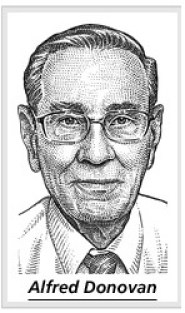 A head-cut image of Alfred Donovan (now deceased) appears courtesy of The Wall Street Journal.