FT: Settling the bill but not the issues
“companies also tend to look to their more reputable peers, of which Shell used to be one. This is no longer the case.”: “whether a management that lied to its biggest shareholders would have any compunction doing the same to Nigerian villagers.”
Published: July 30 2004 5:00 | Last Updated: July 30 2004 5:00
Part of the bill came in yesterday for Royal Dutch/Shell’s misreporting of its reserves. The Anglo-Dutch oil group said it would pay £17m to settle the UK Financial Services Authority’s charge of market abuse, and $120m (£65.8m) to settle wider charges by the US Securities and Exchange Commission, including breaking anti-fraud and reporting rules. Two US regulatory bodies also announced fines of $38m on Coral Energy, a Shell subsidiary, to settle charges of manipulating gas and electricity prices in the US. By paying the fines, Shell has been able to get these investigations closed without having to admit any wrongdoing.
This was not a bad roster of plea bargains for one day, nor a particularly expensive one for a company that yesterday reported second-quarter net profits of $3.76bn. But the company is not out of the woods. It is still subject to a US government criminal investigation and a Dutch regulatory inquiry, and faces the prospect of US shareholder suits. The reserves scandal, which has already led to the resignation of three senior executives, has also caused Shell to review its century-old structure as a group awkwardly and confusingly straddled between its Dutch and UK parent companies. Only if that review, due to conclude in November, creates some transparency out of Shell’s Byzantine structure will we know whether the company is serious about turning over a new leaf in corporate governance.
But the Shell saga carries two wider lessons for the oil industry. One is the need for stricter adherence to guidelines about reserves. The area of ambiguity is not really whether oil and gas deposits exist underground; no one has suggested that Shell just dreamed up its oil and gas, and even if it did, a geological deposit can be checked like a bank deposit. The issue is the degree to which deposits are considered marketable enough for an oil company to book them on its balance sheet. This is a matter of judgment. To guide this judgment, America’s SEC sets broad criteria. But because the criteria are broad, and SEC auditors cannot be everywhere, many oil companies also tend to look to their more reputable peers, of which Shell used to be one. This is no longer the case. The industry will now have to find new benchmarks of probity, and at a time when the commercial pressures to maximise marketable reserves have never been greater.
The other lesson is the importance of high standards of corporate behaviour in an industry that operates in some of the most corrupt and poorest parts of the world. Oil companies are already very suspect to many local populations and non-governmental organisations who might well wonder, with Shell in mind, whether a management that lied to its biggest shareholders would have any compunction doing the same to Nigerian villagers. Oil companies cannot escape a responsibility to improve standards where they operate. But Shell has made it harder for them to lead by example.
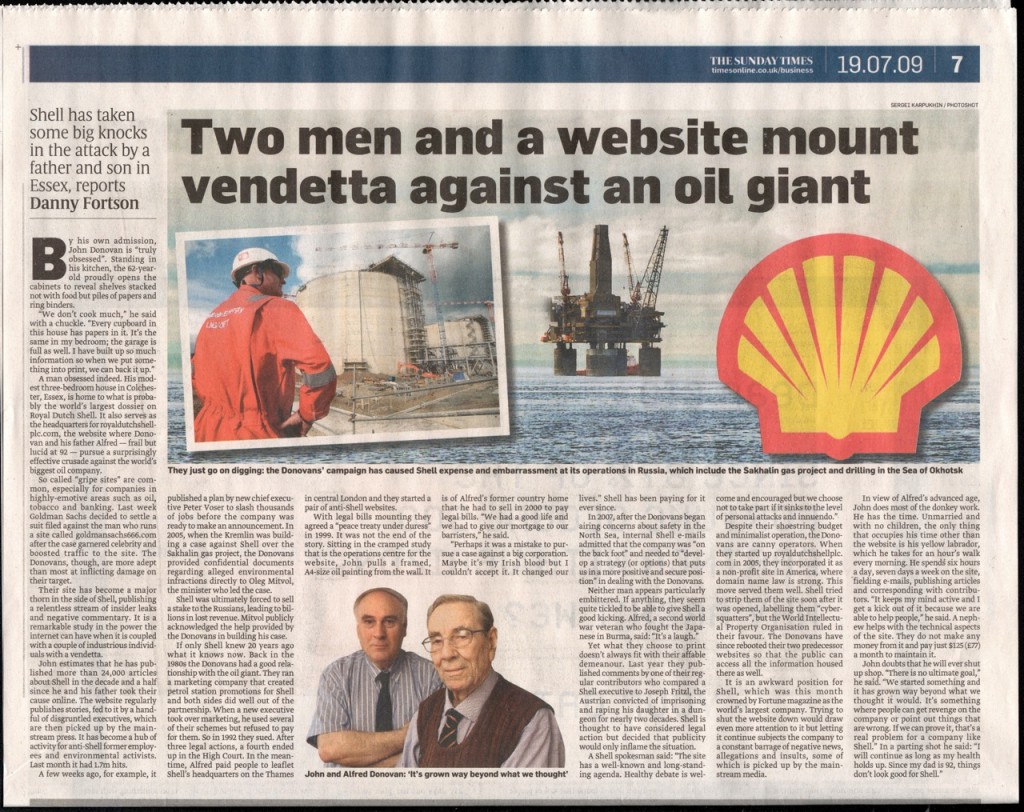
This website and sisters royaldutchshellplc.com, shellnazihistory.com, royaldutchshell.website, johndonovan.website, and shellnews.net, are owned by John Donovan. There is also a Wikipedia segment.


 Royal Dutch Shell conspired directly with Hitler, financed the Nazi Party, was anti-Semitic and sold out its own Dutch Jewish employees to the Nazis. Shell had a close relationship with the Nazis during and after the reign of Sir Henri Deterding, an ardent Nazi, and the founder and decades long leader of the Royal Dutch Shell Group. His burial ceremony, which had all the trappings of a state funeral, was held at his private estate in Mecklenburg, Germany. The spectacle (photographs below) included a funeral procession led by a horse drawn funeral hearse with senior Nazis officials and senior Royal Dutch Shell directors in attendance, Nazi salutes at the graveside, swastika banners on display and wreaths and personal tributes from Adolf Hitler and Reichsmarschall, Hermann Goring. Deterding was an honored associate and supporter of Hitler and a personal friend of Goring.

 Deterding was the guest of Hitler during a four day summit meeting at Berchtesgaden. Sir Henri and Hitler both had ambitions on Russian oil fields. Only an honored personal guest would be rewarded with a private four day meeting at Hitler’s mountain top retreat.


 IN JULY 2007, MR BILL CAMPBELL (ABOVE, A RETIRED GROUP AUDITOR OF SHELL INTERNATIONAL SENT AN EMAIL TO EVERY UK MP AND MEMBER OF THE HOUSE OF LORDS:


 MORE DETAILS:


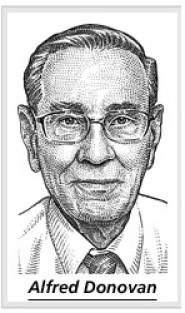 A head-cut image of Alfred Donovan (now deceased) appears courtesy of The Wall Street Journal.