Bloomberg: BP 2nd-Quarter Net Rises 35% on Higher Prices, Output (Update3)
“Last year, BP overtook Shell as the world’s second-largest oil company by market value after Exxon Mobil.”
July 27 (Bloomberg) — BP Plc, Europe’s largest oil company, said second-quarter profit rose 35 percent, boosted by record oil and gasoline prices and a jump in Russian production.
Net income rose to $3.43 billion, or 15.7 cents a share, from $2.54 billion, or 11.5 cents a share, a year ago, based on accounting that excludes gains or losses from holding inventories, BP spokeswoman Wendy Silcock in London said. BP shares fell as much as 1.4 percent as its result missed some analyst forecasts.
BP is the first of the world’s biggest oil companies to report profit for the period, when oil and gasoline pump prices reached a record in the U.S. Royal Dutch/Shell Group and Exxon Mobil Corp. report results on Thursday. Because of a Russian venture created in August, BP’s output surged 18 percent.
“At the end of the day, it’s a good set of numbers,” said Peter Hitchens, an analyst at CAI Cheuvreux in London, with an “outperform” rating on BP. “The key thing is how people will see earnings going forward, because clearly the operating environment is not going to stay at these levels.”
Profit rose to $3.91 billion from $3.17 billion a year ago, BP said, excluding goodwill costs. The recent period included $258 million of one-time charges. Analysts surveyed by Bloomberg expected $3.92 billion for that measure of profit. Sales rose 30 percent to $71.15 billion.
Weaker Dollar
BP expects capital investment of about $14 billion this year, higher than its previous forecast, because of the weaker U.S. dollar. The company said it will continue to buy back shares after spending $3.25 billion on repurchases in the first half.
The quarterly dividend increased 7.1 cents a share, up from 6.5 cents a share a year ago. For investors in Britain, the payout declined 4.4 percent because of the drop in the dollar.
BP shares were down 1.3 percent at 483.5 pence in London at 9:35 a.m. Before today, the stock had gained 8.1 percent this year, compared with an 11 percent rally at Exxon and a 7.5 percent drop in Shell Transport & Trading Co., Shell’s U.K. arm.
BP’s most profitable business is pumping oil and natural gas, where the company benefited from both an increase in production and higher prices. Oil and gas output rose 18 percent from a year ago, BP said in the statement.
“We are on track against our targets of controlled investment for growth,” BP Chief Executive John Browne said in the statement. “Oil prices should remain supported by limited spare OPEC production capacity and further oil-demand growth.”
Oil Price Surge
Crude oil in New York averaged $38.24 a barrel in the quarter, more than last year’s average of $28.94. Natural gas prices climbed 7.5 percent in the U.S. and surged 16 percent in Britain, western Europe’s largest market for the fuel.
BP acquired new supply last year with a $6.35 billion venture, TNK-BP, with Russia’s OAO Tyumen Oil Co. It expanded that investment in January with an agreement to include Russian oil producer AO Slavneft in the plan.
BP is facing higher taxes in Russia, where a yearlong probe by Russian authorities on OAO Yukos Oil Co., the nation’s largest oil exporter, and its biggest shareholder, Mikhail Khodorkovsky, has increased the perception of risk regarding Russia.
At BP’s refining and marketing unit, BP’s second-biggest, adjusted profit rose 43 percent to $1.56 million, helped by wider margins. BP refined about 3.02 million barrels of crude a day, enough to supply Germany, into usable fuels such as gasoline.
Petrochemicals
The petrochemicals unit had a profit of $208 million, down $98 million from the second quarter last year, because of the weaker dollar, higher costs and raw-material prices.
“Chemicals has been a little disappointing,” said Bruce Evers, an analyst at Investec Securities in London, with a “buy” rating on BP shares. “Still, they have been absolutely walloped by higher costs and currency movements.”
BP in April said it plans to sell money-losing petrochemicals operations with a book value of $7 billion, in the second half of next year, perhaps through an initial public offering.
Last year, BP overtook Shell as the world’s second-largest oil company by market value after Exxon Mobil.
To contact the reporter on this story:
Alex Lawler in London [email protected]
To contact the editor of this story:
Tim Coulter at [email protected]
http://quote.bloomberg.com/apps/news?pid=10000006&sid=aLC_zwzrzTJM&refer=home#
This website and sisters royaldutchshellplc.com, shellnazihistory.com, royaldutchshell.website, johndonovan.website, and shellnews.net, are owned by John Donovan. There is also a Wikipedia segment.


 Royal Dutch Shell conspired directly with Hitler, financed the Nazi Party, was anti-Semitic and sold out its own Dutch Jewish employees to the Nazis. Shell had a close relationship with the Nazis during and after the reign of Sir Henri Deterding, an ardent Nazi, and the founder and decades long leader of the Royal Dutch Shell Group. His burial ceremony, which had all the trappings of a state funeral, was held at his private estate in Mecklenburg, Germany. The spectacle (photographs below) included a funeral procession led by a horse drawn funeral hearse with senior Nazis officials and senior Royal Dutch Shell directors in attendance, Nazi salutes at the graveside, swastika banners on display and wreaths and personal tributes from Adolf Hitler and Reichsmarschall, Hermann Goring. Deterding was an honored associate and supporter of Hitler and a personal friend of Goring.

 Deterding was the guest of Hitler during a four day summit meeting at Berchtesgaden. Sir Henri and Hitler both had ambitions on Russian oil fields. Only an honored personal guest would be rewarded with a private four day meeting at Hitler’s mountain top retreat.


 IN JULY 2007, MR BILL CAMPBELL (ABOVE, A RETIRED GROUP AUDITOR OF SHELL INTERNATIONAL SENT AN EMAIL TO EVERY UK MP AND MEMBER OF THE HOUSE OF LORDS:


 MORE DETAILS:


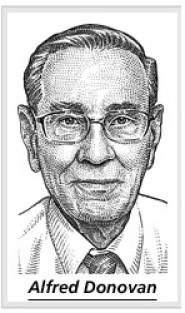 A head-cut image of Alfred Donovan (now deceased) appears courtesy of The Wall Street Journal.