Financial Times: US increases scrutiny of oil groups
“investigations are stepped up in the wake of accounting problems at Royal Dutch/Shell and elsewhere.”
By Adrian Michaels in New York
Jul 21, 2004
Some of the world’s largest oil companies will receive greater scrutiny from US lawmakers as investigations are stepped up in the wake of accounting problems at Royal Dutch/Shell and elsewhere.
Yesterday John Dingell, the senior Democrat on the House energy and commerce committee in Washington, expressed dissatisfaction with letters sent to him by US regulators about oil reserve accounting – the area of the industry’s books in which Shell revealed a huge shortfall in January.
Mr Dingell said answers to his preliminary inquiries from the Securities and Exchange Commission, the US’s senior financial regulator, were inadequate. “I am . . . underwhelmed, if not outright troubled, by the staff resources and level of review . . . given to these critical matters,” he said.
“I believe that significant reforms are called for on all of these issues and would urge prompt action on the basis of what is learned in the ongoing civil and criminal investigations.”
People close to the Democrat side of the energy committee said Mr Dingell would now write to the largest companies asking pointed questions about how they account for their reserves.
Mr Dingell’s first sweep of letters took in just the SEC, the Financial Accounting Standards Board and the Federal Energy Regulatory Commission. Mr Dingell also urged FASB yesterday to start a standard-setting project on oil reserves.
Shell, which is Anglo-Dutch, said in January it had incorrectly booked more than 4bn barrels, or 20 per cent, of its proven reserves with the SEC. Since then uncertainty has clouded how reserves are calculated with some companies moving to reassure investors over the quality of their reserves. At least Shell and the US’s El Paso are being investigated by regulators.
The SEC, in its letter to Mr Dingell, confirmed it was not considering new accounting rules, believing its reserve definitions to be “sufficiently understood to enable reasonably consistent disclosures”. People close to the agency say it is likely to press companies voluntarily to disclose more information.
Separately, a new front of inquiry will open today when the House financial services committee holds a hearing to review oil reserve accounting. The committee, headed by Michael Oxley, and the energy committee have at different times declared jurisdiction over energy accounting, a dispute which at the moment seems to be increasing oversight of the oil industry.
Mr Oxley’s hearing might ruffle more feathers at the energy committee, which is headed by the Republican Joe Barton. Mr Barton has not so far joined the investigation started by Mr Dingell – though people in Washington think he might as part of his dispute with Mr Oxley – so the Democrat letters to oil companies will not for now have the authority of the full energy committee.
© Copyright The Financial Times Ltd
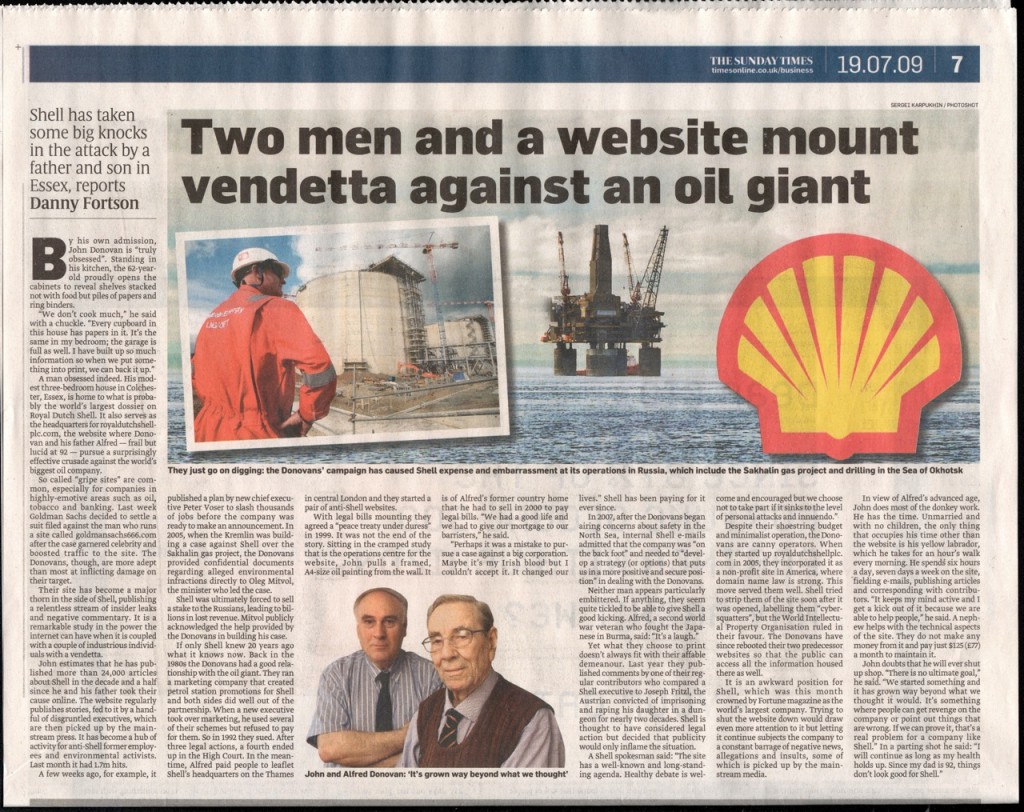
This website and sisters royaldutchshellplc.com, shellnazihistory.com, royaldutchshell.website, johndonovan.website, and shellnews.net, are owned by John Donovan. There is also a Wikipedia segment.


 Royal Dutch Shell conspired directly with Hitler, financed the Nazi Party, was anti-Semitic and sold out its own Dutch Jewish employees to the Nazis. Shell had a close relationship with the Nazis during and after the reign of Sir Henri Deterding, an ardent Nazi, and the founder and decades long leader of the Royal Dutch Shell Group. His burial ceremony, which had all the trappings of a state funeral, was held at his private estate in Mecklenburg, Germany. The spectacle (photographs below) included a funeral procession led by a horse drawn funeral hearse with senior Nazis officials and senior Royal Dutch Shell directors in attendance, Nazi salutes at the graveside, swastika banners on display and wreaths and personal tributes from Adolf Hitler and Reichsmarschall, Hermann Goring. Deterding was an honored associate and supporter of Hitler and a personal friend of Goring.

 Deterding was the guest of Hitler during a four day summit meeting at Berchtesgaden. Sir Henri and Hitler both had ambitions on Russian oil fields. Only an honored personal guest would be rewarded with a private four day meeting at Hitler’s mountain top retreat.


 IN JULY 2007, MR BILL CAMPBELL (ABOVE, A RETIRED GROUP AUDITOR OF SHELL INTERNATIONAL SENT AN EMAIL TO EVERY UK MP AND MEMBER OF THE HOUSE OF LORDS:


 MORE DETAILS:


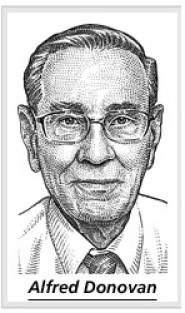 A head-cut image of Alfred Donovan (now deceased) appears courtesy of The Wall Street Journal.