The Times: Shareholders must take care when seeking retribution
PERSONAL INVESTOR
By Graham Searjeant
July 03, 2004
SETTING aside all those economic and political drawbacks, one group would justifiably have cheered to the rafters if the UK had joined the eurozone: Britain’s euro-multinationals.
Corporate life could have been easier at BAT, Pilkington, Diageo and many others. It would have been much easier at Unilever, Reed Elsevier and Shell, which have separate Dutch and British-quoted holding companies that survive in a single European market largely because of the remaining currency and legal differences.
Until this year, few seemed to mind. Shell had a single global operating organisation, Royal Dutch Shell. In practice, the American operation has been the most separate. The two holding companies, Shell Transport and Royal Dutch, harmlessly accommodated the national differences that might otherwise have led to constant, debilitating infighting. The need to meld and choose between two streams of management has also brought a steady flow of competent, rarely brilliant, managers to the top.
This year’s scandal over Shell’s overstated gas and oil reserves has called this into question. Dollar investors do not care if dividends are paid in sterling or euros. Like others, they wondered if the system of dual holding companies neutered the roles of boards in controlling the executives if they ran off the rails. When the boards needed to take a grip fast, they lost time because the joint executive was not transparently under their control.
Many shareholders have demanded improvements, on the assumption that if they do not know how Royal Dutch Shell works, something is wrong. As investors in other companies have found, however, the best corporate governance structure that disinterested bureaucrats can devise is no guarantee against bad practice, over-optimism, dodgy accounting or executive denial/cover-up.
When managers err as glaringly as Sir Phil Watts and his British and Dutch colleagues, a rather different question should be uppermost in investors’ minds. Will action or campaigning against the company be for or against shareholders’ interests? The biggest revolt at Monday’s simultaneous annual meeting came in The Hague. US and continental funds used a peculiarly Dutch corporate formality to vent their anger. Two out of five voted against a resolution signing the management off from further personal responsibility for the events of the previous year. In the circumstances, this protest was restrained.
Some investors were motivated by their desire to pursue class action lawsuits against the company. That is more worrying. Heavy awards of damages and the grinding wheels of the US Securities and Exchange Commission pose greater danger to Shell shareholders as a whole than Sir Phil’s misjudgments or his ludicrous attempt to shrug them off.
Overstatement of reserves certainly exacerbated the group’s perceived failure to find new oil. But three quarters of the presumed reserves will probably eventually have accounting value and the organisation is now energised to step up the search. By contrast, serious harassment by lawyers and regulators could destroy the group, leaving it to be bought at a bargain price by a rival.
Shareholders should uphold standards and must punish lapses, but they should be careful not to damage their own company. Looking carefully at the corporate structure might not be such a bad thing, but shareholders should take care to recognise the importance of such minor matters as currencies.
For all their recent discomforts, Shell shareholders have enjoyed steadily rising dividends. By contrast, sterling investors in the much-admired and supposedly more successful BP could see dividends fall two years running. BP dividends are declared in dollars.
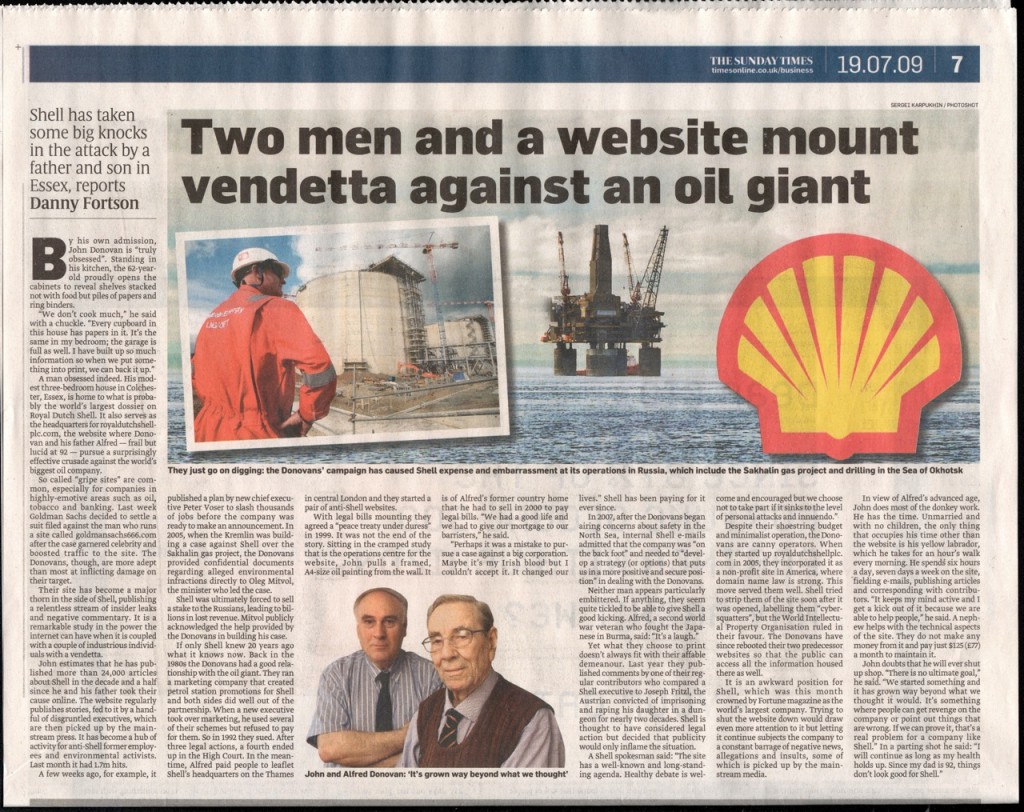
This website and sisters royaldutchshellplc.com, shellnazihistory.com, royaldutchshell.website, johndonovan.website, and shellnews.net, are owned by John Donovan. There is also a Wikipedia segment.


 Royal Dutch Shell conspired directly with Hitler, financed the Nazi Party, was anti-Semitic and sold out its own Dutch Jewish employees to the Nazis. Shell had a close relationship with the Nazis during and after the reign of Sir Henri Deterding, an ardent Nazi, and the founder and decades long leader of the Royal Dutch Shell Group. His burial ceremony, which had all the trappings of a state funeral, was held at his private estate in Mecklenburg, Germany. The spectacle (photographs below) included a funeral procession led by a horse drawn funeral hearse with senior Nazis officials and senior Royal Dutch Shell directors in attendance, Nazi salutes at the graveside, swastika banners on display and wreaths and personal tributes from Adolf Hitler and Reichsmarschall, Hermann Goring. Deterding was an honored associate and supporter of Hitler and a personal friend of Goring.

 Deterding was the guest of Hitler during a four day summit meeting at Berchtesgaden. Sir Henri and Hitler both had ambitions on Russian oil fields. Only an honored personal guest would be rewarded with a private four day meeting at Hitler’s mountain top retreat.


 IN JULY 2007, MR BILL CAMPBELL (ABOVE, A RETIRED GROUP AUDITOR OF SHELL INTERNATIONAL SENT AN EMAIL TO EVERY UK MP AND MEMBER OF THE HOUSE OF LORDS:


 MORE DETAILS:


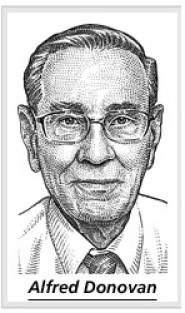 A head-cut image of Alfred Donovan (now deceased) appears courtesy of The Wall Street Journal.