Financial Times: Cairn Energy share placing set to raise £100m: “fourfold jump in its share price”: “field it acquired from Shell”
By Friederike Tiesenhausen Cave
Jul 03, 2004
Cairn Energy yesterday cashed in on the fourfold jump in its share price since the start of the year by placing 7.5m shares to raise approximately £100m.
The Edinburgh-based company has become one of the outstanding successes on the London Stock Exchange this year after striking oil three times in Rajasthan, western India, in a field it acquired from Shell, the oil and gas group.
Bill Gammell, chief executive, said: “The proceeds of the placing will provide additional flexibility for ongoing operations, supporting accelerated development of existing discoveries and further exploration activities in Rajasthan.”
Shares in Cairn have risen from 400p in January to more than £14 in June, giving Cairn a market capitalisation of more than £2bn. However, yesterday’s announcement of a 5 per cent increase in the issued capital sent the shares down 45p to £13.65.
Market sources said the placing, run as an accelerated bookbuild by Hoare Govett, was covered within hours. The shares went to institutional investors at a little less than the market price. Canaccord, Cairn’s other broker, acted as joint global co-ordinator.
Richard Rose, oil analyst at Oriel Securities, said there was currently great demand for the stock as it was sought after by fund managers investing in large as well as in small companies and because today’s share placing created some extra liquidity.
Mr Rose explained: “Cairn is still the largest stock on the Hoare Govett Small Companies Index. But unless there is a major disappointment, the company is also going to be promoted to the FTSE 100 at the next reweighting.”
Several industry analysts commented that the placing had a slightly opportunistic air about it. Richard Slade at Seymour Pierce said: “There isn’t a really pressing need to raise £100m now. I would have expected them to get a better handling on the licence situation first and then put a financial package [on how to fund further drilling] to the market.”
Cairn said it had applied to the Indian government to declare its three existing discoveries in Rajasthan commercial and to obtain a production licence. The company is also doing seismic mapping of two blocks in Bangladesh, which it last year agreed to buy from Shell for $50m (£29m) plus future royalties.
© Copyright The Financial Times Ltd
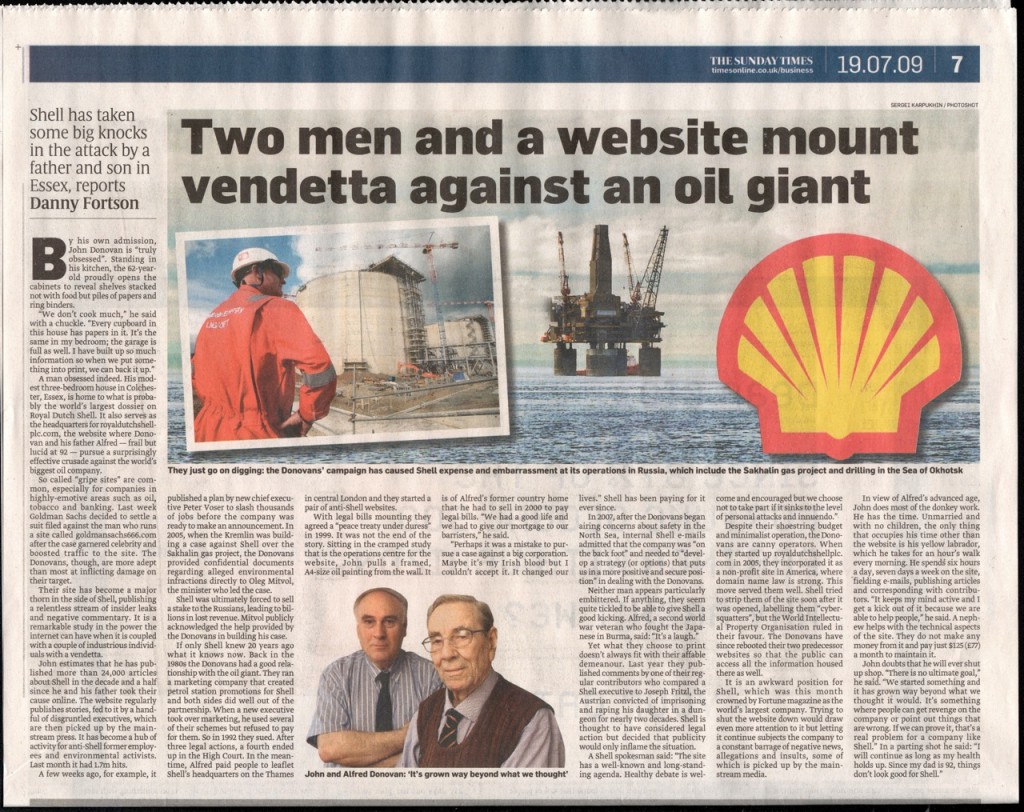
This website and sisters royaldutchshellplc.com, shellnazihistory.com, royaldutchshell.website, johndonovan.website, and shellnews.net, are owned by John Donovan. There is also a Wikipedia segment.


 Royal Dutch Shell conspired directly with Hitler, financed the Nazi Party, was anti-Semitic and sold out its own Dutch Jewish employees to the Nazis. Shell had a close relationship with the Nazis during and after the reign of Sir Henri Deterding, an ardent Nazi, and the founder and decades long leader of the Royal Dutch Shell Group. His burial ceremony, which had all the trappings of a state funeral, was held at his private estate in Mecklenburg, Germany. The spectacle (photographs below) included a funeral procession led by a horse drawn funeral hearse with senior Nazis officials and senior Royal Dutch Shell directors in attendance, Nazi salutes at the graveside, swastika banners on display and wreaths and personal tributes from Adolf Hitler and Reichsmarschall, Hermann Goring. Deterding was an honored associate and supporter of Hitler and a personal friend of Goring.

 Deterding was the guest of Hitler during a four day summit meeting at Berchtesgaden. Sir Henri and Hitler both had ambitions on Russian oil fields. Only an honored personal guest would be rewarded with a private four day meeting at Hitler’s mountain top retreat.


 IN JULY 2007, MR BILL CAMPBELL (ABOVE, A RETIRED GROUP AUDITOR OF SHELL INTERNATIONAL SENT AN EMAIL TO EVERY UK MP AND MEMBER OF THE HOUSE OF LORDS:


 MORE DETAILS:


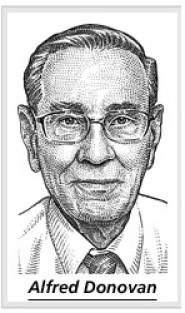 A head-cut image of Alfred Donovan (now deceased) appears courtesy of The Wall Street Journal.