The Wall Street Journal: More Oil Co Reserves Shocks Unless Rules Tighten -Banker
DOW JONES NEWSWIRES
May 28, 2004 5:05 a.m.
Posted 29 May 04
BERLIN — The oil industry faces more reserves downgrade shocks unless disclosure regulations are radically overhauled, said Matthew Simmons, chief executive and chairman of investment bank Simmons & Co (SIC.XX).
Talking to Dow Jones Newswires on the sidelines of a two-day workshop on oil depletion in Berlin this week, Simmons said: “At the moment exploration and production disclosure amounts to little more than ‘just trust us.’ No other industry gets away with this. We need a new set of disclosures. Without more transparency there’s going to be another bombshell along the lines of Shell .”
Monday Royal Dutch/Shell Group (RD, SC) announced the fourth downgrade of its oil and natural-gas reserves this year. In January the company stunned the market by cutting its proven reserves by 3.9 billion barrels, or 20% of its total.
“The Shell debacle proved that current reserves estimates can’t be trusted; they should never have been trusted,” Simmons said.
Simmons set markets talking recently with a report which threw into question the reliability of Saudi Arabia’s old oil fields and resulted in Saudi Arabian Oil Co. (SOI.YY), or Saudi Aramco, making public an unprecedented amount of reserves data.
Simmons said Saudi Aramco has already indicated it would be in favor of his proposals for more detailed disclosure and that he has already presented the proposal to the American Petroleum Institute and the U.S. Energy Information Administration.
Currently oil companies listed on the U.S. stock exchange are required to book reserves under different categories with the U.S. Securities and Exchange Commission.
According to a recent survey by UBS, medium-sized energy companies have become more aggressive in booking proved undeveloped oil and gas reserves, possibly to compensate for their inability to achieve production growth.
In 2003, energy companies reported 34.2% of their holdings as “proved undeveloped reserves,” compared with 26.5% in 1994, UBS said. These reserves, which require companies to drill additional wells or to add major new infrastructure to bring on production, are at the heart of Shell ‘s downgrade.
UBS said investors should view proved undeveloped reserves “as somewhat higher risk than developed reserves.” It said the more “aggressive” approach to booking undeveloped reserves reflects “the companies’ desires to post attractive reserve growth in an industry that has not been capable of generating production growth.”
Simmons’ proposals require that disclosures be on a field-by-field basis, reporting five years’ worth of production and indicating how many wells were producing over that time.
“That way you can analyze the production from each well and see clearly whether it’s going up or down,” Simmons said.
Critics of the proposals say that disclosure in such detail will result in a lengthy report which is time-consuming to compile.
But Simmons said it isn’t asking for any data oil companies wouldn’t have already gathered. “This is elemental data readily available,” he said. “If it takes up a lot of room in a report so be it.”
Earlier in the year Thierry Desmarest, chairman of French oil company Total SA (TOT) called for greater standardization of reserves reporting regulations and this month Norwegian energy giant Norsk Hydro ASA (NHY) asked the SEC to clarify its reserves rules regarding the Ormen Lange gas field.
By Stella Farrington, Dow Jones Newswires; +44 (0)20 7842 9346; [email protected]
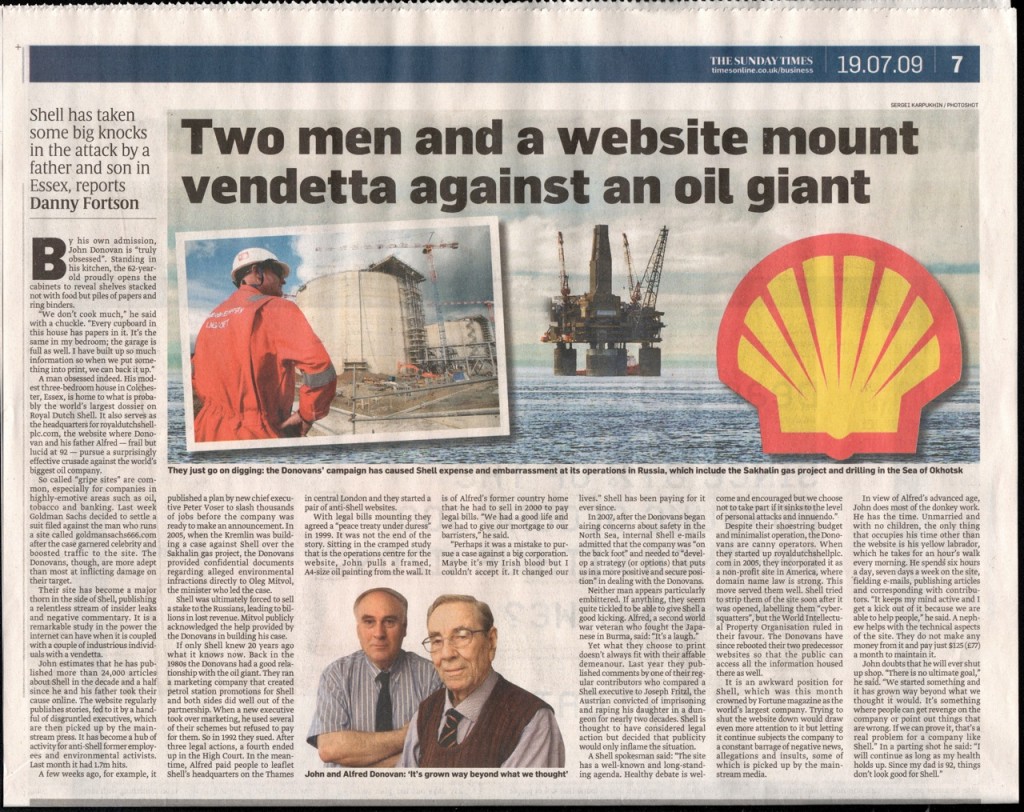
This website and sisters royaldutchshellplc.com, shellnazihistory.com, royaldutchshell.website, johndonovan.website, and shellnews.net, are owned by John Donovan. There is also a Wikipedia segment.


 Royal Dutch Shell conspired directly with Hitler, financed the Nazi Party, was anti-Semitic and sold out its own Dutch Jewish employees to the Nazis. Shell had a close relationship with the Nazis during and after the reign of Sir Henri Deterding, an ardent Nazi, and the founder and decades long leader of the Royal Dutch Shell Group. His burial ceremony, which had all the trappings of a state funeral, was held at his private estate in Mecklenburg, Germany. The spectacle (photographs below) included a funeral procession led by a horse drawn funeral hearse with senior Nazis officials and senior Royal Dutch Shell directors in attendance, Nazi salutes at the graveside, swastika banners on display and wreaths and personal tributes from Adolf Hitler and Reichsmarschall, Hermann Goring. Deterding was an honored associate and supporter of Hitler and a personal friend of Goring.

 Deterding was the guest of Hitler during a four day summit meeting at Berchtesgaden. Sir Henri and Hitler both had ambitions on Russian oil fields. Only an honored personal guest would be rewarded with a private four day meeting at Hitler’s mountain top retreat.


 IN JULY 2007, MR BILL CAMPBELL (ABOVE, A RETIRED GROUP AUDITOR OF SHELL INTERNATIONAL SENT AN EMAIL TO EVERY UK MP AND MEMBER OF THE HOUSE OF LORDS:


 MORE DETAILS:


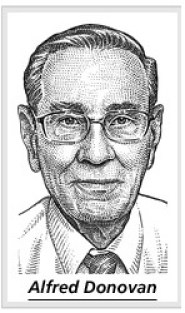 A head-cut image of Alfred Donovan (now deceased) appears courtesy of The Wall Street Journal.