The Sunday Times: Chemical reaction reflects shift to capitalism
From Carl Mortished in Hong Kong
May 15, 2004
YOU may have never heard of Huizhou, an unremarkable Chinese port on the Pearl River Delta, a couple of hours’ drive from Hong Kong. But if Li Xiufeng has his way, it will soon be as famous as Rotterdam, Houston or Singapore.
The secretary of the local branch of the Communist Party has big ambitions: “We have been to these places and we hope to build Huizhou into such a place, to become one of the most dynamic cities in southern China.”
His strategy is chemicals and while he speaks in the city hall, thousands of his constituents are working at a construction site down the road, each earning about $10 a day building a massive complex that is to become the anchor of the Daya Bay petrochemicals industrial park.
The Government has already cleared a 4.3 square kilometre site on the edge of the bay, shunting some 5,000 villagers off the site to make way for the project that will be the anchor of his grand vision, a $4.3 billion (£2.5 billion) investment by Shell and CNOOC.
The villagers, mainly peasant farmers, have been rehoused, compensated for their crops and given incentive to become urbanites in the vast workshop that is being constructed in the hinterland that lies just beyond Hong Kong’s temples of finance and trade.
In Mr Li’s brave new world, all will be entrepreneurs. The grubby, stinking village is gone and so, too, is the crazy patchwork of terraced fields. In its place is a flattened brown construction site on which Bechtel and JCB, the engineering contractors, are supervising the construction of an industrial machine that will pump out 12 millon tonnes of chemicals every year, molecules that will become television sets, car dashboards, plastic bags, bottles and packaging of every kind: the stuff of urban living.
Right now, things look good. Industrial output in Huizhou has risen by more than 20 per cent a year over the past decade. Local industries are big consumers of plastics and solvents and are the target market for Mr Li’s chemicals.
And no effort has been spared to safeguard the venture.
Simon Lam, the chief executive of the CNOOC/Shell joint venture, says that a feng shui master was consulted.
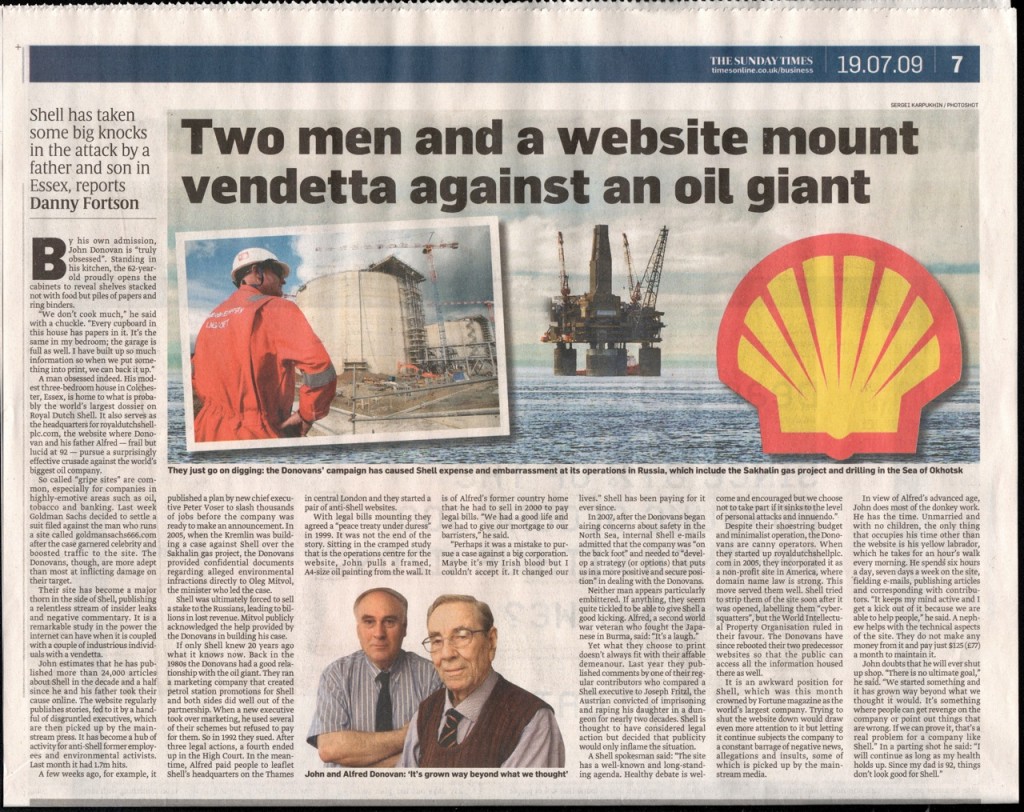
This website and sisters royaldutchshellplc.com, shellnazihistory.com, royaldutchshell.website, johndonovan.website, and shellnews.net, are owned by John Donovan. There is also a Wikipedia segment.


 Royal Dutch Shell conspired directly with Hitler, financed the Nazi Party, was anti-Semitic and sold out its own Dutch Jewish employees to the Nazis. Shell had a close relationship with the Nazis during and after the reign of Sir Henri Deterding, an ardent Nazi, and the founder and decades long leader of the Royal Dutch Shell Group. His burial ceremony, which had all the trappings of a state funeral, was held at his private estate in Mecklenburg, Germany. The spectacle (photographs below) included a funeral procession led by a horse drawn funeral hearse with senior Nazis officials and senior Royal Dutch Shell directors in attendance, Nazi salutes at the graveside, swastika banners on display and wreaths and personal tributes from Adolf Hitler and Reichsmarschall, Hermann Goring. Deterding was an honored associate and supporter of Hitler and a personal friend of Goring.

 Deterding was the guest of Hitler during a four day summit meeting at Berchtesgaden. Sir Henri and Hitler both had ambitions on Russian oil fields. Only an honored personal guest would be rewarded with a private four day meeting at Hitler’s mountain top retreat.


 IN JULY 2007, MR BILL CAMPBELL (ABOVE, A RETIRED GROUP AUDITOR OF SHELL INTERNATIONAL SENT AN EMAIL TO EVERY UK MP AND MEMBER OF THE HOUSE OF LORDS:


 MORE DETAILS:


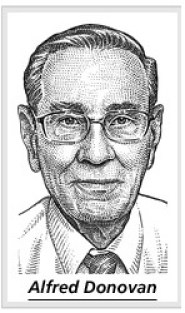 A head-cut image of Alfred Donovan (now deceased) appears courtesy of The Wall Street Journal.