 Bloomberg
Shell seeks permits to build offshore wind farms along Brazil’s coast
Shell plans to sell electricity from the wind farms to the country’s hydrogen industry
London: Energy giant Shell is seeking environmental permits to develop its first offshore wind farms along the coast of Brazil as the company pushes to speed its transition away from fossil fuels.
The London-based oil major proposes to build six projects with a combined capacity of 17 gigawatts, which would rival the output of 15 nuclear reactors. It applied for permits earlier this week with the Brazilian Institute of Environment and Renewable Natural Resources, according to Gabriela Oliveira, Shell’s head of renewable energy generation in Brazil.
“This is the first step of a very long development process,” Oliveira said in an interview. She didn’t provide an estimate on when the company expected to have the projects in operation.
Shell, which aims to achieve net-zero emissions by 2050, has been trying to expand its wind business as it pivots to renewable energy after more than a century of pumping oil. It has more than 8 gigawatts of wind projects in operation and under development, including in the US and the Netherlands. Last year, the company hired Thomas Brostrom, a veteran of Danish offshore wind giant Orsted A/S, to lead its renewable-development business.
Shell, which made its first move into the wind business over 20 years ago, is proposing to build the projects off the Brazilian states of Piaui, Ceara, Rio Grande do Norte, Espirito Santo, Rio de Janeiro and Rio Grande do Sul. They will sit an average minimum distance of 12.4 miles (20 kilometers) from the coast, the company said.
Brazil currently has about 21 gigawatts of wind power capacity, all of it onshore, accounting for about 10 per cent of the nation’s overall power generation. It gets most of its electricity, about 66 per cent, from hydropower, according to the US Energy Information Administration.
Offshore wind, however, is poised to boom. The Brazilian Institute of Environment and Renewable Natural Resources, or Ibama, is already considering proposals for more than 80 gigawatts of offshore wind. Shell expects environmental studies for its proposed projects to begin later this year. The company plans to bid into future Brazilian power auctions and hopes to also sell electricity from the wind farms to the country’s nascent hydrogen industry.


 Royal Dutch Shell conspired directly with Hitler, financed the Nazi Party, was anti-Semitic and sold out its own Dutch Jewish employees to the Nazis. Shell had a close relationship with the Nazis during and after the reign of Sir Henri Deterding, an ardent Nazi, and the founder and decades long leader of the Royal Dutch Shell Group. His burial ceremony, which had all the trappings of a state funeral, was held at his private estate in Mecklenburg, Germany. The spectacle (photographs below) included a funeral procession led by a horse drawn funeral hearse with senior Nazis officials and senior Royal Dutch Shell directors in attendance, Nazi salutes at the graveside, swastika banners on display and wreaths and personal tributes from Adolf Hitler and Reichsmarschall, Hermann Goring. Deterding was an honored associate and supporter of Hitler and a personal friend of Goring.

 Deterding was the guest of Hitler during a four day summit meeting at Berchtesgaden. Sir Henri and Hitler both had ambitions on Russian oil fields. Only an honored personal guest would be rewarded with a private four day meeting at Hitler’s mountain top retreat.


 IN JULY 2007, MR BILL CAMPBELL (ABOVE, A RETIRED GROUP AUDITOR OF SHELL INTERNATIONAL SENT AN EMAIL TO EVERY UK MP AND MEMBER OF THE HOUSE OF LORDS:


 MORE DETAILS:


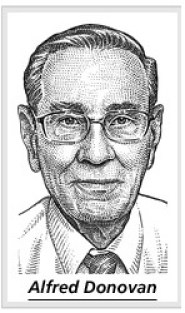 A head-cut image of Alfred Donovan (now deceased) appears courtesy of The Wall Street Journal.