CNN

Shell scraps plans to develop Cambo North Sea oilfield
Story by Reuters: Updated 2232 GMT (0632 HKT) December 2, 2021
Royal Dutch Shell said on Thursday it had scrapped plans to develop the Cambo oilfield in the British North Sea, which became a lightning rod for climate activists seeking to halt the development of new oil and gas resources.
Following “comprehensive screening” of the Cambo field, Shell “concluded the economic case for investment in this project is not strong enough at this time, as well as having the potential for delays,” the company said in a statement.
The Cambo project off the Shetland Isles has been at the center of a political debate on whether Britain should develop new fossil fuel resources as it seeks to become a net zero carbon economy by 2050.
Climate activists have pointed to a report by the International Energy Agency (IEA) saying that no new oil and gas projects should be developed in order to restrict global warming to 1.5 degrees Celsius.
“Cambo remains critical to the UK’s energy security and economy,” Siccar Point Chief Executive Officer Jonathan Roger said in a statement.
Britain’s government has also responded to the IEA report by saying energy security is important. During the COP26 climate conference which was held under British auspices last month, Britain also declined to join an alliance of countries pledging to stop new oil and gas developments on their territory.
“Whilst we are disappointed at Shell’s change of position … we will continue to engage with the UK Government and wider stakeholders on the future development of Cambo,” he said.
Friends of the Earth, an activist group which won a climate court case against Shell in the Netherlands this year applauded the move.
“The future of the project is now in serious doubt — as it should be. There is no need for a new oil field during a climate crisis,” the group said on Twitter.
Shell owns 30% in the project, while Siccar Point, which operates it, holds the remaining 70%. The field could produce up to 170 million barrels of oil equivalent and 53.5 billion cubic feet of gas over 25 years, according to Siccar Point.
It was unclear whether the field could be developed without Shell’s support.
Shell faced another setback for its plans in the British North Sea in October when a regulator rejected plans to develop the Jackdaw gasfield after considering its environmental statement, industry sources said.


 Royal Dutch Shell conspired directly with Hitler, financed the Nazi Party, was anti-Semitic and sold out its own Dutch Jewish employees to the Nazis. Shell had a close relationship with the Nazis during and after the reign of Sir Henri Deterding, an ardent Nazi, and the founder and decades long leader of the Royal Dutch Shell Group. His burial ceremony, which had all the trappings of a state funeral, was held at his private estate in Mecklenburg, Germany. The spectacle (photographs below) included a funeral procession led by a horse drawn funeral hearse with senior Nazis officials and senior Royal Dutch Shell directors in attendance, Nazi salutes at the graveside, swastika banners on display and wreaths and personal tributes from Adolf Hitler and Reichsmarschall, Hermann Goring. Deterding was an honored associate and supporter of Hitler and a personal friend of Goring.

 Deterding was the guest of Hitler during a four day summit meeting at Berchtesgaden. Sir Henri and Hitler both had ambitions on Russian oil fields. Only an honored personal guest would be rewarded with a private four day meeting at Hitler’s mountain top retreat.


 IN JULY 2007, MR BILL CAMPBELL (ABOVE, A RETIRED GROUP AUDITOR OF SHELL INTERNATIONAL SENT AN EMAIL TO EVERY UK MP AND MEMBER OF THE HOUSE OF LORDS:


 MORE DETAILS:


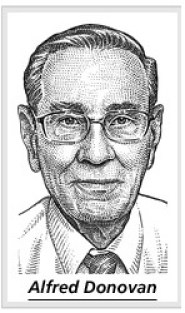 A head-cut image of Alfred Donovan (now deceased) appears courtesy of The Wall Street Journal.