 Coronavirus Takes a Toll on Shell Imposing $15-$22B Write-Offs

What Does the Record Write-Down Imply?
The energy industry, grappling with the twin demerits of oversupply and low pricing, expects the weak macro environment to persist. Companies like Shell and BP are carrying assets on their balance sheets that were purchased/developed at a time when commodity prices were materially higher than the current figures. As the market deteriorates, the operators are ultimately forced to take write-offs.
Other Measures by Shell to Survive the Downturn
By now, we all know that the oil price is constantly trending in the bear territory following the plaguing pandemic’s adverse impact on global energy demand. As a result, the outlook for all industries in the energy sector business seems lackluster. Thus, energy players are ramping down their operational activities by limiting capital budgets. However, Shell’s overall demand for its oil products was not much affected by the COVID-19 in the first quarter. For the rest of the year, the company announced plans to slash its 2020 capital expense by a minimum $5 billion from the past projection of $25 billion along with material reductions in working capital. It further aims to cut operating costs by $3-$4 billion over the next 12 months. These capex measures are anticipated to enhance Shell’s free cash flow generation to $8-$9 billion on a pre-tax basis.
Shell, a reliable high-yield income choice till recently, also trimmed its quarterly dividend by two-thirds to weather the historic oil price crash and preserve cash. Incidentally, this strategic action was executed for the first time since World War II. It is set to deal a heavy blow to income investors who held the stock for its above-average dividend yield and capacity to sustain its payout. Management further stated that it will suspend the next installment of its stock repurchase program.
Now let’s delve into some key segmental revisions in second-quarter 2020.
Upstream
The upstream production is projected between 2,300 and 2,400 thousand barrels of oil equivalent per day (boe/d). The year-ago production was 2,656 thousand boe/d. However, Shell had earlier predicted its second-quarter 2020 upstream volumes to be 1,750-2,250 thousand boe/d.
Downstream
Shell estimates second-quarter oil product sales in the band of 3,500-4,500 thousand barrels per day. This indicates a 46.8% decrease from the year-earlier reported number due to a dramatic drop in demand stemming from the adverse COVID-19 impact, assuming that the upper end of the estimate will be met. This Netherlands-based company anticipates its refinery availability between 67% and 71%. Moreover, its chemical sales volumes are projected between 3,400 and 3,700 thousand tons, suggesting a marginal fall from the year-ago reported figure.
Integrated Gas
The company expects second-quarter LNG liquefaction volumes to contract to 8.1-8.5 million tonnes from its previous year’s quarterly output of 8.66 million tonnes. Moreover, its segmental production is forecast in the 880-910 thousand boe/d band. In the year-earlier period, Shell produced 927 thousand boe/d. Compared with the prior-year quarter, the company expects to incur additional $250-$350 million well write-offs for the ongoing quarter due to tepid macroeconomic outlook.
This presently Zacks Rank #3 (Hold) player belongs to a global group of energy and petrochemical companies. It is involved in all phases of the petroleum industry from exploration to final processing and delivery. The company is scheduled to release second-quarter earnings on Jul 30, 2020. Its peers Chevron CVX, ExxonMobil XOM and BP also plan to release earnings performance around the same time. The Zacks Consensus Estimate for the company’s second-quarter bottom line is pegged at be 51 cents per share.


 Royal Dutch Shell conspired directly with Hitler, financed the Nazi Party, was anti-Semitic and sold out its own Dutch Jewish employees to the Nazis. Shell had a close relationship with the Nazis during and after the reign of Sir Henri Deterding, an ardent Nazi, and the founder and decades long leader of the Royal Dutch Shell Group. His burial ceremony, which had all the trappings of a state funeral, was held at his private estate in Mecklenburg, Germany. The spectacle (photographs below) included a funeral procession led by a horse drawn funeral hearse with senior Nazis officials and senior Royal Dutch Shell directors in attendance, Nazi salutes at the graveside, swastika banners on display and wreaths and personal tributes from Adolf Hitler and Reichsmarschall, Hermann Goring. Deterding was an honored associate and supporter of Hitler and a personal friend of Goring.

 Deterding was the guest of Hitler during a four day summit meeting at Berchtesgaden. Sir Henri and Hitler both had ambitions on Russian oil fields. Only an honored personal guest would be rewarded with a private four day meeting at Hitler’s mountain top retreat.


 IN JULY 2007, MR BILL CAMPBELL (ABOVE, A RETIRED GROUP AUDITOR OF SHELL INTERNATIONAL SENT AN EMAIL TO EVERY UK MP AND MEMBER OF THE HOUSE OF LORDS:


 MORE DETAILS:


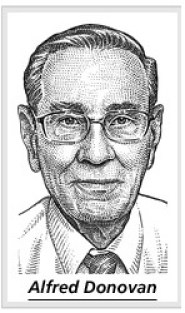 A head-cut image of Alfred Donovan (now deceased) appears courtesy of The Wall Street Journal.