

 FEBRUARY 5, 2020
(Reuters) – Royal Dutch Shell, which plans billions of dollars in spending on shale drilling projects, boosted output in the top U.S. shale field to 250,000 barrels per day in December, the company’s Permian Basin head said on Wednesday.
Shell plans to spend about $3 billion per year for the next five years on shale projects, said Amir Gerges, vice president of Permian assets for Shell, at the Argus Americas Crude Summit in Houston. Its Permian Basin production rose more than 100,000 barrels per day in the last year.
“We continue to ramp up our production from our core acreage,” Gerges said.
Shell and rival oil majors Exxon Mobil, Chevron and BP are spending billions in the Permian Basin of Texas and New Mexico. The companies see shale as a short-cycle asset that complements projects such as deepwater wells that take years to bring into production.
The Permian has 30 years of so-called “tier one” high quality drilling inventory and will remain at the heart of U.S. oil growth, Gerges said. But the industry faces challenges in the region, ranging from too much natural gas flaring to inadequate infrastructure and “even today’s investor sentiments,” he said.
Previously, Shell indicated it might seek a way to expand its presence in the Permian, but during last week’s earnings call, Chief Executive Officer Ben van Beurden indicated the timing is not right for an acquisition.
“I think anything inorganic would not be the right thing to do,” van Beurden said.
Oil and gas companies of all sizes have been under pressure to produce more free cash and return it to investors through share buybacks and dividends.
The industry also faces pressures to reduce emissions, especially from prolific gas flaring, deliberately burning gas produced as a byproduct to oil. The practice can worsen climate change by releasing carbon dioxide.
The U.S. drilling industry flared or vented more natural gas in 2019 for the third year in a row, as soaring production in Texas, New Mexico, and North Dakota have overwhelmed regulatory efforts to curb the practice, according to state data and independent research estimates.
“The flaring and emissions in the Permian Basin have become famous and it’s not something we would like to be recognized for,” Gerges said.
The region needs more infrastructure such as natural gas pipelines, but it is more important to have “robust, fit-for-purpose policies and regulatory requirements that incentivize reduction in flaring,” Gerges said.
Reporting by Jennifer Hiller in Houston; Editing by Bernadette Baum and David Gregorio


 Royal Dutch Shell conspired directly with Hitler, financed the Nazi Party, was anti-Semitic and sold out its own Dutch Jewish employees to the Nazis. Shell had a close relationship with the Nazis during and after the reign of Sir Henri Deterding, an ardent Nazi, and the founder and decades long leader of the Royal Dutch Shell Group. His burial ceremony, which had all the trappings of a state funeral, was held at his private estate in Mecklenburg, Germany. The spectacle (photographs below) included a funeral procession led by a horse drawn funeral hearse with senior Nazis officials and senior Royal Dutch Shell directors in attendance, Nazi salutes at the graveside, swastika banners on display and wreaths and personal tributes from Adolf Hitler and Reichsmarschall, Hermann Goring. Deterding was an honored associate and supporter of Hitler and a personal friend of Goring.

 Deterding was the guest of Hitler during a four day summit meeting at Berchtesgaden. Sir Henri and Hitler both had ambitions on Russian oil fields. Only an honored personal guest would be rewarded with a private four day meeting at Hitler’s mountain top retreat.


 IN JULY 2007, MR BILL CAMPBELL (ABOVE, A RETIRED GROUP AUDITOR OF SHELL INTERNATIONAL SENT AN EMAIL TO EVERY UK MP AND MEMBER OF THE HOUSE OF LORDS:


 MORE DETAILS:


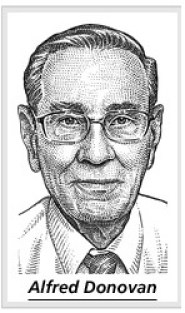 A head-cut image of Alfred Donovan (now deceased) appears courtesy of The Wall Street Journal.