 Parliamentarians voted on Tuesday to establish an expert commission to examine how to make taxing multinationals “more fair” after Netherlands-based Shell recently acknowledged it had paid virtually no Dutch corporation tax in 2018. Royal Dutch Shell refused to release details of its unique advance tax ruling with the Dutch government at a recent hearing of a parliamentary panel on taxation.


By John O’Donnell and Toby Sterling
THE HAGUE (Reuters) – Dutch lawmakers have launched an inquiry into how to make multinationals pay their fair share of tax, after public criticism that government reforms do not go far enough.
Scores of multinationals use the Netherlands to pare their tax bills but the Dutch, who bore tax hikes after the financial crisis, are growing increasingly hostile to minimising company tax, which is legal and has gone unchallenged for decades.
Parliamentarians voted on Tuesday to establish an expert commission to examine how to make taxing multinationals “more fair” after Netherlands-based Shell recently acknowledged it had paid virtually no Dutch corporation tax in 2018. Royal Dutch Shell refused to release details of its unique advance tax ruling with the Dutch government at a recent hearing of a parliamentary panel on taxation.
“The Dutch people take note that one pays income tax when earning a minimum wage but some multinationals make (a) profit and pay no taxes,” Pieter Omtzigt, the Dutch Christian Democrat parliamentarian who instigated the vote, told Reuters.
Government data shows that more than 4 trillion euros ($4.5 trillion) of assets, more than four times the size of the Dutch economy, are parked with thousands of letter box companies in the Netherlands. Many are used to route profits to low-tax countries.
“During election times, parties committed to limit the flow. The government needs to deliver,” Omtzigt said.
‘SHADYROOMS’
Menno Snel, the top Dutch official in charge, said the government intends to introduce reforms to break with the image of “deal-making … in shady rooms”.
Snel will target letter-box companies with a tax on outgoing payments to discourage 22 billion euros of royalty payments moving through the Netherlands, chiefly to Bermuda.
“If a company is trying to come ashore here for only one reason, to channel capital away, I make sure that this company is not feeling welcome any more,” Snel said.
He also wants to publish ‘advance tax rulings’ previously decided in secret by tax authorities for companies, who use them to establish the legality of tax structures.
Lawmakers have said the government measures fell short of what is needed and called for more details to be published of tax rulings, including the company name.
“Many people feel they paid for the financial crisis,” said Bart Snels, a member of parliament from the Green party. “Now they see they still have to pay higher taxes. VAT has risen and corporate taxes are lowered. They are angry.”
Paul Tang, a member of the European Parliament, said the Dutch reforms were “highly symbolic”, pointing to the gradual lowering of the main corporate tax rate to 20.5% in 2021.
“They just keep on continuing the race to the bottom.”
Philips and Akzo Nobel told the parliamentary hearing that they also paid little or no Dutch corporation tax in 2018. Unilever, which routinely discloses its taxes, paid a modest 30 million euros. [L8N235623]
Snel said that while firms should still have a “red carpet treatment”, the Netherlands would not be “only tax friendly”.
The Tax Justice Network, which campaigns for transparency, has placed the Netherlands near the top of a global ranking of countries that helped to cut corporate tax bills. [L8N2332FN]
“15 years ago, no-one in the Netherlands knew this tax avoidance was going on,” Francis Weyzig, a tax expert at anti-poverty charity Oxfam, said.
“They know now. And they are angry.”
($1 = 0.8825 euros)
(Editing by Alexander Smith)
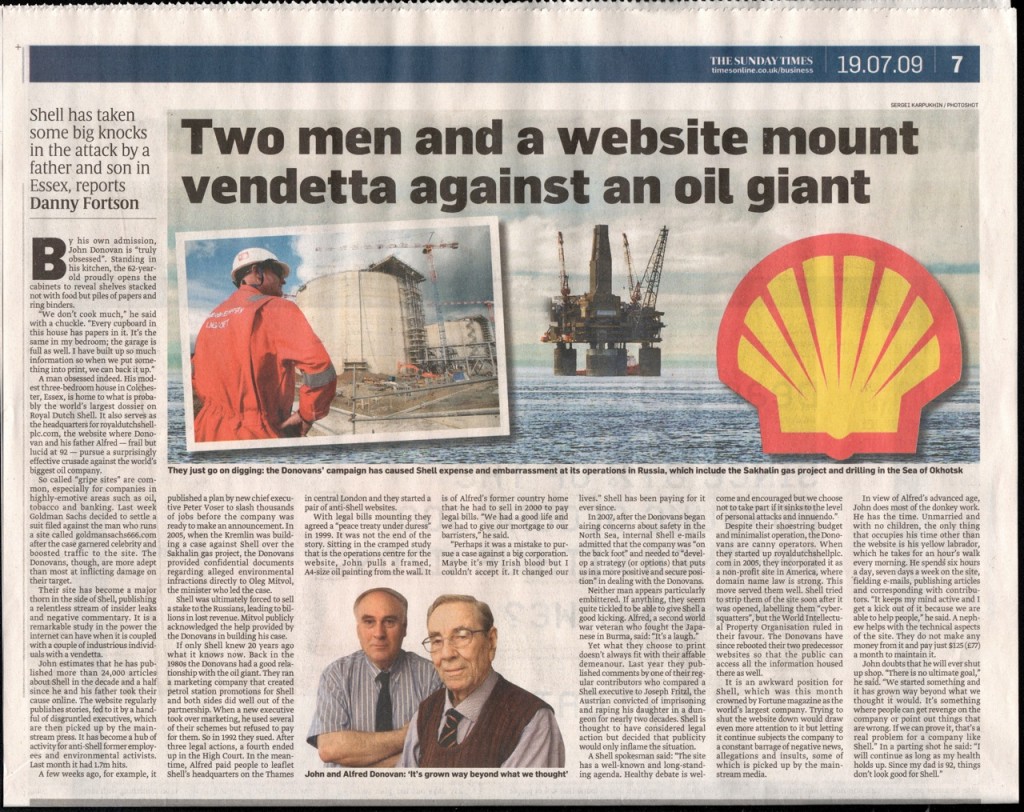
This website and sisters royaldutchshellplc.com, shellnazihistory.com, royaldutchshell.website, johndonovan.website, and shellnews.net, are owned by John Donovan. There is also a Wikipedia segment.


 Royal Dutch Shell conspired directly with Hitler, financed the Nazi Party, was anti-Semitic and sold out its own Dutch Jewish employees to the Nazis. Shell had a close relationship with the Nazis during and after the reign of Sir Henri Deterding, an ardent Nazi, and the founder and decades long leader of the Royal Dutch Shell Group. His burial ceremony, which had all the trappings of a state funeral, was held at his private estate in Mecklenburg, Germany. The spectacle (photographs below) included a funeral procession led by a horse drawn funeral hearse with senior Nazis officials and senior Royal Dutch Shell directors in attendance, Nazi salutes at the graveside, swastika banners on display and wreaths and personal tributes from Adolf Hitler and Reichsmarschall, Hermann Goring. Deterding was an honored associate and supporter of Hitler and a personal friend of Goring.

 Deterding was the guest of Hitler during a four day summit meeting at Berchtesgaden. Sir Henri and Hitler both had ambitions on Russian oil fields. Only an honored personal guest would be rewarded with a private four day meeting at Hitler’s mountain top retreat.


 IN JULY 2007, MR BILL CAMPBELL (ABOVE, A RETIRED GROUP AUDITOR OF SHELL INTERNATIONAL SENT AN EMAIL TO EVERY UK MP AND MEMBER OF THE HOUSE OF LORDS:


 MORE DETAILS:


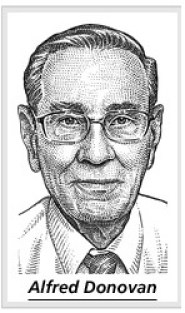 A head-cut image of Alfred Donovan (now deceased) appears courtesy of The Wall Street Journal.