

 By Mark Lammey: 6 MAY 2019
Deep-water Gulf of Mexico has always been about making the impossible possible, according to Rick Tallant, Shell’s vice-president of production for the region.
Now, Shell is trying to make the possible affordable, he said.
Mr Tallant said companies had to do a lot of “soul searching” during the downturn to work out how the industry could survive and compete with Brazil, West Africa and parts of Asia.
A shift in the industry’s mindset and culture was vital in the quest to reinvent itself and get “fit for the future” in the GoM, he said.
Shell spent a lot of time focusing on lowering operating costs and investing more wisely, which meant embracing standardisation, harnessing the local supply chain, and vastly improving performance management.
He said the approach helped Shell bring its breakeven down from a range of $70-$80 per barrel to nearer $30.
Mr Tallant said: “When you are faced with this crisis of low oil prices and halving your revenues overnight, how do you make sure you can create a resilient business that can survive through that?
“It really has been a cultural shift more than anything else that has helped us create a more competitive business.”
Despite the headwinds, Shell has been highly productive in the GoM and has broken new ground. Stones, the world’s deepest offshore oil and gas project at 9,500ft, was brought on stream in 2016, served by an FPSO.
In May 2018, production started from phase one of the 100 million barrel Kaikias development, a tieback to the Ursa platform.
Shell is now ready for another growth phase in the region, and has an “extremely exciting” portfolio of opportunities to go after, Mr Tallant said.
And first oil from Appomattox, Shell’s largest floating platform in GoM, is slated for the third quarter of 2019. Shell spent about $15 billion on its deepwater GoM business over the past five years and is ready to invest on a similar scale during the next five.
A final investment decision was made last year on the Vito project, which illustrates everything Mr Tallant spoke about regarding Shell’s lower-cost developmental approach.
In 2015, Shell went back to the drawing board with Vito in an effort to slash costs by more than 70%, using standard industry designs, working closely with suppliers on well design and completions, subsea, contracting, and topsides design.
Vito’s break-even price was estimated to be less than $35
per barrel at sanction.
The project should come online in late 2021.
Shell is also working on some promising exploration finds and “reloaded” its exploration portfolio through its domination of the 252nd US GoM lease sale, the results of which were revealed earlier this year.
The company tabled 87 high bids totalling $84.8 million, far and away the highest numbers in each category.
Furthermore, Shell has plenty more opportunities for tiebacks in the Norphlet area, where the Appomattox platform is located.
Tiebacks are attractive because of their affordability and have played a big role in Shell’s growth, particularly in the Mars corridor, where the company has three platforms in close proximity – Mars, Olympus and Ursa.
Mr Tallant highlighted three aspects that make the GoM an attractive place to do business.
He said: “The first thing is the geology. You must have the rock and the resources – the possibility of having material exploration finds.
“We have been in this basin for generations and have really good knowledge of it.
“We are familiar with the geology and the rock there and know there are plenty of opportunities for new exploration finds.
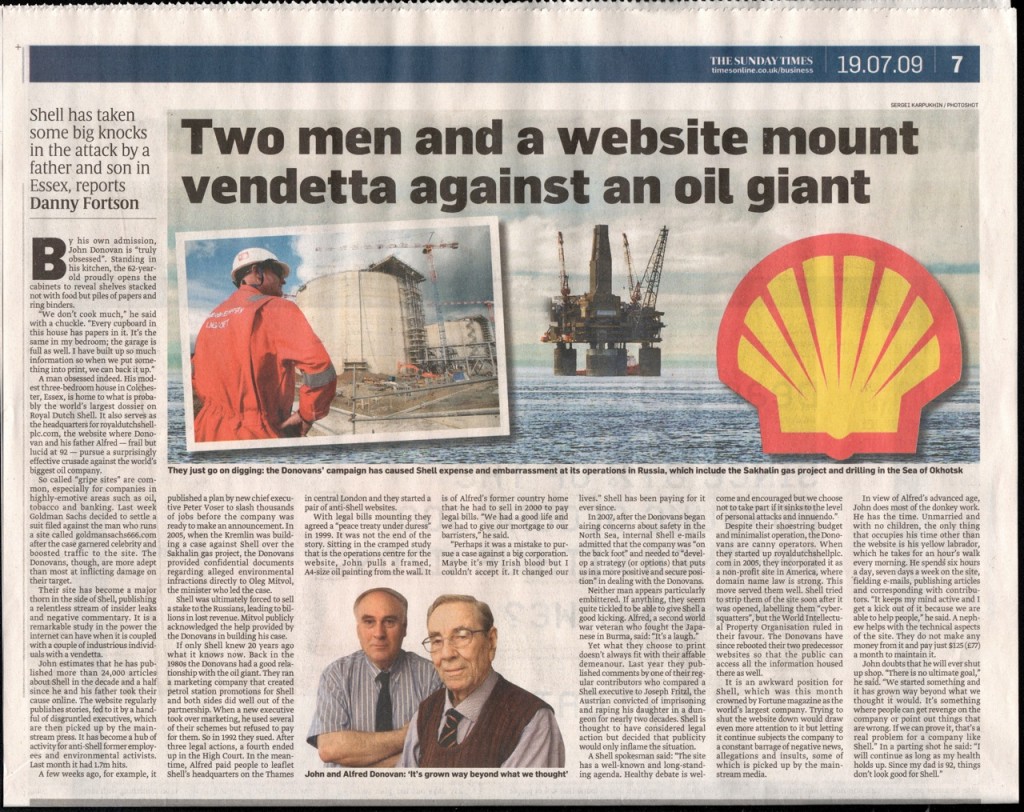
This website and sisters royaldutchshellplc.com, shellnazihistory.com, royaldutchshell.website, johndonovan.website, and shellnews.net, are owned by John Donovan. There is also a Wikipedia segment.


 Royal Dutch Shell conspired directly with Hitler, financed the Nazi Party, was anti-Semitic and sold out its own Dutch Jewish employees to the Nazis. Shell had a close relationship with the Nazis during and after the reign of Sir Henri Deterding, an ardent Nazi, and the founder and decades long leader of the Royal Dutch Shell Group. His burial ceremony, which had all the trappings of a state funeral, was held at his private estate in Mecklenburg, Germany. The spectacle (photographs below) included a funeral procession led by a horse drawn funeral hearse with senior Nazis officials and senior Royal Dutch Shell directors in attendance, Nazi salutes at the graveside, swastika banners on display and wreaths and personal tributes from Adolf Hitler and Reichsmarschall, Hermann Goring. Deterding was an honored associate and supporter of Hitler and a personal friend of Goring.

 Deterding was the guest of Hitler during a four day summit meeting at Berchtesgaden. Sir Henri and Hitler both had ambitions on Russian oil fields. Only an honored personal guest would be rewarded with a private four day meeting at Hitler’s mountain top retreat.


 IN JULY 2007, MR BILL CAMPBELL (ABOVE, A RETIRED GROUP AUDITOR OF SHELL INTERNATIONAL SENT AN EMAIL TO EVERY UK MP AND MEMBER OF THE HOUSE OF LORDS:


 MORE DETAILS:


 A head-cut image of Alfred Donovan (now deceased) appears courtesy of The Wall Street Journal.