

Shell agrees farm-in to Cluff North Sea licence
Written by Allister Thomas –
Cluff Natural Resources (CLNR) has announced it will farm-out a southern North Sea licence to Shell, with the possibility of an agreement on a second.
The deal will see CLNR farm-out 70% of its P2252 licence to the energy giant, which contains the Penascola prospect estimated to hold around 100 million barrels of oil equivalent.
Cluff will retain the remaining 30% non-operated interest and the costs will be “satisfied by each party in proportion to their working interests”.
The agreed work programme includes shooting of at least 400km2 of new seismic data over the Penascola prospect this summer to support a well investment decision before the end of 2020.
CLNR’s share price has surged nearly 40% this morning following the announcement.
Shell has also been granted the option to acquire 50% of Cluff’s P2437 licence by April 30 for £463,335.
The licence contains the Selene prospect, estimated to hold around 90million barrels of oil equivalent, and lies adjacent to Shell’s Barque gas field infrastructure.
If a decision is taken to drill an exploration well, Shell would cover 75% of the costs up to a total of £19.3m.
CLNR, which was founded by oil and gas veteran Algy Cluff, described it as an “endorsement” of the quality of the licences.
Chief executive Graham Swindells said: “We are delighted to be able to announce the farm-out of Licence P2252 and the terms of an option to farm out Licence P2437 with a partner of this standing.
“This partnership is a clear endorsement of the quality of the licences in our portfolio and demonstrates the Cluff technical team’s ability to identify and transform overlooked or less understood opportunities.
“We are particularly excited at the prospect of embarking on our partnership with Shell with both parties sharing a commitment to further development in the Southern North Sea.
“Most importantly, we now have direct visibility over the route to future drilling activity, and the potential to create further significant value for shareholders.
“We look forward to building our partnership with Shell and successfully developing these prospects.”
Cluff, which has been on a long-running hunt for a partner, announced in November that it entered into an exclusivity agreement with a “major international oil and gas company” back in November.
The firm also confirmed today it is no longer in non-exclusive negotiations with its preferred bidder for the P2248 licence, as the bidder could not demonstrate the financial capacity to fund the work.
CLNR has until 29 February to find a partner or it will be forced to drop the licence.


 Royal Dutch Shell conspired directly with Hitler, financed the Nazi Party, was anti-Semitic and sold out its own Dutch Jewish employees to the Nazis. Shell had a close relationship with the Nazis during and after the reign of Sir Henri Deterding, an ardent Nazi, and the founder and decades long leader of the Royal Dutch Shell Group. His burial ceremony, which had all the trappings of a state funeral, was held at his private estate in Mecklenburg, Germany. The spectacle (photographs below) included a funeral procession led by a horse drawn funeral hearse with senior Nazis officials and senior Royal Dutch Shell directors in attendance, Nazi salutes at the graveside, swastika banners on display and wreaths and personal tributes from Adolf Hitler and Reichsmarschall, Hermann Goring. Deterding was an honored associate and supporter of Hitler and a personal friend of Goring.

 Deterding was the guest of Hitler during a four day summit meeting at Berchtesgaden. Sir Henri and Hitler both had ambitions on Russian oil fields. Only an honored personal guest would be rewarded with a private four day meeting at Hitler’s mountain top retreat.


 IN JULY 2007, MR BILL CAMPBELL (ABOVE, A RETIRED GROUP AUDITOR OF SHELL INTERNATIONAL SENT AN EMAIL TO EVERY UK MP AND MEMBER OF THE HOUSE OF LORDS:


 MORE DETAILS:


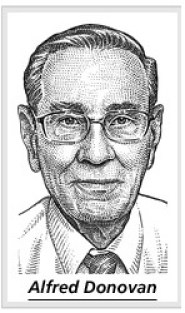 A head-cut image of Alfred Donovan (now deceased) appears courtesy of The Wall Street Journal.