

HOUSTON — In a setback to Trump administration efforts to increase offshore oil production, the industry responded with only modest interest on Wednesday in a federal auction covering a record 77 million acres in the Gulf of Mexico.
Companies bid on only 1 percent of the acreage, and the winning bids yielded a mere $125 million for the government.
The results reflected broad uncertainty among oil executives that global oil prices can remain at current levels over $60 a barrel, as well as a general preference for drilling in onshore shale fields that require smaller investments and are less risky.
Administration officials characterized the auction as a success since major oil companies — Royal Dutch Shell, BP, Chevron and Total — had placed over 150 bids, and the yield tally was $3 million above a regional lease sale in August.
But independent analysts said the results were modest.
“Operators appear to still be in a ‘wait and see’ mentality when it comes to exploration, looking for stability in oil prices,” said William Turner, senior research analyst at Wood Mackenzie, a consultancy influential in the oil patch.
Winning bids averaged just over $150 an acre, a bargain compared with what oil companies paid in recent years.
Drilling in the gulf, and in other deep waters, slowed considerably after the BP Deepwater Horizon explosion in 2010, which killed 11 workers and soiled water and beaches with oil.
But interest is slowly picking up again, with companies like Exxon Mobil, Royal Dutch Shell and Hess starting major oil and gas projects off the coasts of Guyana, Brazil and Mexico; around Africa; and in the Mediterranean.
In a recent interview, the Royal Dutch Shell chief executive, Ben van Beurden, said deepwater exploration “is back absolutely.” He said lower oil prices had served as a catalyst for advances in technology and project planning that have reduced the break-even price for deepwater development from $70 a barrel to close to $30.
“You see the industry has gone through a tremendous amount of adjustment,” he added.
Still, in recent years, more American investment has gone into shale fields in Texas and North Dakota, and it is mostly that production that is driving United States oil output to records levels and produced major exports for the first time in decades.


 Royal Dutch Shell conspired directly with Hitler, financed the Nazi Party, was anti-Semitic and sold out its own Dutch Jewish employees to the Nazis. Shell had a close relationship with the Nazis during and after the reign of Sir Henri Deterding, an ardent Nazi, and the founder and decades long leader of the Royal Dutch Shell Group. His burial ceremony, which had all the trappings of a state funeral, was held at his private estate in Mecklenburg, Germany. The spectacle (photographs below) included a funeral procession led by a horse drawn funeral hearse with senior Nazis officials and senior Royal Dutch Shell directors in attendance, Nazi salutes at the graveside, swastika banners on display and wreaths and personal tributes from Adolf Hitler and Reichsmarschall, Hermann Goring. Deterding was an honored associate and supporter of Hitler and a personal friend of Goring.

 Deterding was the guest of Hitler during a four day summit meeting at Berchtesgaden. Sir Henri and Hitler both had ambitions on Russian oil fields. Only an honored personal guest would be rewarded with a private four day meeting at Hitler’s mountain top retreat.


 IN JULY 2007, MR BILL CAMPBELL (ABOVE, A RETIRED GROUP AUDITOR OF SHELL INTERNATIONAL SENT AN EMAIL TO EVERY UK MP AND MEMBER OF THE HOUSE OF LORDS:


 MORE DETAILS:


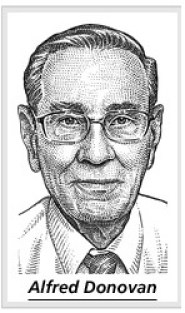 A head-cut image of Alfred Donovan (now deceased) appears courtesy of The Wall Street Journal.