

 Ron Bousso: MARCH 21, 2018
LONDON (Reuters) – Royal Dutch Shell is placing a big bet on petrol stations and convenience stores in China, India and Mexico as it looks to shore up profits during the electric car revolution.
By 2025, the oil and gas giant plans to grow its global network of roadside stations by nearly a quarter to 55,000, targeting 40 million daily customers, Shell said in a statement on Wednesday.
It will add another 5,000 convenience stores selling coffee and snacks, with growth focused on rapidly growing economies in emerging markets.
Shell, as well as rivals such as BP, sees retail as a way to secure demand for the fuels it refines, as consumption could peak as early as by the end of the next decade due to the growth in electric vehicles.
“We plan to be leading through the energy transition,” Shell head of downstream John Abbott said in an investor presentation on Wednesday.
Already one of the world’s biggest retailers with a well known brand, Shell expects earning from its marketing and commercial businesses to grow annually by 7 percent into 2025, when it will deliver $4 billion in earnings.
The company is also rolling out a number of experimental initiatives to introduce electric battery chargers and hydrogen chargers to its traditional petrol stations, hoping to capture some of the growth in the non-combustion engines.
The fuel marketing sector nevertheless faces a risk of overcrowding as many companies see growth potential there, warned Biraj Borkhataria, analyst at RBC Capital Markets.
“We are more sceptical on Shell’s plans in retail, as the market is fiercely competitive and the ongoing threat of EVs (electric vehicles) could put some of that earnings stream at risk.”
The Anglo-Dutch company said its downstream business, which includes refining, trading, marketing and chemicals, will generate $6-$7 billion organic free cash flow per year by 2020 based on a Brent crude oil price of $60 a barrel.
Free cash generation for the whole company is expected to reach $25-$30 billion over the same period. Shell delivered $15 billion in organic free cash flow in 2017.
By 2025, cashflow from downstream is expected to grow to $9-$12 billion.
Downstream proved its importance during the oil industry’s downturn since 2014, providing the bulk of Shell’s profits as the price of crude collapsed.
Shell has in recent years transformed its downstream business by selling some plants and upgrading others, helping the company ride out oil price fluctuations and shifts in demand.
The company is also bracing for a world of “lower for longer” oil prices due to rising oil supplies, particularly from the United States. Shell and others cut tens of thousands of jobs, lowered spending and brought in new technology to simplify field designs and operations
Shell also said it plans to invest $7 billion to $9 billion a year across the business and expects to deliver a return on average capital employed of more than 15 percent.
Shell shares were down 0.5 percent by 0941 GMT, compared with 0.1 declines for the broader energy index.
Reporting by Arathy S Nair in Bengaluru; editing by Jason Neely and Jon Boyle


 Royal Dutch Shell conspired directly with Hitler, financed the Nazi Party, was anti-Semitic and sold out its own Dutch Jewish employees to the Nazis. Shell had a close relationship with the Nazis during and after the reign of Sir Henri Deterding, an ardent Nazi, and the founder and decades long leader of the Royal Dutch Shell Group. His burial ceremony, which had all the trappings of a state funeral, was held at his private estate in Mecklenburg, Germany. The spectacle (photographs below) included a funeral procession led by a horse drawn funeral hearse with senior Nazis officials and senior Royal Dutch Shell directors in attendance, Nazi salutes at the graveside, swastika banners on display and wreaths and personal tributes from Adolf Hitler and Reichsmarschall, Hermann Goring. Deterding was an honored associate and supporter of Hitler and a personal friend of Goring.

 Deterding was the guest of Hitler during a four day summit meeting at Berchtesgaden. Sir Henri and Hitler both had ambitions on Russian oil fields. Only an honored personal guest would be rewarded with a private four day meeting at Hitler’s mountain top retreat.


 IN JULY 2007, MR BILL CAMPBELL (ABOVE, A RETIRED GROUP AUDITOR OF SHELL INTERNATIONAL SENT AN EMAIL TO EVERY UK MP AND MEMBER OF THE HOUSE OF LORDS:


 MORE DETAILS:


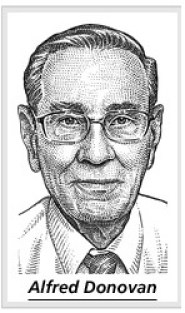 A head-cut image of Alfred Donovan (now deceased) appears courtesy of The Wall Street Journal.