

 Jessica Jaganathan: 9 MARCH 2018
SINGAPORE (Reuters) – Royal Dutch Shell is planning to build a truck loading facility at its Hazira liquefied natural gas (LNG) terminal on India’s west coast as it looks to meet demand from industrial users, a top company official said on Friday.
The facility, which could be ready by next year, will be used to supply industrial demand through trucking in places that can’t access supply from the grid, said Steve Hill, executive vice president at Shell Energy.
“It has a big potential growth … in India because energy supply reliability is a big issue in India,” he said at a media briefing in Singapore, referring to LNG being transported in trucks to industrial users.
“There hasn’t been as much supply infrastructure in place, but some of the import terminals are now putting the truck loading facilities in place so that’s opening up that option.”
LNG trucking works well for locations off-grid, with China and India the two obvious markets, Hill said.
Gas hauled by trailers is seen growing to a tenth of China’s total gas consumption of around 240 billion cubic meters (bcm) in 2017, from 5.6 percent in 2014, but is a new development in India.
CHINA AND INDIA DEMAND GROWTH
Shell expects LNG demand to rise again in China this year as the world’s second-largest importer of the super-chilled fuel extends a program to switch from coal to cleaner gas beyond the capital Beijing to large industrial cities, Hill said.
“The underlying policy that’s driving this is basically community heating or small in-city industrial users switching (the) boilers from coal to gas,” he said. “This is structural demand conversion.”
The full effect of China’s drive to switch factories and millions of homes from coal to gas to curb harmful emissions will be felt this year, he added.
India had the potential to be the next biggest growth market as it faced similar factors to China, Hill said.
“They are both countries with big populations, developing rapidly growing economies, (and) air quality challenges where gas has low penetration in the energy mix,” he said.
“It’s harder to predict the timing in India, but ultimately I’m quite confident we’ll see rapid growth in gas demand in India.”
Reporting by Jessica Jaganathan; editing by Richard Pullin


 Royal Dutch Shell conspired directly with Hitler, financed the Nazi Party, was anti-Semitic and sold out its own Dutch Jewish employees to the Nazis. Shell had a close relationship with the Nazis during and after the reign of Sir Henri Deterding, an ardent Nazi, and the founder and decades long leader of the Royal Dutch Shell Group. His burial ceremony, which had all the trappings of a state funeral, was held at his private estate in Mecklenburg, Germany. The spectacle (photographs below) included a funeral procession led by a horse drawn funeral hearse with senior Nazis officials and senior Royal Dutch Shell directors in attendance, Nazi salutes at the graveside, swastika banners on display and wreaths and personal tributes from Adolf Hitler and Reichsmarschall, Hermann Goring. Deterding was an honored associate and supporter of Hitler and a personal friend of Goring.

 Deterding was the guest of Hitler during a four day summit meeting at Berchtesgaden. Sir Henri and Hitler both had ambitions on Russian oil fields. Only an honored personal guest would be rewarded with a private four day meeting at Hitler’s mountain top retreat.


 IN JULY 2007, MR BILL CAMPBELL (ABOVE, A RETIRED GROUP AUDITOR OF SHELL INTERNATIONAL SENT AN EMAIL TO EVERY UK MP AND MEMBER OF THE HOUSE OF LORDS:


 MORE DETAILS:


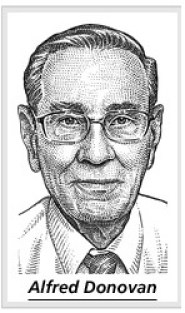 A head-cut image of Alfred Donovan (now deceased) appears courtesy of The Wall Street Journal.