

Ernest Sheyder and Valerie Volcovici
HOUSTON/WASHINGTON (Reuters) – President Donald Trump’s administration has proposed opening up nearly all of America’s offshore waters to oil and gas drilling, but the industry says it is mainly interested in one part of it, now cordoned off by the Pentagon: the eastern Gulf of Mexico.
The industry’s focus on an area located near a sprawling network of existing platforms, pipes and ports could ease the path to new reserves, and assuage the drilling opponents near other places offered under the Interior Department’s proposed drilling plan issued last week, like California’s Pacific, the Atlantic and Arctic.
Sajjad Alam, an analyst focusing on oil and gas in Moody’s corporate finance group, said the high costs and difficulties in many of the areas offered for lease under the plan are likely to keep them low on an oil company’s priority list.
Recent leasing statistics in the Gulf of Mexico already show soft demand for acreage from the oil industry.
The amount of money per acre that oil companies spent in the Gulf in 2017 was about a third what they spent in 2013 when oil prices were higher, according to a Reuters review of government data. Energy firms bid for less than 1 percent of total U.S. acreage in 2017, compared with 4.5 percent in 2013.
But for oil companies, the option of exploring new areas is nice to have, and one they might exploit if oil prices rise.
“We’d like an opportunity to look at all of the areas (including the Eastern Seaboard and Alaska),” said Tracy Krohn, the chief executive of W&T Offshore Inc (WTI.N), which currently produces oil in the Gulf of Mexico.
“I don’t know that we would exclude any areas.”
The API said some of its members could be interested in looking at parts of the mid- and southern-Atlantic too, because of successful wells drilled in similar geology off Brazil, Africa and Canada.
“It would make sense to go out there and run seismic and do some exploratory drilling down the road,” said Erik Milito, API’s director of upstream operations.


 Royal Dutch Shell conspired directly with Hitler, financed the Nazi Party, was anti-Semitic and sold out its own Dutch Jewish employees to the Nazis. Shell had a close relationship with the Nazis during and after the reign of Sir Henri Deterding, an ardent Nazi, and the founder and decades long leader of the Royal Dutch Shell Group. His burial ceremony, which had all the trappings of a state funeral, was held at his private estate in Mecklenburg, Germany. The spectacle (photographs below) included a funeral procession led by a horse drawn funeral hearse with senior Nazis officials and senior Royal Dutch Shell directors in attendance, Nazi salutes at the graveside, swastika banners on display and wreaths and personal tributes from Adolf Hitler and Reichsmarschall, Hermann Goring. Deterding was an honored associate and supporter of Hitler and a personal friend of Goring.

 Deterding was the guest of Hitler during a four day summit meeting at Berchtesgaden. Sir Henri and Hitler both had ambitions on Russian oil fields. Only an honored personal guest would be rewarded with a private four day meeting at Hitler’s mountain top retreat.


 IN JULY 2007, MR BILL CAMPBELL (ABOVE, A RETIRED GROUP AUDITOR OF SHELL INTERNATIONAL SENT AN EMAIL TO EVERY UK MP AND MEMBER OF THE HOUSE OF LORDS:


 MORE DETAILS:


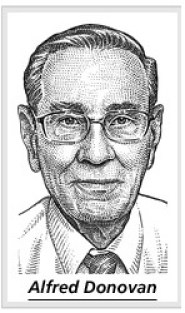 A head-cut image of Alfred Donovan (now deceased) appears courtesy of The Wall Street Journal.