

Three industry sources said BP has become a participant of the 2018 program on which Mexico spent some $1.26 billion to hedge its 2018 oil exports against oil price falls as part of government’s efforts to stabilize its budget.
BP declined to comment.
BP joins rival Royal Dutch Shell (RDSa.L), which made a first foray last year to become the first major to challenge years of dominance of big Wall Street banks in the program.
Shell declined to comment.
Banks such as Goldman Sachs (GS.N), Citi (C.N) and JPMorgan (JPM.N) have dominated Mexico’s program for years but their role has diminished with tighter regulations on bank commodity trading, including a near total ban on proprietary trading.
Commodities-related revenue across Wall Street banks broadly tumbled in the first half of 2017 to its lowest level since at least 2006, consultancy Coalition said in a report.
This was due mainly to a drop in client activity and a slump in trading performance in the energy sector.
Mexico did not disclose the volumes of oil hedged nor detail of the average price per barrel of put options that the government has purchased.
In September, the finance ministry proposed a 2018 budget that based expected oil export revenue on an estimate of $46 per barrel. In October, members of Congress increased that estimate to $48.5 per barrel as global oil prices rose.
On Tuesday, Brent oil prices stood at $64 per barrel.
For more than a decade, Mexico’s government has paid for a hedge every year in a bid to guarantee its revenues from oil exports by state company Pemex. The program is seen as the world’s top sovereign derivatives trade.
Last year, the government bought put options at an average price of $38 per barrel to cover 250 million barrels of crude at a cost of $1.03 billion and underpin the 2017 budget, which was based on an average price of $42 per barrel.
This year, Mexico is on track to not see any income from its oil hedge as prices for Mexican crude trade well above $50 per barrel. In 2016, Mexico saw a $2.65 billion payout from its oil hedge.
Mexico used to receive about one-third of federal revenues from oil sales, but it now funds less than one-fifth of the budget with oil sales after the collapse of crude prices in late 2014 and a decline in production.
(This version of the story was refiled to correct typographical error in paragraph 1)
Additional reporting by Julia Payne and Ron Bousso, editing by David Evans


 Royal Dutch Shell conspired directly with Hitler, financed the Nazi Party, was anti-Semitic and sold out its own Dutch Jewish employees to the Nazis. Shell had a close relationship with the Nazis during and after the reign of Sir Henri Deterding, an ardent Nazi, and the founder and decades long leader of the Royal Dutch Shell Group. His burial ceremony, which had all the trappings of a state funeral, was held at his private estate in Mecklenburg, Germany. The spectacle (photographs below) included a funeral procession led by a horse drawn funeral hearse with senior Nazis officials and senior Royal Dutch Shell directors in attendance, Nazi salutes at the graveside, swastika banners on display and wreaths and personal tributes from Adolf Hitler and Reichsmarschall, Hermann Goring. Deterding was an honored associate and supporter of Hitler and a personal friend of Goring.

 Deterding was the guest of Hitler during a four day summit meeting at Berchtesgaden. Sir Henri and Hitler both had ambitions on Russian oil fields. Only an honored personal guest would be rewarded with a private four day meeting at Hitler’s mountain top retreat.


 IN JULY 2007, MR BILL CAMPBELL (ABOVE, A RETIRED GROUP AUDITOR OF SHELL INTERNATIONAL SENT AN EMAIL TO EVERY UK MP AND MEMBER OF THE HOUSE OF LORDS:


 MORE DETAILS:


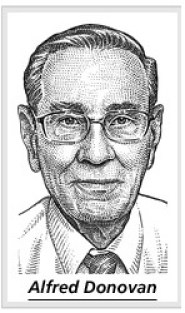 A head-cut image of Alfred Donovan (now deceased) appears courtesy of The Wall Street Journal.