

Ron Bousso
LONDON (Reuters) – Royal Dutch Shell (RDSa.L) reported an 18 percent rise in third-quarter profit on Tuesday, lowering next year’s capital spending to the bottom of the expected range as it grapples with persistently low oil prices and weak refining margins.
The Anglo-Dutch oil major, whose acquisition of BG Group transformed it into the world’s top liquefied natural gas producer, has been under pressure from shareholders to cut annual spending to ensure it can maintain its dividend given the slow recovery in the oil prices LCOc1.
“Lower oil prices continue to be a significant challenge across the business, and the outlook remains uncertain,” Chief Executive Officer Ben van Beurden said in a statement.
Shell’s “A” shares were up 3.4 percent shortly after the opening of trade in London.
Shell said its 2017 capital spending was expected to be at around $25 billion (20 billion pounds), at the bottom of the range previously given. This year’s capex will be around $29 billion, down from a combined $36 billion for Shell and BG Group in 2015.
Net income in the quarter, based on a current cost of supplies (CCS) and excluding exceptional items, rose to $2.8 billion, beating analysts’ expectations of $1.71 billion.
Shell disappointed the market with its second-quarter results, the first full quarter following the completion of the BG acquisition in February, by missing expectations by around 50 percent.
Shell’s Integrated Gas division generated $931 million in profits, slightly above last year’s level, while oil and gas production division, known as upstream, was virtually flat.
The refining and trading division, or downstream, once again offered support with a profit of $2.01 billion, although this was down from $2.6 billion a year ago.
RBC Capital Markets analyst Biraj Borkhataria said there was “room for Shell to outperform its peers in the near term” following the solid results.
BP on Tuesday also beat earnings expectations, trimming its 2016 capital spending by another $1 billion.
Other rivals, including Exxon Mobil (XOM.N) and Chevron (CVX.N), reported sharply lower in quarterly results last week due to lower oil prices and weaker refining margins.
Reporting by Ron Bousso, editing by Louise Heavens


 Royal Dutch Shell conspired directly with Hitler, financed the Nazi Party, was anti-Semitic and sold out its own Dutch Jewish employees to the Nazis. Shell had a close relationship with the Nazis during and after the reign of Sir Henri Deterding, an ardent Nazi, and the founder and decades long leader of the Royal Dutch Shell Group. His burial ceremony, which had all the trappings of a state funeral, was held at his private estate in Mecklenburg, Germany. The spectacle (photographs below) included a funeral procession led by a horse drawn funeral hearse with senior Nazis officials and senior Royal Dutch Shell directors in attendance, Nazi salutes at the graveside, swastika banners on display and wreaths and personal tributes from Adolf Hitler and Reichsmarschall, Hermann Goring. Deterding was an honored associate and supporter of Hitler and a personal friend of Goring.

 Deterding was the guest of Hitler during a four day summit meeting at Berchtesgaden. Sir Henri and Hitler both had ambitions on Russian oil fields. Only an honored personal guest would be rewarded with a private four day meeting at Hitler’s mountain top retreat.


 IN JULY 2007, MR BILL CAMPBELL (ABOVE, A RETIRED GROUP AUDITOR OF SHELL INTERNATIONAL SENT AN EMAIL TO EVERY UK MP AND MEMBER OF THE HOUSE OF LORDS:


 MORE DETAILS:


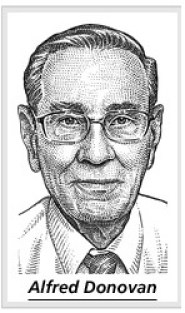 A head-cut image of Alfred Donovan (now deceased) appears courtesy of The Wall Street Journal.