

 Saad Sayeed: November 2, 2017
ISLAMABAD (Reuters) – Pakistan’s state oil and gas regulator said on Thursday it would investigate a complaint that fuel suppliers including local units of Shell and Total as well as Pakistan State Oil (PSO) had added manganese to their gasoline.
Honda Motor Co’s Pakistan subsidiary, Honda Atlas Cars (Pakistan) Ltd., filed the complaint, saying the additive appeared to be damaging engines in its vehicles.
Manganese can be added to fuel to make it appear to be of a higher quality but it can reduce fuel economy and potentially harm public health due to emissions.
Honda’s complaint states Pakistani suppliers used the additive to elevate the Research Octane Number (RON) used to grade petroleum and lower quality fuel up to the RON 92 grade required by regulatory standards.
“We have received a complaint from Honda, and the relevant department will look into the issue,” said Imran Ghaznavi, a spokesman for the Oil and Gas Regulatory Authority (OGRA).
The Honda complaint, a copy of which was seen by Reuters, said tests found dangerous levels of manganese in fuel samples from Shell Pakistan Ltd, Total Parco Pakistan Ltd and Pakistan State Oil Company Ltd.
The tests showed levels of manganese of up to 53 milligrams per kilogram (mg/kg), while the additive is deemed at a “danger level” at 24 mg/kg, the Honda complaint said.
A spokesman for PSO said the company’s “products fully adhere to official specifications laid out by the Ministry of Energy” and all products were tested before being released to the market.
“Products below official standards are rejected and returned,” company spokesman Imran Rana told Reuters.
Officials from Shell in Pakistan and London had no immediate comment. Total officials could not immediately be reached.
Ilyas Fazil, head of Pakistan’s Oil Companies Advisory Council, said on Thursday he had not heard of manganese additives being a problem in the industry.
“Other refineries are producing 90 RON, which is slightly lower than 92…pure 92 RON, that is imported,” he said.
Pakistan’s petroleum sales have spiked in the past two years, rising 10 percent between 2015 and 2017 and continued growth is expected as Chinese-backed development projects spur the transportation and automotive sectors.
A senior industry official said Toyota Pakistan had not experienced the same issues with their engines but said the company was concerned about high manganese levels in petroleum.
“Now that Honda has formally complained they may also follow suit,” the official who asked not to be identified told Reuters.
Additional reporting by Drazen Jorgic; Writing by Saad Sayeed; Editing by Christian Schmollinger and Edmund Blair


 Royal Dutch Shell conspired directly with Hitler, financed the Nazi Party, was anti-Semitic and sold out its own Dutch Jewish employees to the Nazis. Shell had a close relationship with the Nazis during and after the reign of Sir Henri Deterding, an ardent Nazi, and the founder and decades long leader of the Royal Dutch Shell Group. His burial ceremony, which had all the trappings of a state funeral, was held at his private estate in Mecklenburg, Germany. The spectacle (photographs below) included a funeral procession led by a horse drawn funeral hearse with senior Nazis officials and senior Royal Dutch Shell directors in attendance, Nazi salutes at the graveside, swastika banners on display and wreaths and personal tributes from Adolf Hitler and Reichsmarschall, Hermann Goring. Deterding was an honored associate and supporter of Hitler and a personal friend of Goring.

 Deterding was the guest of Hitler during a four day summit meeting at Berchtesgaden. Sir Henri and Hitler both had ambitions on Russian oil fields. Only an honored personal guest would be rewarded with a private four day meeting at Hitler’s mountain top retreat.


 IN JULY 2007, MR BILL CAMPBELL (ABOVE, A RETIRED GROUP AUDITOR OF SHELL INTERNATIONAL SENT AN EMAIL TO EVERY UK MP AND MEMBER OF THE HOUSE OF LORDS:


 MORE DETAILS:


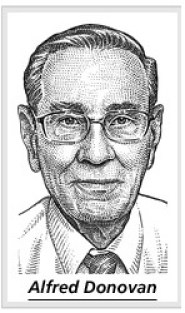 A head-cut image of Alfred Donovan (now deceased) appears courtesy of The Wall Street Journal.