

Representatives from Shell, Statoil and Total have teamed up to steer a project that will store carbon dioxide captured from industrial operations in Norway offshore. Photo courtesy of Ole Jørgen Bratland/Statoil
Oct. 2 (UPI) — Norwegian energy company Statoil said Monday it was leading a partnership aimed at advancing Paris climate efforts through carbon capture and storage.
Statoil said it would lead a project alongside the Norwegian subsidiaries of Royal Dutch Shell and French supermajor Total in storing carbon dioxide captured from industrial facilities in eastern Norway at an offshore site.
“Statoil believes that without carbon capture and storage, it is not realistic to meet the global climate target as defined in the Paris agreement,” Irene Rummelhoff, Statoil’s executive vice president for new energy solutions, said in a statement.
The International Energy Agency described carbon capture and storage as a necessary addition to other low-carbon energy technologies meant to drive down global greenhouse gas emissions. The process involves capturing carbon dioxide from sources like power plants and storing it in such a way that it won’t enter the atmosphere.
To meet the benchmarks outlined in the Paris climate agreement, the IEA said CCS “will not be optional.”
It’s been 20 years since the start of the first large-scale CCS project, at Sleipner in Norway. The United States, meanwhile, hosts the largest CCS project of its kind, the Petra Nova project in southwest Houston.
The first phase of the Statoil-led project would transport CO2 captured from facilities onshore and inject it near the Troll oil field on the Norwegian continental shelf. Statoil said there are three possible locations under consideration for the receiving terminal and a final decision will be made later this year.
“Shell sees CCS as a transformative technology that can significantly reduce emissions from those industrial sectors that will continue to rely on hydrocarbons for decades to come,” added Monika Hausenblas, Shell’s executive vice president for environment and safety.
Statoil last year was tasked by the government in Oslo to study ways to store carbon dioxide on the country’s continental shelf. The company was awarded a contract from the Norwegian Ministry of Petroleum and Energy to carry out feasibility studies at three offshore locations. It marked the first study of its kind in Europe.
Statoil valued the government contract at around $3.9 million.
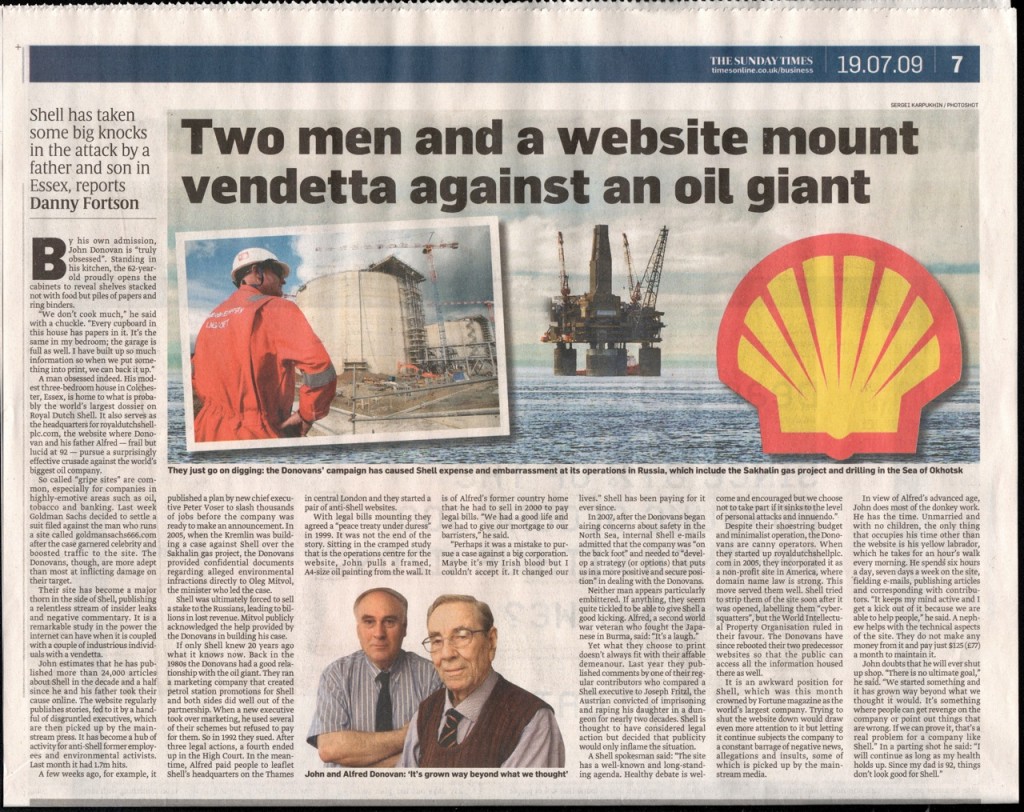
This website and sisters royaldutchshellplc.com, shellnazihistory.com, royaldutchshell.website, johndonovan.website, and shellnews.net, are owned by John Donovan. There is also a Wikipedia segment.


 Royal Dutch Shell conspired directly with Hitler, financed the Nazi Party, was anti-Semitic and sold out its own Dutch Jewish employees to the Nazis. Shell had a close relationship with the Nazis during and after the reign of Sir Henri Deterding, an ardent Nazi, and the founder and decades long leader of the Royal Dutch Shell Group. His burial ceremony, which had all the trappings of a state funeral, was held at his private estate in Mecklenburg, Germany. The spectacle (photographs below) included a funeral procession led by a horse drawn funeral hearse with senior Nazis officials and senior Royal Dutch Shell directors in attendance, Nazi salutes at the graveside, swastika banners on display and wreaths and personal tributes from Adolf Hitler and Reichsmarschall, Hermann Goring. Deterding was an honored associate and supporter of Hitler and a personal friend of Goring.

 Deterding was the guest of Hitler during a four day summit meeting at Berchtesgaden. Sir Henri and Hitler both had ambitions on Russian oil fields. Only an honored personal guest would be rewarded with a private four day meeting at Hitler’s mountain top retreat.


 IN JULY 2007, MR BILL CAMPBELL (ABOVE, A RETIRED GROUP AUDITOR OF SHELL INTERNATIONAL SENT AN EMAIL TO EVERY UK MP AND MEMBER OF THE HOUSE OF LORDS:


 MORE DETAILS:


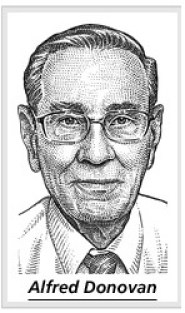 A head-cut image of Alfred Donovan (now deceased) appears courtesy of The Wall Street Journal.