Written by Reporter –
The project, with ITM Power, will take shape at the Wesseling site of the Rhineland refinery.
With a capacity of ten megawatts, it would be the largest plant of its kind in Germany and the largest PEM (polymer electrolyte membrane) electrolysis in the world.
In addition to the production of hydrogen, the technology could also contribute to the stabilization of the electricity grid with an increasing share of irregularly available renewable energies in the energy mix.
Shell represented by Shell Deutschland Oil GmbH and Shell Energy Europe Ltd, together with the European consortium partners ITM Power plc, SINTEF, thinkstep and Element Energy, have been invited by the European Fuel Cells and Hydrogen 2 Joint Undertaking (FCH 2 JU) to prepare a contract to promote the project.
The Rheinland refinery already uses around 180,000 tonnes of hydrogen per year for its production processes. This is produced by steam reforming from natural gas and water vapor. In the case of electrolysis, on the other hand, water is split into hydrogen and oxygen by means of current.
The project would enable the construction and operation of an electrolysis with a capacity of ten megawatts. The aim is to test the technology on an industrial scale, to achieve cost synergies and to develop new business models. The electrolysis operated with inexpensive electricity from renewable energies could be a key technology for a potential CO 2 free hydrogen generation in the Rhineland refinery.
“The planned hydrogen electrolysis would be a step that opens up many possibilities for the future,” says Raffineriedirektor Dr. Thomas Zengerly.
“The hydrogen produced can be fully integrated into the refinery processes. The site also allows the facility to be expanded at a later stage to deliver hydrogen to potential customers outside the refinery.”
“Hydrogen is a promising technology also beyond the direct use as a clean fuel in the transport sector . In the future hydrogen is expected to play an important role in the integration of energy storage and grid balancing. In this way, hydrogen can contribute to the reliability of the energy system with a growing share of irregularly available renewable energies in the energy mix,” said Brian Davis, VP, Integrated Energy Solutions at Shell.


 Royal Dutch Shell conspired directly with Hitler, financed the Nazi Party, was anti-Semitic and sold out its own Dutch Jewish employees to the Nazis. Shell had a close relationship with the Nazis during and after the reign of Sir Henri Deterding, an ardent Nazi, and the founder and decades long leader of the Royal Dutch Shell Group. His burial ceremony, which had all the trappings of a state funeral, was held at his private estate in Mecklenburg, Germany. The spectacle (photographs below) included a funeral procession led by a horse drawn funeral hearse with senior Nazis officials and senior Royal Dutch Shell directors in attendance, Nazi salutes at the graveside, swastika banners on display and wreaths and personal tributes from Adolf Hitler and Reichsmarschall, Hermann Goring. Deterding was an honored associate and supporter of Hitler and a personal friend of Goring.

 Deterding was the guest of Hitler during a four day summit meeting at Berchtesgaden. Sir Henri and Hitler both had ambitions on Russian oil fields. Only an honored personal guest would be rewarded with a private four day meeting at Hitler’s mountain top retreat.


 IN JULY 2007, MR BILL CAMPBELL (ABOVE, A RETIRED GROUP AUDITOR OF SHELL INTERNATIONAL SENT AN EMAIL TO EVERY UK MP AND MEMBER OF THE HOUSE OF LORDS:


 MORE DETAILS:


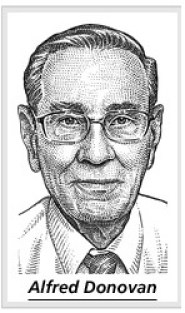 A head-cut image of Alfred Donovan (now deceased) appears courtesy of The Wall Street Journal.