

Royal Dutch Shell Plc plans to spend as much as $1 billion a year on its New Energies division as the transition toward renewable power and electric cars accelerates.
“In some parts of the world we are beginning to see battery electric cars starting to gain consumer acceptance” while wind and solar costs are falling fast, Shell CEO Ben Van Beurden said in a speech in Istanbul on Monday. “All of this is good news for the world and must accelerate,” while still offering opportunities for producers of fossil fuels.
Shell sees opportunities in hydrogen fuel-cells, liquefied natural gas and next-generation biofuels for air travel, shipping and heavy freight — areas of transport for which batteries aren’t adequate. The intermittent nature of wind and solar energy means power plants fired by natural gas will have a long-term role, Van Beurden said.
Van Beurden was addressing the World Petroleum Congress — a gathering of ministers and CEOs from some of the largest oil producers — at a time when the accelerating shift to clean energy is raising questions about their long-term business models. While Russian Energy Minister Alexander Novak and Saudi Arabian Oil Co. boss Amin Nasser said oil and gas will be dominant for decades to come, Van Beurden highlighted the potential for some of the fastest-growing nations to leapfrog straight to a cleaner energy mix.
“When you consider the areas of the world where energy demand is still to expand, like Asia and sub-Saharan Africa, there is a huge opportunity,” Van Beurden said. “These are areas that are not, on the whole, locked in to a coal-driven system. There is the potential for them to shift more directly onto a less energy-intensive pathway to development.”
There is often too much focus on energy-transition policies in Europe and North America instead of the fast-growing developing world, Van Beurden said. “What happens in England is important, but what happens in Ethiopia is at least as important. From Denmark to the DRC, from the U.S. to Uganda, to India, to China, there is a lot of work to do.”
These countries will still require fossil fuels to develop industries such as steel, cement and chemicals because they need a heat intensity that cannot come from electricity alone, he said.
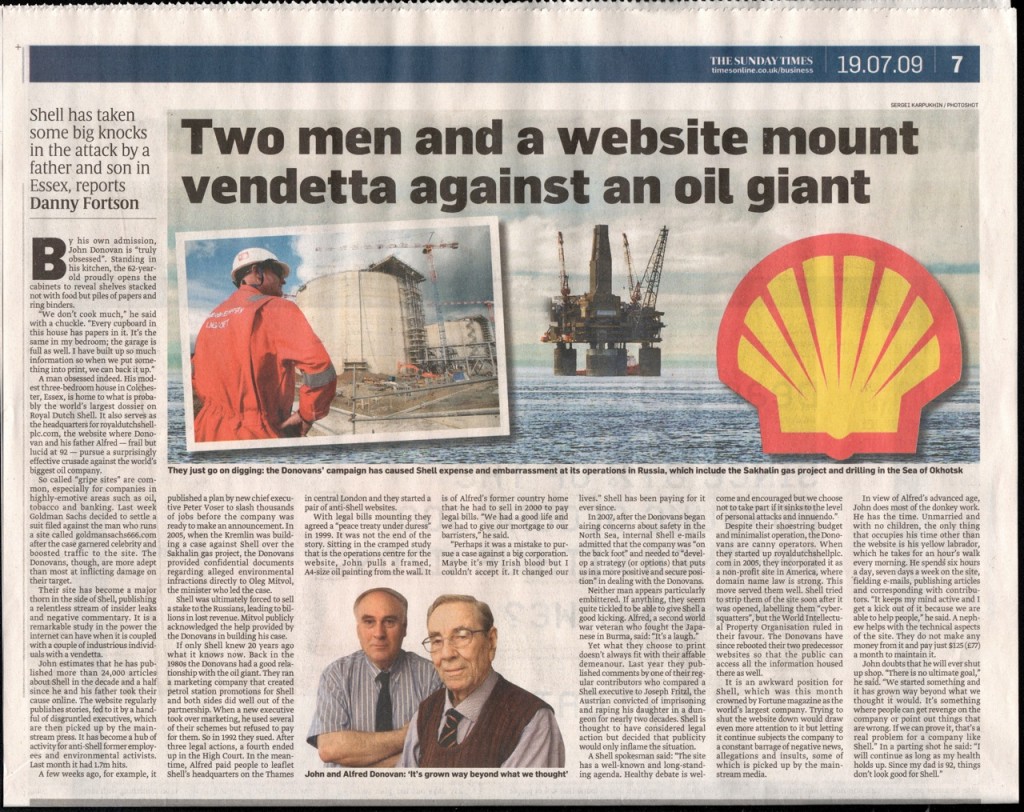
This website and sisters royaldutchshellplc.com, shellnazihistory.com, royaldutchshell.website, johndonovan.website, and shellnews.net, are owned by John Donovan. There is also a Wikipedia segment.


 Royal Dutch Shell conspired directly with Hitler, financed the Nazi Party, was anti-Semitic and sold out its own Dutch Jewish employees to the Nazis. Shell had a close relationship with the Nazis during and after the reign of Sir Henri Deterding, an ardent Nazi, and the founder and decades long leader of the Royal Dutch Shell Group. His burial ceremony, which had all the trappings of a state funeral, was held at his private estate in Mecklenburg, Germany. The spectacle (photographs below) included a funeral procession led by a horse drawn funeral hearse with senior Nazis officials and senior Royal Dutch Shell directors in attendance, Nazi salutes at the graveside, swastika banners on display and wreaths and personal tributes from Adolf Hitler and Reichsmarschall, Hermann Goring. Deterding was an honored associate and supporter of Hitler and a personal friend of Goring.

 Deterding was the guest of Hitler during a four day summit meeting at Berchtesgaden. Sir Henri and Hitler both had ambitions on Russian oil fields. Only an honored personal guest would be rewarded with a private four day meeting at Hitler’s mountain top retreat.


 IN JULY 2007, MR BILL CAMPBELL (ABOVE, A RETIRED GROUP AUDITOR OF SHELL INTERNATIONAL SENT AN EMAIL TO EVERY UK MP AND MEMBER OF THE HOUSE OF LORDS:


 MORE DETAILS:


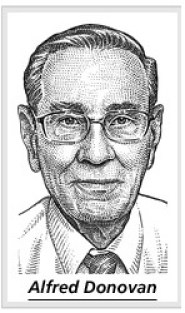 A head-cut image of Alfred Donovan (now deceased) appears courtesy of The Wall Street Journal.