
Van Beurden is the CEO of Royal Dutch Shell
“To make investments in clean energy technologies more attractive, governments must set an effective price on CO2 emissions”
Nobody can predict the future, but it is highly likely that global energy demand will grow for decades to come. There will be more people on this planet, more people will be living in cities, and more people will be seeking a better life. “A better life” in this context does not mean a tv in every room or a new smartphone every year. It does mean adequate housing, healthcare, sanitation, and modern transport.
How much energy is needed for a better life? A common measurement of energy is the “gigajoule”. Today, primary energy demand in the United States amounts to around 300 gigajoules per person per year. In more energy-efficient economies, such as Japan or most European countries, it is around 150 gigajoules.
For everyone to enjoy this better life, research by Shell indicates that some 100 gigajoules of primary energy per person per year should be enough, provided that energy efficiency increases greatly. Assuming a population of 10 billion people by the end of this century, the world’s need for energy would amount to some 1,000 exajoules. This is roughly twice the size of today’s energy system.
If the world is to live up to the ambitions of the Paris agreement on climate change and the Sustainable Development Goals, the challenge it faces is how to provide much more energy with much less carbon dioxide (CO2). Renewables clearly have a major role to play in tackling this challenge, but they are going to need some help along the way. This is because they are intermittent and not available everywhere at a sufficient scale. More importantly, renewables chiefly produce electricity, which currently covers less than 20% of final energy consumption.
This century’s energy landscape is likely to be an evolving mix of renewables and more established sources such as oil and gas. Some level of emissions will remain for some time. Parts of the global economy that are unable to reduce emissions enough, should be offset by other areas which are taking man-made carbon out of the environment.
This is why carbon capture and storage (CCS) is so important. CCS captures CO2 from factories and power plants, and stores it safely under ground. Shell operates a CCS project called Quest in Canada and we are involved in a number of other CCS projects around the world. Others are taking encouraging steps too, but more is needed.
CCS is driven by the need to tackle climate change rather than commerce. It brings extra costs and has no paying customer. To make investments in CCS and other clean energy technologies more attractive, governments must set an effective price on CO2 emissions. As emissions do not show respect for borders, government-led carbon pricing mechanisms needs to be implemented across as much of the global economy as possible. It will bring the world closer to creating a better life for everyone.
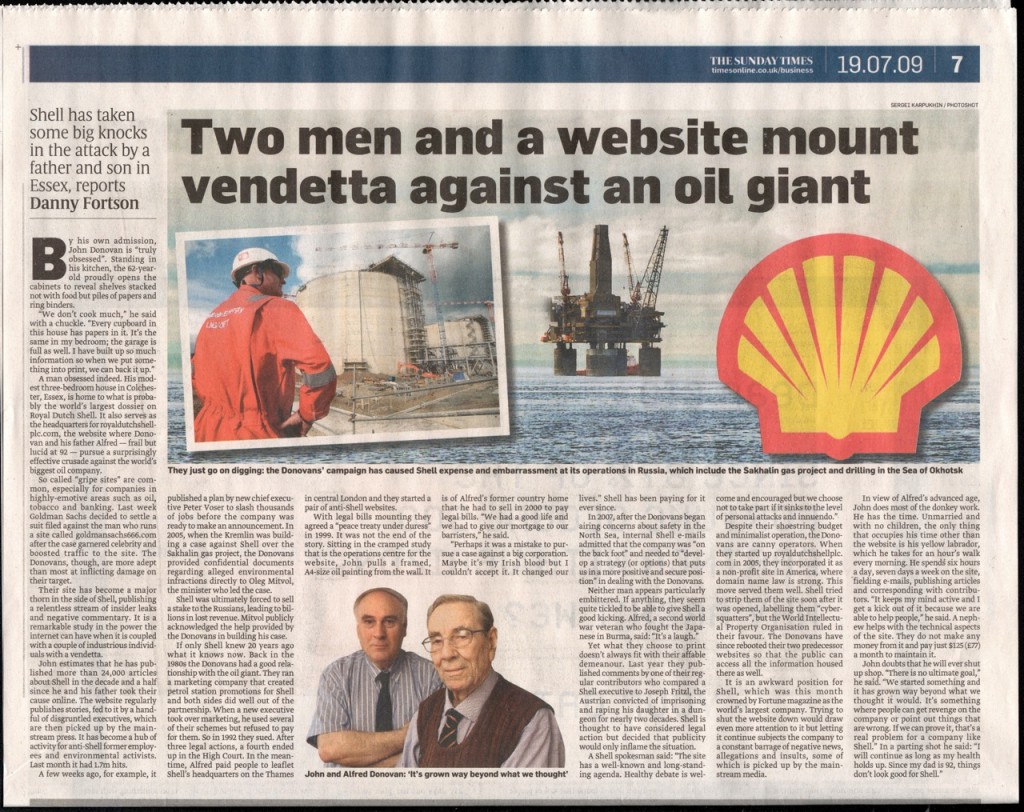
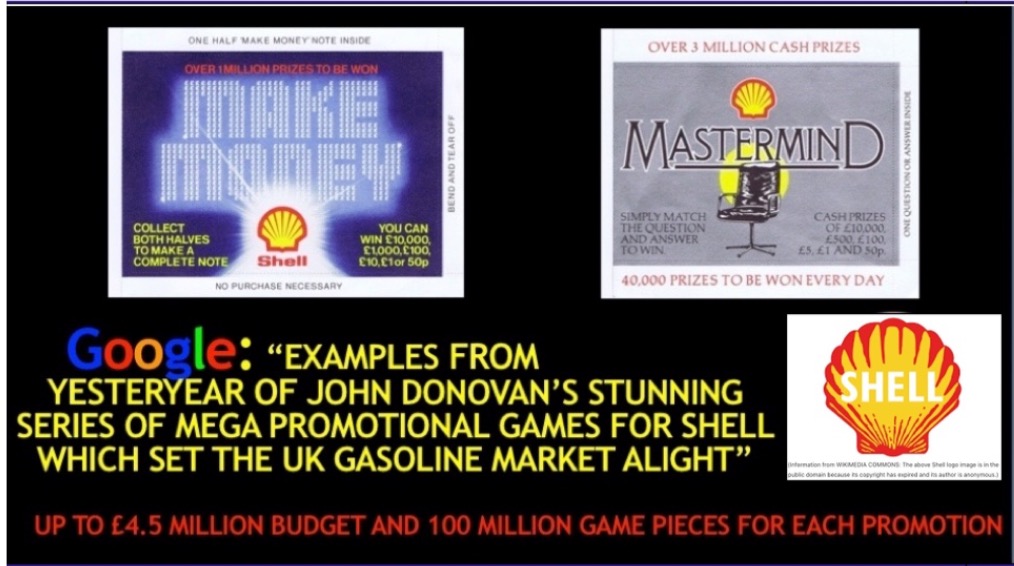
This website and sisters royaldutchshellplc.com, shellnazihistory.com, royaldutchshell.website, johndonovan.website, and shellnews.net, are owned by John Donovan. There is also a Wikipedia segment.


 Royal Dutch Shell conspired directly with Hitler, financed the Nazi Party, was anti-Semitic and sold out its own Dutch Jewish employees to the Nazis. Shell had a close relationship with the Nazis during and after the reign of Sir Henri Deterding, an ardent Nazi, and the founder and decades long leader of the Royal Dutch Shell Group. His burial ceremony, which had all the trappings of a state funeral, was held at his private estate in Mecklenburg, Germany. The spectacle (photographs below) included a funeral procession led by a horse drawn funeral hearse with senior Nazis officials and senior Royal Dutch Shell directors in attendance, Nazi salutes at the graveside, swastika banners on display and wreaths and personal tributes from Adolf Hitler and Reichsmarschall, Hermann Goring. Deterding was an honored associate and supporter of Hitler and a personal friend of Goring.

 Deterding was the guest of Hitler during a four day summit meeting at Berchtesgaden. Sir Henri and Hitler both had ambitions on Russian oil fields. Only an honored personal guest would be rewarded with a private four day meeting at Hitler’s mountain top retreat.


 IN JULY 2007, MR BILL CAMPBELL (ABOVE, A RETIRED GROUP AUDITOR OF SHELL INTERNATIONAL SENT AN EMAIL TO EVERY UK MP AND MEMBER OF THE HOUSE OF LORDS:


 MORE DETAILS:


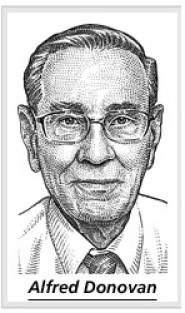 A head-cut image of Alfred Donovan (now deceased) appears courtesy of The Wall Street Journal.