
Here (Sweetman v Shell), the Supreme Court held that Part 2 of the Environmental (Miscellaneous Provisions) Act 2011 (Costs of Certain Proceedings to be Borne by Each Party in Certain Circumstances) (link) does not act retrospectively. Charleton J stated: This is because the award of costs is not essentially procedural. An expectation as to the recovery of costs affects both the decision to commence a case and the necessary and legitimate prediction that it would be funded if successfully prosecuted or successfully defended by the party required to answer a legal action. Laffoy J and Dunne J concurred.
Background
The background case to this application for costs is outlined in a previous post (here). In 2005, the High Court refused Sweetman an order under s 160 of the Planning and Development Act 2000 prohibiting Shell from completing works on the Corrib Gas Terminal. Sweetman lodged an appeal of that decision in the Supreme Court. But he allowed that appeal to remain dormant until 2014. In 2016, the Supreme Court dismissed that appeal as moot.
Shell applied for a costs order against Sweetman. Sweetman argued that the Environmental (Miscellaneous Provisions) Act 2011 applied retrospectively to his case.
For reasons set out in the judgment, Charleton J rejected Sweetman’s argument:
23. The relevant section as to costs of the Environmental (Miscellaneous Provisions) Act 2011 is not retrospective. It does not apply to litigation already issued prior to the commencement of the Act. It applies to all future litigation started after the commencement date of the Act of 2011. This is because the award of costs is not essentially procedural. An expectation as to the recovery of costs affects both the decision to commence a case and the necessary and legitimate prediction that it would be funded if successfully prosecuted or successfully defended by the party required to answer a legal action.
24. Even if the Act of 2011 applied retrospectively, the legislative provisions providing for an exception to the neutral rule as to costs in environmental protection cases requires this Court leave in place the order of the High Court as to costs. On this appeal, this Court cannot but award costs against the appellant Peter Sweetman in circumstances where an action has languished on appeal for 10 years and was effectively rendered moot by that delay. The costs of this appeal are awarded to Shell as against the appellant Peter Sweetman.
(WE HOPE TO RECEIVE SOME COMMENT ON THIS CASE ON OUR SHELL BLOG FROM INTERESTED PARTIES)
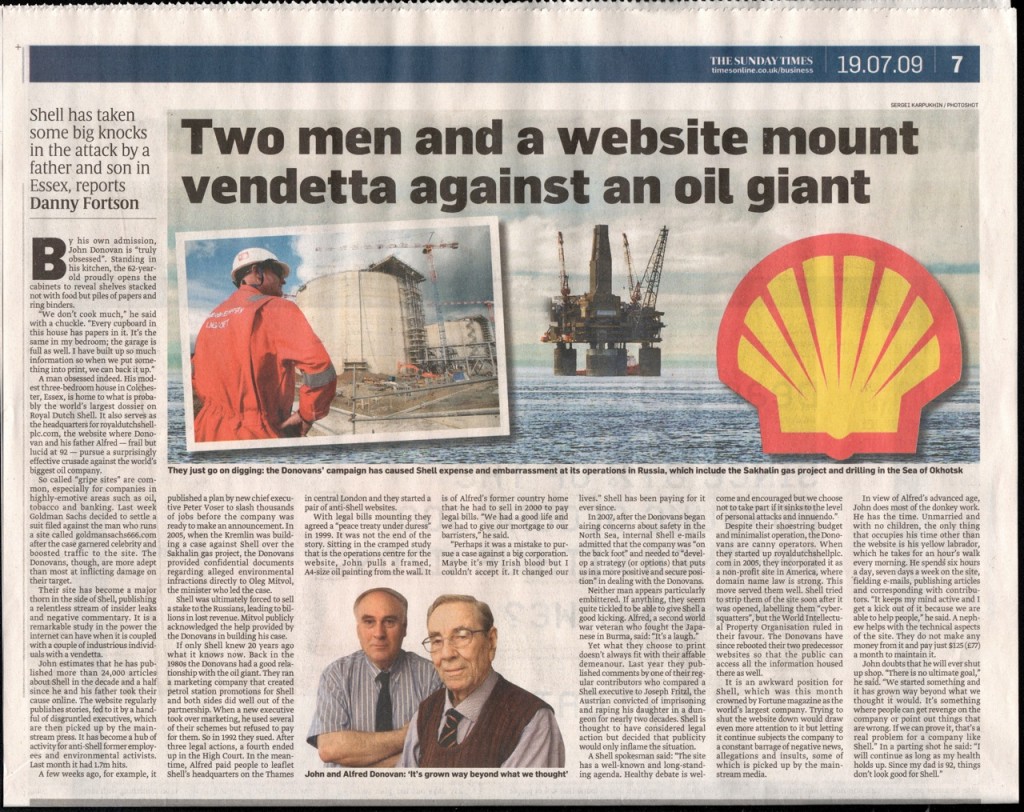
This website and sisters royaldutchshellplc.com, shellnazihistory.com, royaldutchshell.website, johndonovan.website, and shellnews.net, are owned by John Donovan. There is also a Wikipedia segment.


 Royal Dutch Shell conspired directly with Hitler, financed the Nazi Party, was anti-Semitic and sold out its own Dutch Jewish employees to the Nazis. Shell had a close relationship with the Nazis during and after the reign of Sir Henri Deterding, an ardent Nazi, and the founder and decades long leader of the Royal Dutch Shell Group. His burial ceremony, which had all the trappings of a state funeral, was held at his private estate in Mecklenburg, Germany. The spectacle (photographs below) included a funeral procession led by a horse drawn funeral hearse with senior Nazis officials and senior Royal Dutch Shell directors in attendance, Nazi salutes at the graveside, swastika banners on display and wreaths and personal tributes from Adolf Hitler and Reichsmarschall, Hermann Goring. Deterding was an honored associate and supporter of Hitler and a personal friend of Goring.

 Deterding was the guest of Hitler during a four day summit meeting at Berchtesgaden. Sir Henri and Hitler both had ambitions on Russian oil fields. Only an honored personal guest would be rewarded with a private four day meeting at Hitler’s mountain top retreat.


 IN JULY 2007, MR BILL CAMPBELL (ABOVE, A RETIRED GROUP AUDITOR OF SHELL INTERNATIONAL SENT AN EMAIL TO EVERY UK MP AND MEMBER OF THE HOUSE OF LORDS:


 MORE DETAILS:


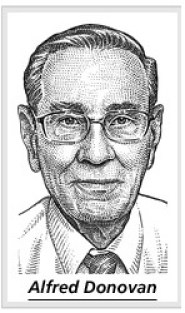 A head-cut image of Alfred Donovan (now deceased) appears courtesy of The Wall Street Journal.