
After all, keeping temperatures from rising to catastrophic levels will require the world to wean itself off fossil fuels and turn to cleaner forms of energy, hardly an appealing proposition to the financial wellbeing of oil producers.
But now the leader of one of the world’s biggest oil companies is telling his peers to accept the role unapologetically.
“When it comes to some of the beliefs about the challenge of the energy transition, which may be founded on less than solid fact, our industry should not shy away from being the contrarian in the room,” Ben van Beurden, the chief executive of Royal Dutch Shell, told an oil conference in Norway recently.
“All of us here today have a pivotal role to play in shaping the energy system of the future. With our knowledge, we have some indispensable — and you could say, contrarian — insights to offer.”
With that, van Beurden ticked off the difficulties of curbing emissions as demand for energy grows, especially in developing countries.
“The underlying question is: How far can countries transform their economies to meet demand and reduce emissions at the same time?” he asked. “And, crucially: How fast can they do that?
“Social, political and geographical conditions vary from country to country. So the energy transition is likely to play out in a different way in different places. … In some places, it will be relatively fast; in others, relatively slow.”
Oil, coal and natural gas — the primary culprits behind climate change – will remain essential on a large scale for years for long-distance air travel, heavy road transportation, steelmaking and other sectors, he said in remarks prepared for the Offshore Northern Seas Conference in Stavanger on August 29.
His speech came just six days before President Obama and China’s President Xi Jinping formally entered their two nations into last year’s Paris climate agreement, which aims to hold the increase in the global average temperature to below 2 degrees Celsius compared to pre-industrial levels.
Obama calls the landmark accord “the single best chance we have” to save the planet.
The Anglo-Dutch company is no opponent of the climate deal; in fact, Shell has taken a formal position that the agreement “could provide greater certainty about how the world can provide more energy with much less carbon dioxide.”
Nor is Shell absent when it comes to lower-carbon and no-carbon alternatives.
With its $52 billion acquisition of BG Group earlier this year, Shell became the world’s top liquefied natural gas company, at a time when gas, which emits half the carbon dioxide of coal, is displacing coal as a fuel for electricity generation around the globe.
The company also backs projects in Norway, Canada and other countries seeking commercially viable ways of capturing carbon emissions from coal- and gas-burning power plants and burying them deep underground.
In fact, the 109-year-old oil giant sees itself becoming gradually greener.
“As we have explained to our investors, new energies like wind, hydrogen and biofuels will become essential parts of our portfolio over time,” van Beurden said.
But despite dire warnings by scientists of the potential for a climate catastrophe if the rise in temperatures isn’t curbed relatively soon, and his own company’s acknowledgment of the problem, van Beurden cautions that suggestions of a quick fix can be deceptive.
“In other words,” he concluded, “this century’s landscape will inevitably be a patchwork of renewables and hydrocarbons. Or, to put it differently, some level of emissions will remain for some time.”
Bill Loveless — @bill_loveless on Twitter — is a veteran energy journalist and podcast host in Washington. He is the former anchor of the TV program Platts Energy Week.
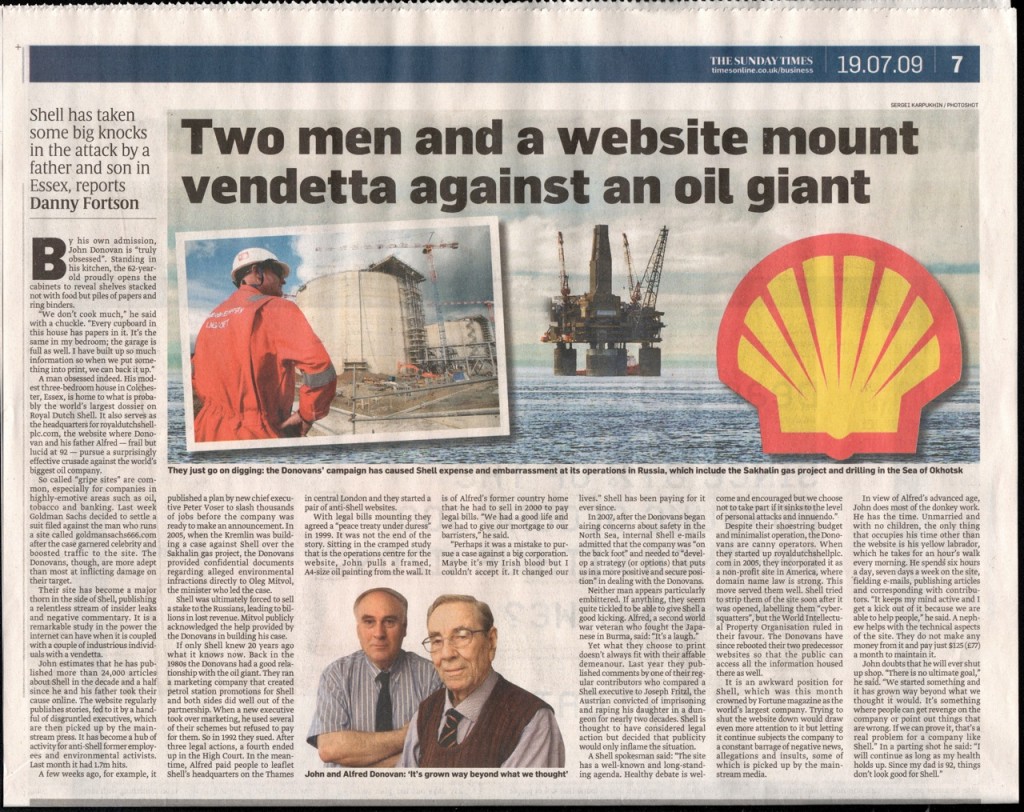
This website and sisters royaldutchshellplc.com, shellnazihistory.com, royaldutchshell.website, johndonovan.website, and shellnews.net, are owned by John Donovan. There is also a Wikipedia segment.


 Royal Dutch Shell conspired directly with Hitler, financed the Nazi Party, was anti-Semitic and sold out its own Dutch Jewish employees to the Nazis. Shell had a close relationship with the Nazis during and after the reign of Sir Henri Deterding, an ardent Nazi, and the founder and decades long leader of the Royal Dutch Shell Group. His burial ceremony, which had all the trappings of a state funeral, was held at his private estate in Mecklenburg, Germany. The spectacle (photographs below) included a funeral procession led by a horse drawn funeral hearse with senior Nazis officials and senior Royal Dutch Shell directors in attendance, Nazi salutes at the graveside, swastika banners on display and wreaths and personal tributes from Adolf Hitler and Reichsmarschall, Hermann Goring. Deterding was an honored associate and supporter of Hitler and a personal friend of Goring.

 Deterding was the guest of Hitler during a four day summit meeting at Berchtesgaden. Sir Henri and Hitler both had ambitions on Russian oil fields. Only an honored personal guest would be rewarded with a private four day meeting at Hitler’s mountain top retreat.


 IN JULY 2007, MR BILL CAMPBELL (ABOVE, A RETIRED GROUP AUDITOR OF SHELL INTERNATIONAL SENT AN EMAIL TO EVERY UK MP AND MEMBER OF THE HOUSE OF LORDS:


 MORE DETAILS:


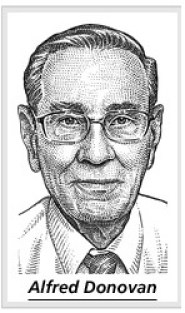 A head-cut image of Alfred Donovan (now deceased) appears courtesy of The Wall Street Journal.