
The oil firm said it would reduce investment to $30bn from a planned $33bn, after coming under pressure from shareholders to cut costs.
Shell also said profits in the three months to March had fallen to $800m from $4.8bn a year earlier.
Oil prices have fallen sharply over the past 18 months.
On average, in the first three months of 2016 oil prices stood at about $35 a barrel, down from a peak of $115 a barrel in June 2014.
Excluding one-off items, Shell’s preferred measure of profit, earnings fell to $1.6bn from $3.8bn in the quarter.
The company also warned that low oil and gas prices, significant maintenance at production sites and “substantial redundancy and restructuring charges” would hit second-quarter earnings.
‘Strong start’
Profits from Shell’s downstream business – which includes refining – fell to $2bn from $2.6bn a year earlier.
Meanwhile, losses at the upstream business, which includes exploration and production, widened to $1.4bn compared with $195m a year ago.
Shell chief executive Ben van Beurden said: “Downstream and integrated gas businesses are delivering strong results and underpinning our financial performance despite continued low oil and gas prices.
“We continue to reduce our spending levels, to capture cost opportunities and manage the financial framework in today’s lower oil price environment.
Earlier this year Shell completed its $54bn takeover of BG Group.
Mr van Beurden said: “The combination with BG is off to a strong start, as a result of detailed forward planning before the completion of the transaction. This will likely result in accelerated delivery of the synergies from the acquisition, and at a lower cost than we originally set out.”
‘Clearly unsustainable’
The oil major maintained its dividend at $0.47 per share. But Laith Khalaf, senior analyst at Hargreaves Lansdown, said Shell would have to change this before too long.
“The dividend now accounts for $2 for each $1 that Shell earns, which is clearly unsustainable in the long term,” he said.
“The company will be hoping it gets bailed out by a recovery in oil and gas prices before it looks down and realises the ground it was running on has disappeared.”
Shares in Shell were 0.23% lower at 1,750p in early trading.
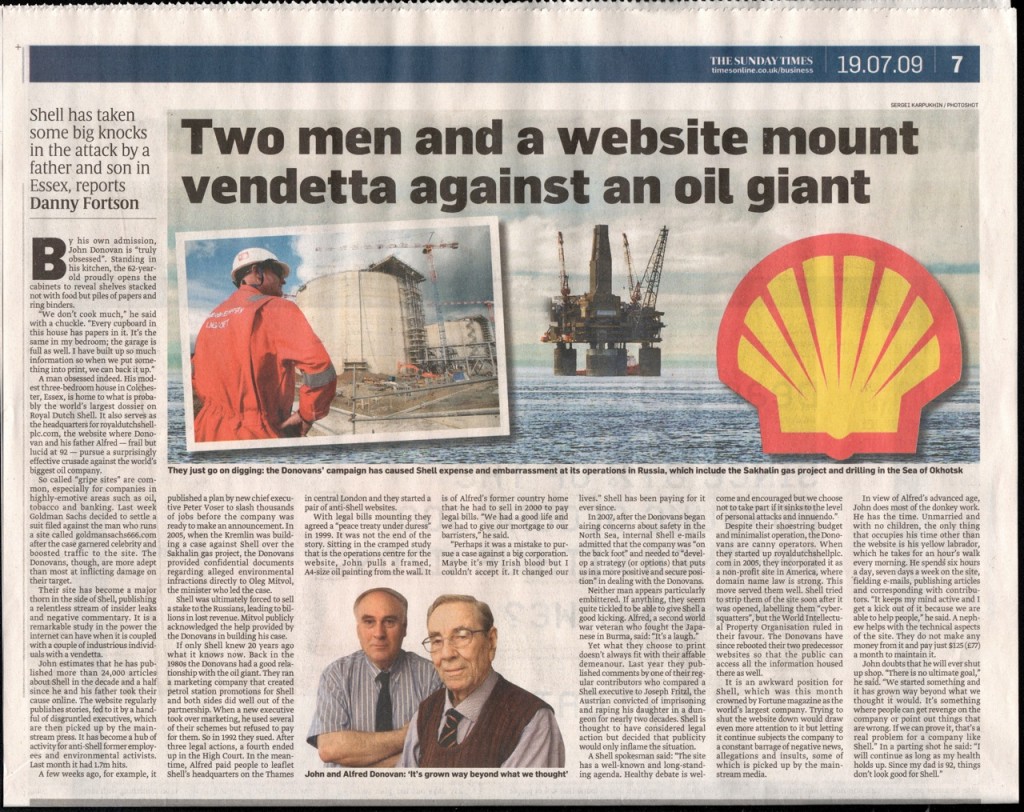
This website and sisters royaldutchshellplc.com, shellnazihistory.com, royaldutchshell.website, johndonovan.website, and shellnews.net, are owned by John Donovan. There is also a Wikipedia segment.


 Royal Dutch Shell conspired directly with Hitler, financed the Nazi Party, was anti-Semitic and sold out its own Dutch Jewish employees to the Nazis. Shell had a close relationship with the Nazis during and after the reign of Sir Henri Deterding, an ardent Nazi, and the founder and decades long leader of the Royal Dutch Shell Group. His burial ceremony, which had all the trappings of a state funeral, was held at his private estate in Mecklenburg, Germany. The spectacle (photographs below) included a funeral procession led by a horse drawn funeral hearse with senior Nazis officials and senior Royal Dutch Shell directors in attendance, Nazi salutes at the graveside, swastika banners on display and wreaths and personal tributes from Adolf Hitler and Reichsmarschall, Hermann Goring. Deterding was an honored associate and supporter of Hitler and a personal friend of Goring.

 Deterding was the guest of Hitler during a four day summit meeting at Berchtesgaden. Sir Henri and Hitler both had ambitions on Russian oil fields. Only an honored personal guest would be rewarded with a private four day meeting at Hitler’s mountain top retreat.


 IN JULY 2007, MR BILL CAMPBELL (ABOVE, A RETIRED GROUP AUDITOR OF SHELL INTERNATIONAL SENT AN EMAIL TO EVERY UK MP AND MEMBER OF THE HOUSE OF LORDS:


 MORE DETAILS:


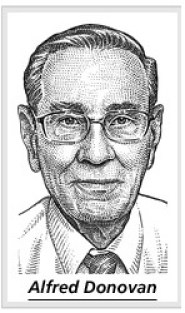 A head-cut image of Alfred Donovan (now deceased) appears courtesy of The Wall Street Journal.