

Ben van Beurden, Chief Executive Officer of Royal Dutch Shell, said in Brazil on Feb. 15 that the government should allow for more foreign investment in the country’s lucrative off-shore oil fields without having to partner with beleaguered oil major Petrobras.
By Contributor: Kenneth Rapoza: 15 Feb 2016
Brazil’s government-owned oil giant, Petrobras, should cede some of its drilling rights to foreign firms, Royal Dutch Shell Oil CEO Ben van Beurden was quoted saying in Estado de Sao Paulo newspaper on Monday.
The Shell Oil man is arguing for greater private investment in Brazil’s precious off-shore oil fields in the Atlantic Ocean, rather than current rules that require 50% ownership by Petrobras. In theory, such a move would entice private oil firms to explore for more oil and keep it for themselves, rather than having to share half of it with Petrobras. That wouldn’t eliminate government royalties, of course, but it would give foreign firms like Shell the incentive to explore and develop deep water oil fields on their own.
The government is considering these changes in an effort to take some debt pressure off Petrobras, the most heavily indebted company in Latin America.
“It’s up to congress to decide. But I think it makes sense to call on other companies who have the technology, who have the money,” van Beurden said in what amounts to a lobbying effort on behalf of big oil companies to stake claim to Brazil’s undersea oil wealth. “I don’t see how this is not beneficial for Brazil,” he added.
Brazil’s government may not have much of a choice. If it wants to make some fast money for the beleaguered Petrobras, it might find itself selling what the market wants most: pre-salt level oil fields.
Last year, Petrobras promised to sell upwards of $14 billion in assets in order to tackle its short and mid-term debt obligations. New CEO Aldemir Bendini was brought on board to tackle these divestitures. But very little has actually been sold. Surely no where near half. And Bendini’s goal was to hit that target this year.
Meanwhile, the “doomsday clock” on Petrobras’ debt is ticking. The company has an estimated $24 billion in interest and loan payments due over the next 22 months.
Petrobras is producing more oil, but it doesn’t have the refining capacity to turn it into gasoline so it has to import. That hasn’t helped its bottom line because it is importing a dollar commodity in a strong dollar environment. That’s never good.
Petrobras hasn’t generated free cash flow now for 8 years. Annual debt servicing costs have doubled to 20.3 billion reals ($5.4 billion) in the past three, Bloomberg estimated in November.
Petrobras investors have told me that if Bendini ever announced that he was selling pre-salt assets, the stock would rally significantly. Bendini has stated before that pre-salt oil was off limits. However, that could change as Petrobras remains stagnant and investors, including Brazilian government pension funds, are exhausted from being beat-down by this stock and its sad story. Pension funds, including the retirement accounts of Petrobras employees, have lost over 85% in their Petrobras holdings over the last five years.
Something’s got to give.
Opening pre-salt oil to foreign firms “would distribute the risks, bring more capacity and more investment (to Brazil),” van Beurden said in Estado today. “If someone consulted me on what to do about this, I would say (opening the market) is a good idea.”
Shell is already a partner with Petrobras.
Last year, it merged with BG, another Petrobras partner, to more than double its oil drilling rights. With the deal, Shell went from just two wells to five. At the time, van Beurden said that the BG acquisition was attractive to Shell because of Petrobras’ deepwater resources.
With BG, “Brazil…will probably be one of the most valuable countries in our portfolio,” van Beurden said.
If the government did allow for foreigners to explore and develop without Petrobras, Shell and BG would be one of the first ones in the water.
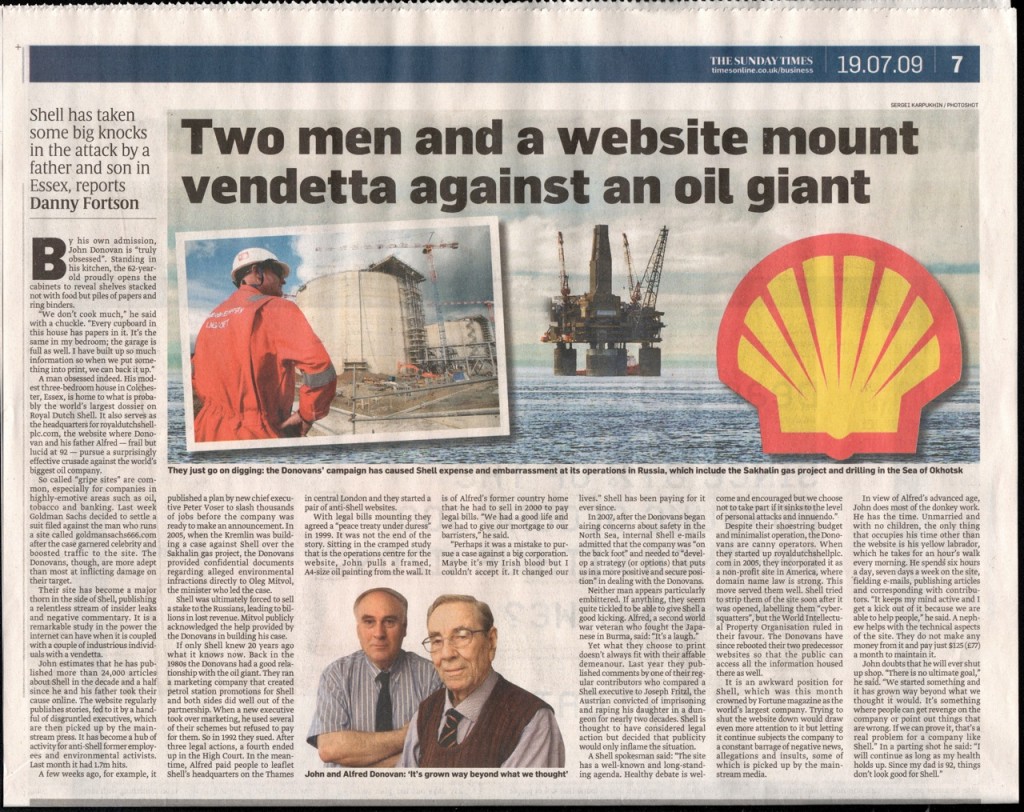
This website and sisters royaldutchshellplc.com, shellnazihistory.com, royaldutchshell.website, johndonovan.website, and shellnews.net, are owned by John Donovan. There is also a Wikipedia segment.


 Royal Dutch Shell conspired directly with Hitler, financed the Nazi Party, was anti-Semitic and sold out its own Dutch Jewish employees to the Nazis. Shell had a close relationship with the Nazis during and after the reign of Sir Henri Deterding, an ardent Nazi, and the founder and decades long leader of the Royal Dutch Shell Group. His burial ceremony, which had all the trappings of a state funeral, was held at his private estate in Mecklenburg, Germany. The spectacle (photographs below) included a funeral procession led by a horse drawn funeral hearse with senior Nazis officials and senior Royal Dutch Shell directors in attendance, Nazi salutes at the graveside, swastika banners on display and wreaths and personal tributes from Adolf Hitler and Reichsmarschall, Hermann Goring. Deterding was an honored associate and supporter of Hitler and a personal friend of Goring.

 Deterding was the guest of Hitler during a four day summit meeting at Berchtesgaden. Sir Henri and Hitler both had ambitions on Russian oil fields. Only an honored personal guest would be rewarded with a private four day meeting at Hitler’s mountain top retreat.


 IN JULY 2007, MR BILL CAMPBELL (ABOVE, A RETIRED GROUP AUDITOR OF SHELL INTERNATIONAL SENT AN EMAIL TO EVERY UK MP AND MEMBER OF THE HOUSE OF LORDS:


 MORE DETAILS:


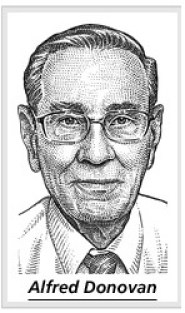 A head-cut image of Alfred Donovan (now deceased) appears courtesy of The Wall Street Journal.