

Royal Dutch Shell chief executive Ben van Beurden has told the BBC a recovery in the price of oil is hard to foresee.
“It is a very, very volatile business in terms of supply and demand. The oil price responds to very small mismatches between supply and demand,” he told BBC Radio 4’s Today programme.
The price of oil has roughly halved in the past year, to just under $50 (£32) per barrel.
Goldman Sachs predicted earlier this month it could fall as low as $20.
When asked where oil prices may go next, he told the BBC: “The honest answer to that is I don’t know.”
US shale
The halving of the oil price is “on the back of just a few percent of oversupply, and it shows how inelastic the whole system is, and simply because oil is so cheap – its not as if demand is going to respond,” he said.
He added that oil becoming cheaper would not tempt consumers to use more of it, as can happen with other products.
“People don’t drive to work twice because it’s more economical to do so” than it was before, he explained.
Demand for energy, North American shale oil production, Opec policy and industry costs would help inform where oil will go in the future, he said.
Opec producers, particularly Saudi Arabia, have maintained high levels of production in an attempt to curb US shale output, which is uneconomical at lower prices.
The organisation is managing through low oil prices by keeping its debts low. The organisation’s debts are about 12% of total capital, he added.
Solar backbone
Shell said in June it was cutting 6,500 jobs as part of cost-cutting plans following the oil price slump.
When asked how renewable energy could affect his business, Mr van Beurden said solar power could emerge as a much bigger contributor to world energy needs.
“I have no hesitation to predict that in years to come solar will be the dominant backbone of our energy system, certainly of the electricity system.”
However, during that period, the demand for energy will double, he said, leading to a “multi-decade transition,” from fossil fuels being the dominant supply for energy, he says.
He also said his reaction to any exit from the EU by the UK would be “one of disappointment” as the firm has a heritage in Britain.
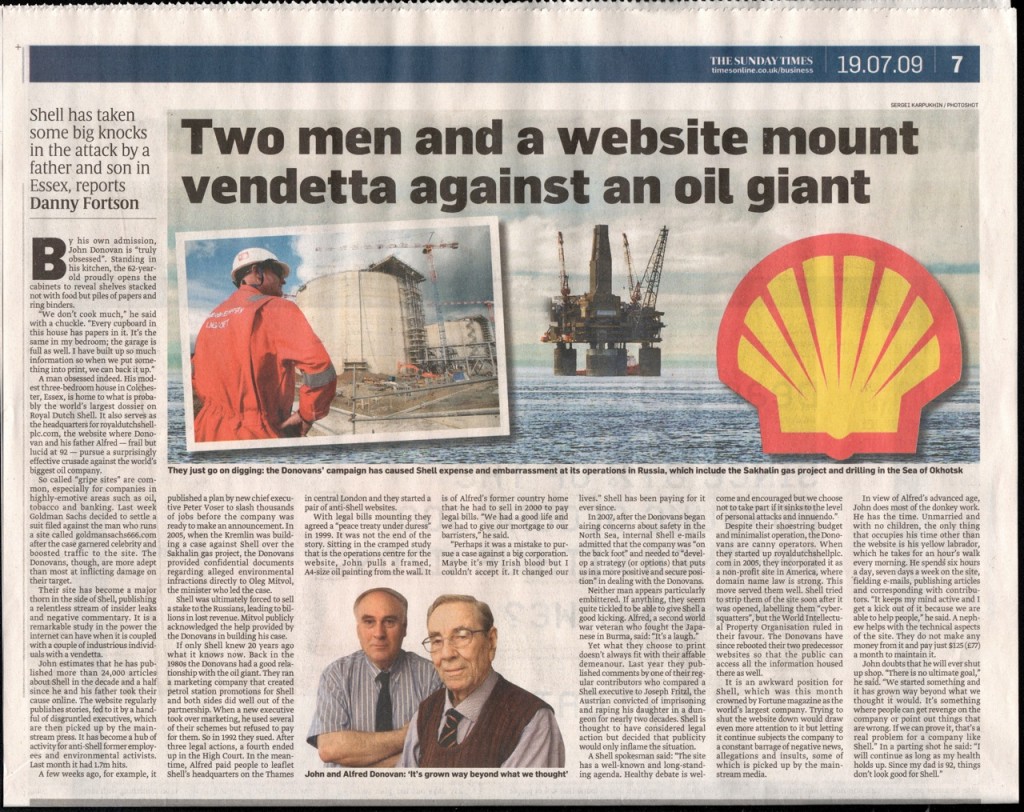
This website and sisters royaldutchshellplc.com, shellnazihistory.com, royaldutchshell.website, johndonovan.website, and shellnews.net, are owned by John Donovan. There is also a Wikipedia segment.


 Royal Dutch Shell conspired directly with Hitler, financed the Nazi Party, was anti-Semitic and sold out its own Dutch Jewish employees to the Nazis. Shell had a close relationship with the Nazis during and after the reign of Sir Henri Deterding, an ardent Nazi, and the founder and decades long leader of the Royal Dutch Shell Group. His burial ceremony, which had all the trappings of a state funeral, was held at his private estate in Mecklenburg, Germany. The spectacle (photographs below) included a funeral procession led by a horse drawn funeral hearse with senior Nazis officials and senior Royal Dutch Shell directors in attendance, Nazi salutes at the graveside, swastika banners on display and wreaths and personal tributes from Adolf Hitler and Reichsmarschall, Hermann Goring. Deterding was an honored associate and supporter of Hitler and a personal friend of Goring.

 Deterding was the guest of Hitler during a four day summit meeting at Berchtesgaden. Sir Henri and Hitler both had ambitions on Russian oil fields. Only an honored personal guest would be rewarded with a private four day meeting at Hitler’s mountain top retreat.


 IN JULY 2007, MR BILL CAMPBELL (ABOVE, A RETIRED GROUP AUDITOR OF SHELL INTERNATIONAL SENT AN EMAIL TO EVERY UK MP AND MEMBER OF THE HOUSE OF LORDS:


 MORE DETAILS:


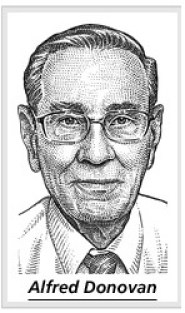 A head-cut image of Alfred Donovan (now deceased) appears courtesy of The Wall Street Journal.