
BY MICHELLE WITTE in BUSINESS on 13 APRIL

ASTANA – Production at Kazakhstan’s giant Kashagan offshore oil field is expected to restart in 2017, Royal Dutch Shell stated in its 2014 annual report.
“After the start of production from the Kashagan field in September 2013, operations had to be stopped in October 2013 due to gas leaks from the sour gas pipeline. Following investigations, it has been decided that both the oil and the gas pipeline will be replaced. Replacement activities are ongoing, with production expected to restart in 2017,” page 27 of the annual report, released on March 12, said.
After sour gas leaks forced production to halt soon after it began in late 2013 – already years behind the original schedule – predictions as to when the project would actually produce have been repeatedly made and then pushed back, and even in late January of this year, Energy Minister Vladimir Shkolnik was announcing that Kashagain would come online in late 2016.
Reuters reported in February that Italian oil service company Saipem had won a $1.8 billion contract to replace leaking pipelines at the giant field in Kazakhstan. Saipem’s statement on the contract to build two 95-kilometre pipelines said “The construction will be completed by the end of 2016,” the Feb. 6 article said.
Kashagan’s oil is deep below the Caspian seabed at very high pressure, and its associated gas has extremely high levels of toxic and corrosive hydrogen sulphide, the cause of pipe leaks and subsequent delays. Saipem’s new pipelines will be made of carbon steel and lined inside with a corrosion-resistant alloy layer, Reuters reported.
The Kashagan field is operated by the North Caspian Operating Company, and partners in the project include Shell, Italian energy company Eni, ExxonMobil, Total, the China National Petroleum Corporation, Japan’s Inpex and KazMunayGas. Upon its discovery in 2000, Kashagan field was considered to be the biggest oil discovery in 30 years. Because of the low temperature, high pressure and sour gas associated with the project, it is also considered to be one of the world’s most challenging.
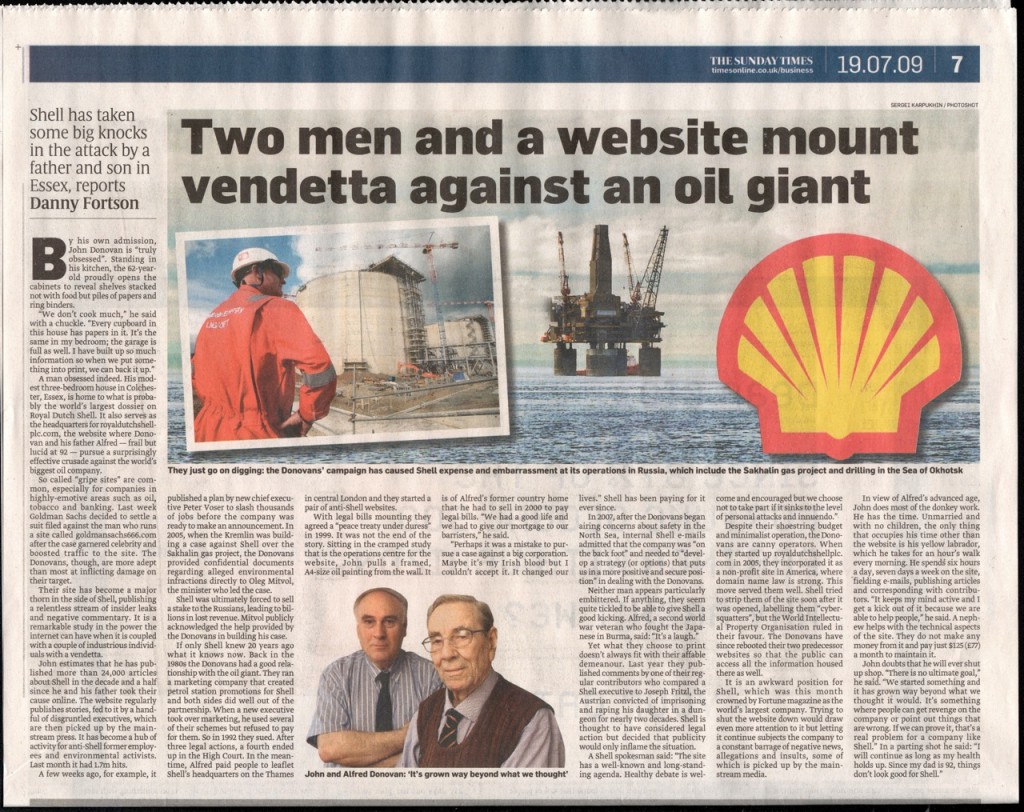
This website and sisters royaldutchshellplc.com, shellnazihistory.com, royaldutchshell.website, johndonovan.website, and shellnews.net, are owned by John Donovan. There is also a Wikipedia segment.


 Royal Dutch Shell conspired directly with Hitler, financed the Nazi Party, was anti-Semitic and sold out its own Dutch Jewish employees to the Nazis. Shell had a close relationship with the Nazis during and after the reign of Sir Henri Deterding, an ardent Nazi, and the founder and decades long leader of the Royal Dutch Shell Group. His burial ceremony, which had all the trappings of a state funeral, was held at his private estate in Mecklenburg, Germany. The spectacle (photographs below) included a funeral procession led by a horse drawn funeral hearse with senior Nazis officials and senior Royal Dutch Shell directors in attendance, Nazi salutes at the graveside, swastika banners on display and wreaths and personal tributes from Adolf Hitler and Reichsmarschall, Hermann Goring. Deterding was an honored associate and supporter of Hitler and a personal friend of Goring.

 Deterding was the guest of Hitler during a four day summit meeting at Berchtesgaden. Sir Henri and Hitler both had ambitions on Russian oil fields. Only an honored personal guest would be rewarded with a private four day meeting at Hitler’s mountain top retreat.


 IN JULY 2007, MR BILL CAMPBELL (ABOVE, A RETIRED GROUP AUDITOR OF SHELL INTERNATIONAL SENT AN EMAIL TO EVERY UK MP AND MEMBER OF THE HOUSE OF LORDS:


 MORE DETAILS:


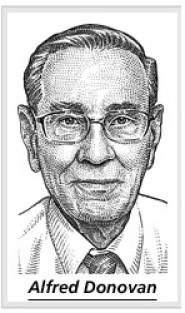 A head-cut image of Alfred Donovan (now deceased) appears courtesy of The Wall Street Journal.