
President-elect Muhammadu Buhari, a former military leader, vowed to fight the scourges of corruption and Boko Haram militants. Sunday Alamba/Associated Press
From an article Adam Nossiter published 1 April 2015 by The New York Times under the headline:
Nigerian President-Elect Muhammadu Buhari Sets Out His Agenda
Extracts
KANO, Nigeria — Nigeria’s president-elect, Muhammadu Buhari, did not smile while making his acceptance speech on Wednesday — understandably, as terrorism and corruption were his main talking points.
A day after piling up substantial vote totals against the incumbent president, Mr. Buhari, a former general who once rose to power in a military coup, further consolidated something extraordinary for Nigeria: the peaceful passing of power from one political party to another through the ballot box.
The country is now a democratic nation like others, Mr. Buhari suggested Wednesday, both in his words and in the fact that the democratic process had worked well enough that he could give the speech at all.
But in his remarks in the Nigerian capital, Abuja, Mr. Buhari also bluntly enumerated two scourges in this giant democracy: the ruthless onslaught of the Boko Haram militant group and the “evil of corruption,” as he put it.
Boko Haram led Mr. Buhari on Wednesday to segue immediately into Nigeria’s corruption problem, which “attacks our national character” and “distorts the economy,” he said.
He made it clear that, falling oil prices aside, he sees this as the country’s top economic problem, telling the audience at Abuja’s International Conference Center that “such an illegal yet powerful force soon comes to undermine democracy.” He promised to “end this threat to our economic development and democratic survival.”
At Chatham House, Mr. Buhari suggested that what he called a “war waged on corruption” would be the first step in tackling the country’s pressing economic problems. The price of oil, on which the government depends for over 70 percent of its revenue, has tumbled. Nigeria’s currency has fallen some 20 percent against the dollar over six months. Foreign currency reserves are dwindling, and an oil-revenue rainy day fund has been ransacked.
“In the face of dwindling revenues, a good place to start the repositioning of Nigeria’s economy is to swiftly tackle two ills that have ballooned under the present administration: waste and corruption,” Mr. Buhari said at Chatham House.
“If you cut the graft, you can do things,” he said. “We have a new presidential jet in this budget. Most airlines in Nigeria don’t have as many jets as the presidential fleet.”
Another economist also suggested that Mr. Buhari’s anticorruption stance was critical in a country with, as a recent World Bank paper put it, a “deeply embedded culture of corruption.”
With the new president’s emphasis on “accountability, integrity and transparency,” one economist, Bismarck Rewane, said the “missing piece in the Nigerian economy” would be filled in.
Of course, other Nigerian politicians have promised to end corruption, only to fail or even steal with abandon afterward. But there is some reason to think Mr. Buhari may hew more closely to his promises. As military ruler in 1984 and 1985, he did not enrich himself. And he ruthlessly pursued those whom he accused of corruption.
“Corruption will not be tolerated by this administration, and it shall no longer be allowed to stand as if it is a respected monument in this nation,” he said Wednesday.
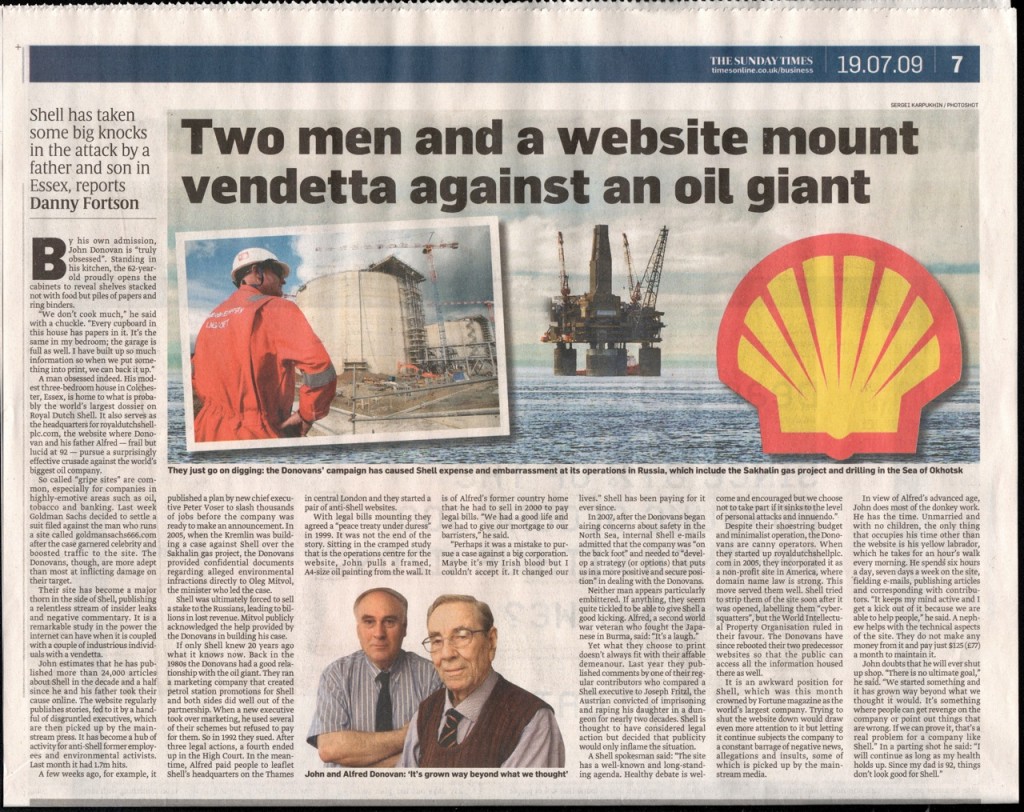
This website and sisters royaldutchshellplc.com, shellnazihistory.com, royaldutchshell.website, johndonovan.website, and shellnews.net, are owned by John Donovan. There is also a Wikipedia segment.


 Royal Dutch Shell conspired directly with Hitler, financed the Nazi Party, was anti-Semitic and sold out its own Dutch Jewish employees to the Nazis. Shell had a close relationship with the Nazis during and after the reign of Sir Henri Deterding, an ardent Nazi, and the founder and decades long leader of the Royal Dutch Shell Group. His burial ceremony, which had all the trappings of a state funeral, was held at his private estate in Mecklenburg, Germany. The spectacle (photographs below) included a funeral procession led by a horse drawn funeral hearse with senior Nazis officials and senior Royal Dutch Shell directors in attendance, Nazi salutes at the graveside, swastika banners on display and wreaths and personal tributes from Adolf Hitler and Reichsmarschall, Hermann Goring. Deterding was an honored associate and supporter of Hitler and a personal friend of Goring.

 Deterding was the guest of Hitler during a four day summit meeting at Berchtesgaden. Sir Henri and Hitler both had ambitions on Russian oil fields. Only an honored personal guest would be rewarded with a private four day meeting at Hitler’s mountain top retreat.


 IN JULY 2007, MR BILL CAMPBELL (ABOVE, A RETIRED GROUP AUDITOR OF SHELL INTERNATIONAL SENT AN EMAIL TO EVERY UK MP AND MEMBER OF THE HOUSE OF LORDS:


 MORE DETAILS:


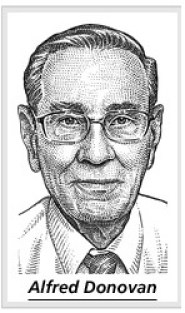 A head-cut image of Alfred Donovan (now deceased) appears courtesy of The Wall Street Journal.