
 By David Ljunggren
OTTAWA (Reuters) – Royal Dutch Shell will resume drilling off Alaska after suspending operations for two years in the wake of an accident, the special U.S. envoy to the Arctic said on Monday, but gave no details as to when.
Shell has been moving oil rigs to Alaska as it awaits the green light from U.S. authorities. It froze operations in 2013 after the grounding of a rig in Alaska prompted protests from environmental groups.
“Clearly Shell and others will resume drilling and exploration up off the North Slope of Alaska,” Admiral Robert Papp said in an interview during a visit to Canada.
Papp, noting the accident had happened in December 2012 after that year’s drilling season had ended, said the Anglo-Dutch oil major understood the importance of taking all the necessary precautions.
“I think Shell is putting significant resources into this to make sure they have enough people, equipment, resources, redundancy. They should be OK,” he said.
Any company operating in the Arctic had to follow U.S. Department of the Interior rules on safety, preparation, extra equipment and additional drill rigs, Papp said, adding they had to be capable of drilling a relief well if necessary.
The Arctic is estimated to contain 20 percent of the world’s undiscovered hydrocarbon resources, although the reserves are extremely remote and costly to develop.
Environmentalists fear the remoteness of the region and the near total lack of infrastructure mean the consequences of a drilling accident could be disastrous.
Papp said, however, he was more worried about two ships colliding in the Bering Strait – the narrow passage that divides Alaska and Russia – than an oil spill.
“The oil companies have done this before. They’re drilled in areas like this – it’s relatively shallow, the wells are not high pressure … so I think they can do it,” he said.
Papp, who headed the U.S. Coast Guard before taking up his new post last year, said that while the Department of the Interior was responsible for drilling operations, he had an interest as the Arctic envoy.
“I would not say that there’s any official fingerpointing at them, but I’ve spoken to Shell officials numerous times over about a four-year period and they clearly know the pressure is on,” he said.
“They understand it’s very important for their company, and they also understand that it’s very important from a public relations standpoint as well. So they get it.”
(Reporting by David Ljunggren, editing by G Crosse)
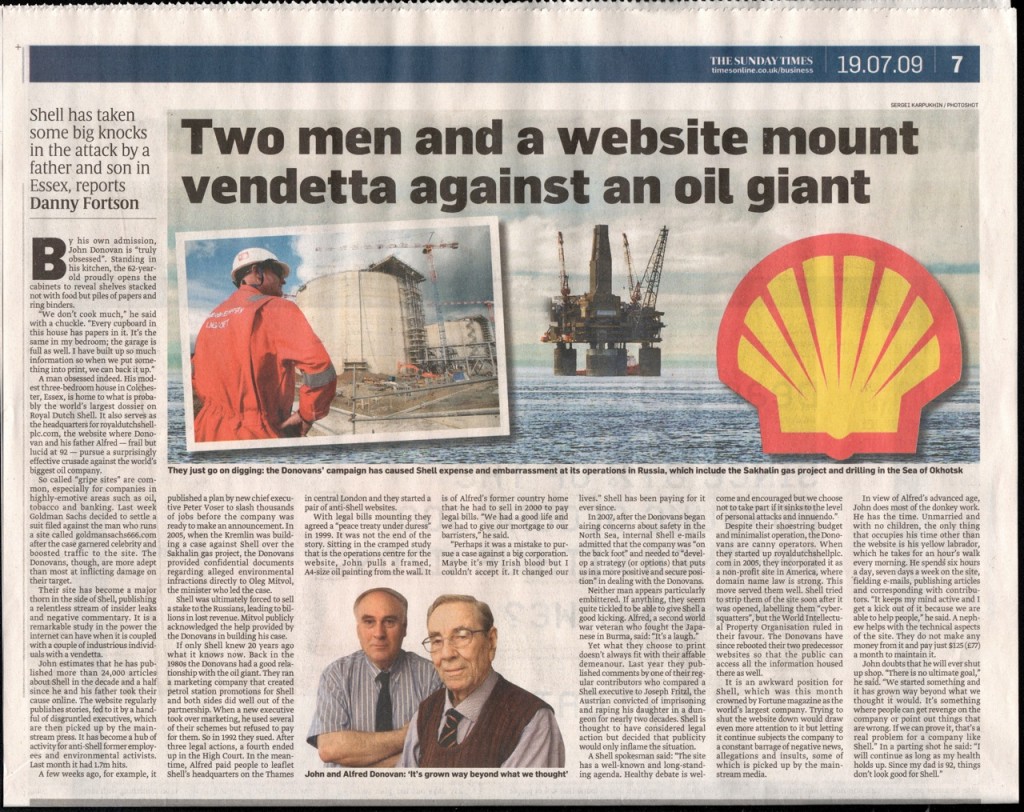
This website and sisters royaldutchshellplc.com, shellnazihistory.com, royaldutchshell.website, johndonovan.website, and shellnews.net, are owned by John Donovan. There is also a Wikipedia segment.


 Royal Dutch Shell conspired directly with Hitler, financed the Nazi Party, was anti-Semitic and sold out its own Dutch Jewish employees to the Nazis. Shell had a close relationship with the Nazis during and after the reign of Sir Henri Deterding, an ardent Nazi, and the founder and decades long leader of the Royal Dutch Shell Group. His burial ceremony, which had all the trappings of a state funeral, was held at his private estate in Mecklenburg, Germany. The spectacle (photographs below) included a funeral procession led by a horse drawn funeral hearse with senior Nazis officials and senior Royal Dutch Shell directors in attendance, Nazi salutes at the graveside, swastika banners on display and wreaths and personal tributes from Adolf Hitler and Reichsmarschall, Hermann Goring. Deterding was an honored associate and supporter of Hitler and a personal friend of Goring.

 Deterding was the guest of Hitler during a four day summit meeting at Berchtesgaden. Sir Henri and Hitler both had ambitions on Russian oil fields. Only an honored personal guest would be rewarded with a private four day meeting at Hitler’s mountain top retreat.


 IN JULY 2007, MR BILL CAMPBELL (ABOVE, A RETIRED GROUP AUDITOR OF SHELL INTERNATIONAL SENT AN EMAIL TO EVERY UK MP AND MEMBER OF THE HOUSE OF LORDS:


 MORE DETAILS:


 A head-cut image of Alfred Donovan (now deceased) appears courtesy of The Wall Street Journal.