
 Thursday 26 March 2015
(Reuters) – Royal Dutch Shell (RDSa.L) is planning further job cuts in its UK North Sea oil and gas business in 2015, the company said on Thursday, just a week after a package of tax cuts from the Treasury aimed at encouraging growth in the industry.
“Shell UK plans to reduce the number of staff and agency contractors who support the company’s UK North Sea operations by at least 250 in 2015,” Shell said in an emailed statement.
The reduction is in addition to 250 job losses announced in August, Shell said, and follows North Sea job cuts by BP (BP.L), Talisman Sinopec, Chevron and ConocoPhillips.
Britain’s North Sea oil and gas sector employs over 400,000 people and is worth about 5 billion pounds ($7.47 billion) a year to the state. But investment activity has stalled due to a combination of high costs, high taxes and falling oil prices.
Last week, Britain announced a raft of oil tax cuts and an investment allowance with the aim of stimulating investment and production, heeding calls for help from battered North Sea oil and gas companies battling high costs and the price slump.
While these measures were broadly welcomed by the industry, some participants expressed reservations about whether they were sufficient to make a material difference without a rebound in the oil price.
Paul Goodfellow, upstream vice president for the UK and Ireland at Shell, said that while reforms to the fiscal regime were a “step in the right direction”, the industry needed to redouble its efforts to tackle costs and improve profitability if the North Sea was to continue to attract investment.
Shell also said that a decision had been made in principle to move to an “even time rota”. As a result, a three weeks on, three weeks off shift pattern – as opposed to the more traditional two weeks on, two or three weeks off – will be put forward for consultation with the staff committee.
Trade unions Unite and GMB are already balloting their members working offshore to gauge appetite for strike action over changes to shift patterns, which have already been introduced by some operators.
“We think this cancer will spread throughout the North Sea,” said John Taylor, regional industrial organiser at Unite. “We are totally opposed to the introduction of three on, three off.”
The ballot will close on March 27. “We expect an overwhelming majority in favour of strike action,” he said.
(Reporting by Alex Lawler and Claire Milhench; editing by Susan Thomas)
RELATED


 Royal Dutch Shell conspired directly with Hitler, financed the Nazi Party, was anti-Semitic and sold out its own Dutch Jewish employees to the Nazis. Shell had a close relationship with the Nazis during and after the reign of Sir Henri Deterding, an ardent Nazi, and the founder and decades long leader of the Royal Dutch Shell Group. His burial ceremony, which had all the trappings of a state funeral, was held at his private estate in Mecklenburg, Germany. The spectacle (photographs below) included a funeral procession led by a horse drawn funeral hearse with senior Nazis officials and senior Royal Dutch Shell directors in attendance, Nazi salutes at the graveside, swastika banners on display and wreaths and personal tributes from Adolf Hitler and Reichsmarschall, Hermann Goring. Deterding was an honored associate and supporter of Hitler and a personal friend of Goring.

 Deterding was the guest of Hitler during a four day summit meeting at Berchtesgaden. Sir Henri and Hitler both had ambitions on Russian oil fields. Only an honored personal guest would be rewarded with a private four day meeting at Hitler’s mountain top retreat.


 IN JULY 2007, MR BILL CAMPBELL (ABOVE, A RETIRED GROUP AUDITOR OF SHELL INTERNATIONAL SENT AN EMAIL TO EVERY UK MP AND MEMBER OF THE HOUSE OF LORDS:


 MORE DETAILS:


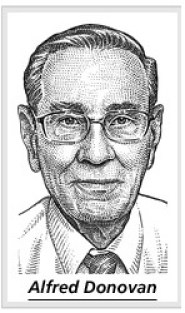 A head-cut image of Alfred Donovan (now deceased) appears courtesy of The Wall Street Journal.