
 The Groningen field is the largest natural gas field in Europe and the 10th largest in the world. It is operated by government-owned Gasunie and output is jointly exploited by the government, Royal Dutch Shell and Exxon. Extraction has resulted in increasingly strong tremors, some measuring as much as 3.6 on the Richter scale, which have cracked buildings and led to widespread damage claims.

(Reporting By Anthony Deutsch, editing by David Evans)
Extracts
Feb 12 (Reuters) – Gas supplies to Europe from the massive Groningen field in the Netherlands could be curtailed as Dutch lawmakers debating on Thursday face public protests over earthquakes blamed on the site ahead of elections next month.
The parliament debate comes as the Netherlands and the European Union seek to diversify energy needs in the wake of the worst confrontation with Russia since the Cold War.
The Dutch, the EU’s largest gas exporter, can supply their households and power plants for years, but supplies will start dwindling in 2025, and they will soon become a net importer.
The Groningen field was the main source of 13 billion euros ($14.73 billion) in government gas income in 2013 and a reduction could significantly impact state finances, already strained by years of austerity.
Its future has become a political flashpoint in the run-up to March 18 provincial elections that are expected to deal a blow to the ruling coalition of Liberal Prime Minister Mark Rutte.
Extraction has resulted in increasingly strong tremors, some measuring as much as 3.6 on the Richter scale, which have cracked buildings and led to widespread damage claims.
As the debate in parliament began, protesters in the public gallery sang the folk anthem of the Groningen region.
The Groningen field is the largest natural gas field in Europe and the 10th largest in the world.
It is operated by government-owned Gasunie and output is jointly exploited by the government, Royal Dutch Shell and Exxon.
RELATED REUTERS ARTICLE


 Royal Dutch Shell conspired directly with Hitler, financed the Nazi Party, was anti-Semitic and sold out its own Dutch Jewish employees to the Nazis. Shell had a close relationship with the Nazis during and after the reign of Sir Henri Deterding, an ardent Nazi, and the founder and decades long leader of the Royal Dutch Shell Group. His burial ceremony, which had all the trappings of a state funeral, was held at his private estate in Mecklenburg, Germany. The spectacle (photographs below) included a funeral procession led by a horse drawn funeral hearse with senior Nazis officials and senior Royal Dutch Shell directors in attendance, Nazi salutes at the graveside, swastika banners on display and wreaths and personal tributes from Adolf Hitler and Reichsmarschall, Hermann Goring. Deterding was an honored associate and supporter of Hitler and a personal friend of Goring.

 Deterding was the guest of Hitler during a four day summit meeting at Berchtesgaden. Sir Henri and Hitler both had ambitions on Russian oil fields. Only an honored personal guest would be rewarded with a private four day meeting at Hitler’s mountain top retreat.


 IN JULY 2007, MR BILL CAMPBELL (ABOVE, A RETIRED GROUP AUDITOR OF SHELL INTERNATIONAL SENT AN EMAIL TO EVERY UK MP AND MEMBER OF THE HOUSE OF LORDS:


 MORE DETAILS:


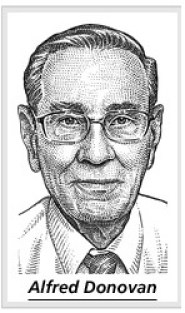 A head-cut image of Alfred Donovan (now deceased) appears courtesy of The Wall Street Journal.