

By Rob Davies: 2 August 2013 (Headline as per newspaper article)
Departing Shell boss Peter Voser lamented a ‘clearly disappointing’ quarter as the oil giant suffered a slump in profit and ditched production targets it set just two years ago.
Continuing problems with oil theft in Nigeria and a writedown on the value of its US shale operations proved the main drag on pre-tax profit, which tumbled 60 per cent to £1.6billion.
Even stripping out the US writedown in its ‘liquids-rich’ shale assets, the quarterly profit was 20 per cent below last year’s result at £3billion, sending shares down 105p to 2133p.
Voser, who is to step down in the first half of 2014, said he had also ‘retired’ the group’s production target of 3.7million barrels of oil per day (bpd) by 2014.
The Swiss boss, who set the target in mid-2011, claimed output was ‘less relevant’ in 2013 because shareholders preferred the firm’s goals to be linked to financial performance.
He urged investors to look beyond the quarter’s results, insisting that ‘earnings volatility is a fact of life’ and pointing to the company’s ‘long-term strategy making multi-year investment decisions’.
One of the biggest ongoing challenges for Voser has been the firm’s effort to tackle what he called ‘endemic’ oil theft in Nigeria.
The problem, known as ‘bunkering’, cost Shell some £165million in profit and 100,000bpd in production over the past three months. It contributed to an overall 1 per cent decline in production to 3.1m bpd.
Voser said there had been a ‘marked escalation in security problems and theft in Nigeria’ and revealed the firm plans to sell some of its onshore oil facilities, one of its traditional powerhouse regions.
Shell will sell to local firms where possible, Voser said, in the hope this will help stem a tidal wave of bunkering costing Nigeria £7.9billion a year.
About half of the North American shale assets will also be put on the block as Shell chases projects with greater economies of scale.
Despite the difficult quarter, Voser and chief financial officer Simon Henry insisted the firm’s long-term strategy was on track.
The duo set a target of up to £132billion in total cashflow between 2012 and 2015 and said Shell had reached £46billion after 18 months. Henry also highlighted the windfalls shareholders have received, despite the dip in profit.
The dividend was up by 5 per cent to 29.6p per share in the quarter, while the company bought back £2billion worth of shares in the first half of the year.
This website and sisters royaldutchshellplc.com, shellnazihistory.com, royaldutchshell.website, johndonovan.website, and shellnews.net, are owned by John Donovan. There is also a Wikipedia segment.


 Royal Dutch Shell conspired directly with Hitler, financed the Nazi Party, was anti-Semitic and sold out its own Dutch Jewish employees to the Nazis. Shell had a close relationship with the Nazis during and after the reign of Sir Henri Deterding, an ardent Nazi, and the founder and decades long leader of the Royal Dutch Shell Group. His burial ceremony, which had all the trappings of a state funeral, was held at his private estate in Mecklenburg, Germany. The spectacle (photographs below) included a funeral procession led by a horse drawn funeral hearse with senior Nazis officials and senior Royal Dutch Shell directors in attendance, Nazi salutes at the graveside, swastika banners on display and wreaths and personal tributes from Adolf Hitler and Reichsmarschall, Hermann Goring. Deterding was an honored associate and supporter of Hitler and a personal friend of Goring.

 Deterding was the guest of Hitler during a four day summit meeting at Berchtesgaden. Sir Henri and Hitler both had ambitions on Russian oil fields. Only an honored personal guest would be rewarded with a private four day meeting at Hitler’s mountain top retreat.


 IN JULY 2007, MR BILL CAMPBELL (ABOVE, A RETIRED GROUP AUDITOR OF SHELL INTERNATIONAL SENT AN EMAIL TO EVERY UK MP AND MEMBER OF THE HOUSE OF LORDS:


 MORE DETAILS:


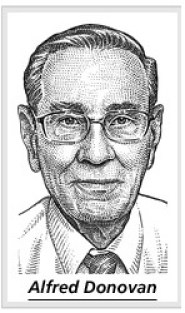 A head-cut image of Alfred Donovan (now deceased) appears courtesy of The Wall Street Journal.