

An executive of Shell has said the future of the oil company’s Geelong refinery is ‘borderline’.
Shell global downstream director Mark Williams said the operation of the refinery at Geelong was ‘questionable’ given the challenges faced.
‘It’s borderline,’ Mr Williams told the Australian Financial Review.
‘It depends a lot on how it performs over the next few years whether or not it will ultimately be a survivor.
‘I think you can see the rest of the industry struggling with the same dynamics.’
In a statement, Shell said Australian refining was part of a highly competitive global market and the Geelong refinery faced challenges.
‘Geelong Refinery faces challenges, including increased competition from new mega-refineries in Asia,’ company spokesman Paul Zennaro said.
‘Shell employees are working to make the refinery more competitive with a continued focus on safety while enhancing profitable niche products including Avgas, bitumen and solvents.’
Shell had recently invested $47.5 million in a new water processing plant and $20 million in new bitumen facilities at the Geelong plant.
The plant, one of the largest hydrocarbon refineries in Australia, employs more than 400 people on site.
Shell in June decided to close its refinery in Clyde, Sydney.
The 79,000 barrel refinery will stop from September 30 and will be converted into a fuel terminal.
Caltex Australia announced in July that it would convert its Sydney refinery into an import terminal.
The Kurnell refinery will close in 2014 at the expense of 330 jobs.
The decision follows a review of the company’s operations announced in August last year.
The Victorian government committed $4 million to a Geelong-focused assistance fund in June, a spokeswoman said.
‘The Australian refining sector, like others, is facing major challenges,’ she said.
‘Remaining competitive is a key part of dealing with those challenges.
‘That’s why we have been calling on the Gillard government to address issues that impact Australia’s competitiveness.’
She said issues undermining the nation’s competitiveness included rising energy prices and the carbon tax.
‘Our focus is on assisting regional communities to transition,’ she said.
When asked whether the government was in talks with Shell the government spokeswoman said the coalition regularly met major employers and those discussions were commercial in confidence.
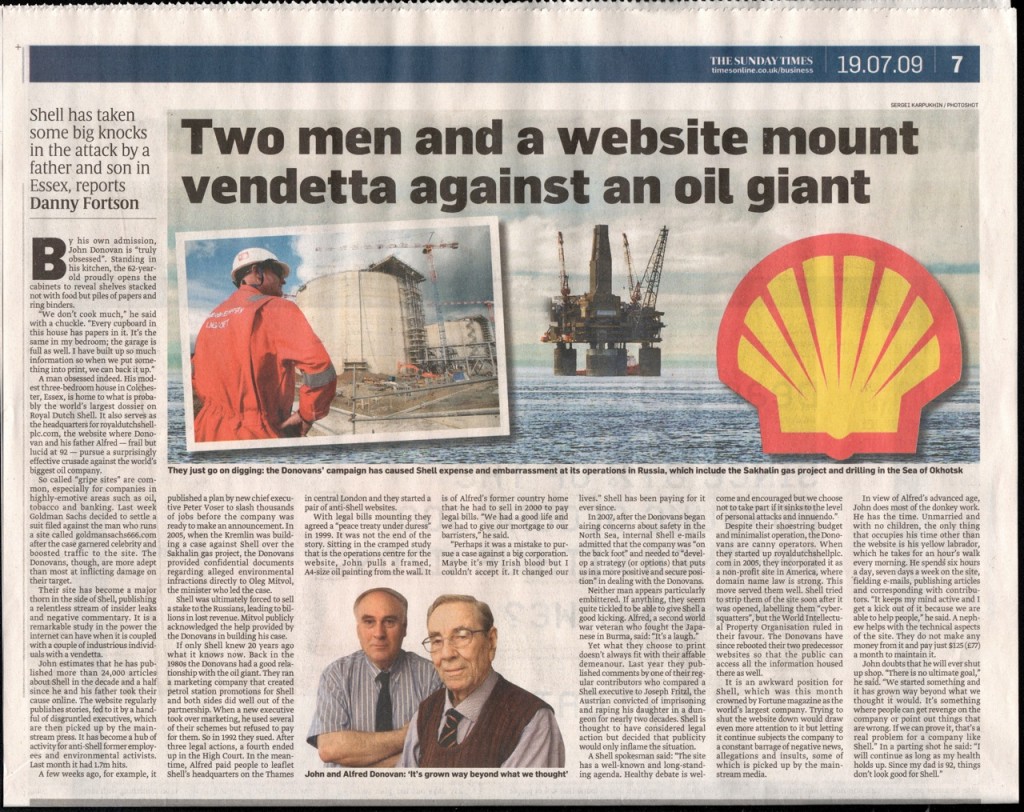
This website and sisters royaldutchshellplc.com, shellnazihistory.com, royaldutchshell.website, johndonovan.website, and shellnews.net, are owned by John Donovan. There is also a Wikipedia segment.


 Royal Dutch Shell conspired directly with Hitler, financed the Nazi Party, was anti-Semitic and sold out its own Dutch Jewish employees to the Nazis. Shell had a close relationship with the Nazis during and after the reign of Sir Henri Deterding, an ardent Nazi, and the founder and decades long leader of the Royal Dutch Shell Group. His burial ceremony, which had all the trappings of a state funeral, was held at his private estate in Mecklenburg, Germany. The spectacle (photographs below) included a funeral procession led by a horse drawn funeral hearse with senior Nazis officials and senior Royal Dutch Shell directors in attendance, Nazi salutes at the graveside, swastika banners on display and wreaths and personal tributes from Adolf Hitler and Reichsmarschall, Hermann Goring. Deterding was an honored associate and supporter of Hitler and a personal friend of Goring.

 Deterding was the guest of Hitler during a four day summit meeting at Berchtesgaden. Sir Henri and Hitler both had ambitions on Russian oil fields. Only an honored personal guest would be rewarded with a private four day meeting at Hitler’s mountain top retreat.


 IN JULY 2007, MR BILL CAMPBELL (ABOVE, A RETIRED GROUP AUDITOR OF SHELL INTERNATIONAL SENT AN EMAIL TO EVERY UK MP AND MEMBER OF THE HOUSE OF LORDS:


 MORE DETAILS:


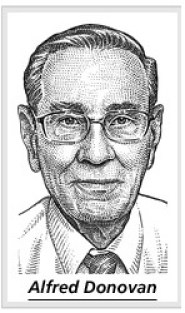 A head-cut image of Alfred Donovan (now deceased) appears courtesy of The Wall Street Journal.