
They want Alberta to demonstrate that recommendations are being followed
Environmentalists are trying to force the Alberta government to show it’s followed through on previous recommendations to reduce the impact of oilsands mines before any more projects are approved.
The Oilsands Environmental Coalition has asked the regulatory panel examining Shell’s proposed Jackpine expansion to check into the status of dozens of recommendations by previous panels.
Those recommendations were conditions under which previous oilsands projects were given the OK, but there’s no information on whether they’ve been lived up to, said Simon Dyer of the Pembina Institute.
“There’s no accountability,” Dyer said. “We fear many of (the recommendations) have not been acted upon.
“These were recommendations that the panel said had to happen for the project to be in the public interest.”
The groups combed through the approvals for four major oilsands projects made by joint federal-provincial impact assessment panels. Each of those four panels concluded the projects would have no significant adverse environmental effects, provided the recommendations were followed.
There are a total of 108 separate recommendations, although some repeated from panel to panel.
The Pembina Institute, part of the coalition that filed the motion, then tried to find out how many of those recommendations had been implemented. They were unable to do so.
“There’s no public registry,” said Dyer. “There’s no contact person.”
Some of the recommendations have been met, such as the 2004 recommendation for a study into how much water the Athabasca River needs to stay healthy.
Others haven’t. The water management framework based on that study remains stalled at phase one, more than a year after it was supposed to have moved forward.
But the status of most of the recommendations, which involve everything from wildlife impacts to tailings management to emissions from mine vehicles, is simply unclear.
Randall Barrett of Alberta Environment said recommenda-tions dealing specifically with a project – allowable level of sulphur emissions, for example – are tracked very closely.
But he said those dealing with larger issues, such as overall water use, are simply considered part of the government’s ongoing environmental monitoring work and are not tied as closely to project approvals.
“We carefully track the highconsequence items that are used in the public-interest test for that project,” he said. “The other items relative to ongoing work, we consider those, but the timing on those is not tracked in the same way.”
Barrett acknowledged that timelines for such issues often change and may not conform to those set out in project approvals.
The coalition is arguing that hearings on Shell’s Jackpine expansion, which would produce 100,000 barrels a day, can’t proceed until the panel finds out what happened with those recommendations. Until that happens, Dyer said it’s impossible to know how the project will add to environmental impacts the oilsands region is already seeing.
“We’ve got a cumulative effects problem that’s getting worse with every project that’s approved,” he said.
Shell argues the coalition’s motion has come too late in the game and should be disregarded.


 Royal Dutch Shell conspired directly with Hitler, financed the Nazi Party, was anti-Semitic and sold out its own Dutch Jewish employees to the Nazis. Shell had a close relationship with the Nazis during and after the reign of Sir Henri Deterding, an ardent Nazi, and the founder and decades long leader of the Royal Dutch Shell Group. His burial ceremony, which had all the trappings of a state funeral, was held at his private estate in Mecklenburg, Germany. The spectacle (photographs below) included a funeral procession led by a horse drawn funeral hearse with senior Nazis officials and senior Royal Dutch Shell directors in attendance, Nazi salutes at the graveside, swastika banners on display and wreaths and personal tributes from Adolf Hitler and Reichsmarschall, Hermann Goring. Deterding was an honored associate and supporter of Hitler and a personal friend of Goring.

 Deterding was the guest of Hitler during a four day summit meeting at Berchtesgaden. Sir Henri and Hitler both had ambitions on Russian oil fields. Only an honored personal guest would be rewarded with a private four day meeting at Hitler’s mountain top retreat.


 IN JULY 2007, MR BILL CAMPBELL (ABOVE, A RETIRED GROUP AUDITOR OF SHELL INTERNATIONAL SENT AN EMAIL TO EVERY UK MP AND MEMBER OF THE HOUSE OF LORDS:


 MORE DETAILS:


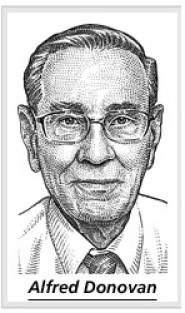 A head-cut image of Alfred Donovan (now deceased) appears courtesy of The Wall Street Journal.