
Investors table special resolution prior to May meeting
Campaigners argue project is an environmental liability
Tim Webb: Monday 12 April 2010 21.29 BST

A group of institutional investors want Shell to review the commerical and environmental viability of its oil sands project. Photograph: John Vidal
Shell has dismissed shareholder calls for a review of its controversial oil sands developments.
A group of institutional investors, led by campaign group FairPensions, had tabled a special resolution ahead of the Anglo-Dutch company’s annual meeting next month. They want Shell to review the commercial and environmental viability of going ahead with its new projects in Canada’s boreal forests.
But the Anglo-Dutch oil company today urged other investors to vote down the resolution. “Whilst the issues raised by the group of shareholders … are valid and appreciated … it would set a precedent which, if applied more generally to the company’s major investment opportunities, would add unnecessary costs and duplication of effort.”
The letter to shareholders, giving notice of the meeting in the Hague on 18 May, added that the company had already provided all the non commercially sensitive information to shareholders about its oil sands projects. BP, whose annual meeting takes place on Thursday, is facing similar pressure from shareholders over its own oil sands activities.
Shell’s next development phase of its Athabasca joint venture will soon add 100,000 barrels per day. This will take production from oil sands mining to 4% of its total production. About 0.6% of its current production comes from in situ operations, where the oil is recovered from beneath the ground by drilling.
The campaign led by FairPensions, whose supporters include the Co-operative and trade union Unison, argue that the projects are too big an environmental and economic liability. They also argue that climate change caused by oil sands development could put at risk shareholders’ other investments.
The issue of oil sands has soared up the political and environmental agenda since the Copenhagen summit highlighted the need for a clampdown on carbon-intensive activities.


 Royal Dutch Shell conspired directly with Hitler, financed the Nazi Party, was anti-Semitic and sold out its own Dutch Jewish employees to the Nazis. Shell had a close relationship with the Nazis during and after the reign of Sir Henri Deterding, an ardent Nazi, and the founder and decades long leader of the Royal Dutch Shell Group. His burial ceremony, which had all the trappings of a state funeral, was held at his private estate in Mecklenburg, Germany. The spectacle (photographs below) included a funeral procession led by a horse drawn funeral hearse with senior Nazis officials and senior Royal Dutch Shell directors in attendance, Nazi salutes at the graveside, swastika banners on display and wreaths and personal tributes from Adolf Hitler and Reichsmarschall, Hermann Goring. Deterding was an honored associate and supporter of Hitler and a personal friend of Goring.

 Deterding was the guest of Hitler during a four day summit meeting at Berchtesgaden. Sir Henri and Hitler both had ambitions on Russian oil fields. Only an honored personal guest would be rewarded with a private four day meeting at Hitler’s mountain top retreat.


 IN JULY 2007, MR BILL CAMPBELL (ABOVE, A RETIRED GROUP AUDITOR OF SHELL INTERNATIONAL SENT AN EMAIL TO EVERY UK MP AND MEMBER OF THE HOUSE OF LORDS:


 MORE DETAILS:


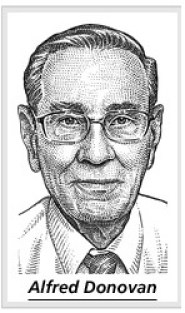 A head-cut image of Alfred Donovan (now deceased) appears courtesy of The Wall Street Journal.