
Rex Tillerson. AP Photo
e24.se
2009-12-02 | Publicerad 07:42 | Uppdaterad 07:46
Rex Tillerson, the chief executive of ExxonMobil, will receive a 7 per cent increase in salary to $2.2m in 2010, but his year-end bonus for 2009 is to drop by almost half.
Exxon’s board of directors cut his 2009 bonus to $2.4m, down 40 per cent from 2008 after profits were hitby the economic downturn and lower oil prices. The company’s profits were lifted in 2008 by record-high commodity prices.
This past year has been tougher on the industry in general, with lower commodity prices and the global economic downturn. In the third quarter, Exxon’s profit plunged 68 per cent on the grim outlook.
But analysts have continued to support Mr Tillerson’s strategic leadership at Exxon, which has enabled it to continue spending despite falling profits and an uncertain year ahead. It has invested $19bn through the first three quarters to develop new energy supplies, while competitors have sharply cut back.
In the past 18 months, BP has cut 6,500 jobs – more than the 5,000 it had originally announced it would cut – and said this week it had lifted its cost-cutting target for this year to $4bn from $3bn.
Royal Dutch Shell said in October that 5,000 staff would be forced to leave the Anglo-Dutch group as part of a restructuring begun this year.
ConocoPhillips has announced plans to sell $10bn in assets during the next wo years as part of a restructuring that has included job cuts and cost-saving measures.
Exxon maintains a steady capital-spending programme through the ups and downs in commodity prices.
But it is not known for overly generous bonuses. Indeed, Exxon is conservative in this regard, compared with other, less well performing energy companies. The most significant bonus of 2008 was that of Aubrey McClendon, chief executive of Chesapeake Energy, one of the US’s biggest natural gas producers, who received a bonus of more than $75m after Chesapeake’s falling stock price forced him to sell more than 90 per cent of his shares to meet a margin call from his creditors.
Yet Exxon had the highest return on capital employed of 2008 and the second highest total shareholder return.
By Sheila McNulty in Houston


 Royal Dutch Shell conspired directly with Hitler, financed the Nazi Party, was anti-Semitic and sold out its own Dutch Jewish employees to the Nazis. Shell had a close relationship with the Nazis during and after the reign of Sir Henri Deterding, an ardent Nazi, and the founder and decades long leader of the Royal Dutch Shell Group. His burial ceremony, which had all the trappings of a state funeral, was held at his private estate in Mecklenburg, Germany. The spectacle (photographs below) included a funeral procession led by a horse drawn funeral hearse with senior Nazis officials and senior Royal Dutch Shell directors in attendance, Nazi salutes at the graveside, swastika banners on display and wreaths and personal tributes from Adolf Hitler and Reichsmarschall, Hermann Goring. Deterding was an honored associate and supporter of Hitler and a personal friend of Goring.

 Deterding was the guest of Hitler during a four day summit meeting at Berchtesgaden. Sir Henri and Hitler both had ambitions on Russian oil fields. Only an honored personal guest would be rewarded with a private four day meeting at Hitler’s mountain top retreat.


 IN JULY 2007, MR BILL CAMPBELL (ABOVE, A RETIRED GROUP AUDITOR OF SHELL INTERNATIONAL SENT AN EMAIL TO EVERY UK MP AND MEMBER OF THE HOUSE OF LORDS:


 MORE DETAILS:


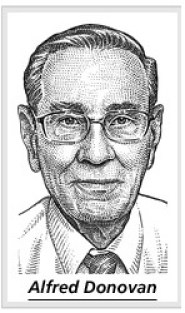 A head-cut image of Alfred Donovan (now deceased) appears courtesy of The Wall Street Journal.