Bloomberg News
Nov. 16, 2009, 6:05AM
Royal Dutch Shell Plc is calling for the removal of any restrictions on carbon credit trading and asking for derivative contracts to be allowed under cap-and-trade programs.
You have to allow a secondary market to develop, David Hone, Shell’s climate change adviser, told reporters at an energy conference in Singapore today. You don’t want to have a carbon market that’s restricted from doing what other commodity markets are doing.
Legislators in the U.S. plan to impose restrictions on trading of carbon credits under a proposed cap-and-trade program, on concern that speculators will drive up carbon prices and costs for consumers.
Under such programs, emitters are permitted to release a certain quantity of polluting gases and are allotted permits for that amount, which can be bought and sold as required. The European Trading Scheme, mandatory for heavy industry and power generators, is the world’s largest. There are also voluntary cap-and-trade programs such as the one operated by the Chicago Climate Exchange.
The current economics of carbon capture and sequestration projects require carbon dioxide to cost $100 a ton to make a profit, David Lawrence, an executive vice president at Shell, said Nov. 13. Companies need to advance technology to cut projects costs to make them feasible at $40 a ton and potentially below that, he said.
Is carbon capture and sequestration a possibility? Yes, it is. Can it be done? Yes, it can. Can it cost a lot of money? Yes, it does, Lawrence said on a Webcast presentation. These are all in the early days and requires a tremendous amount of work to push this forward, to make them happen.
European Union carbon-dioxide permits for December advanced 0.6 percent to 13.49 euros a metric ton as of 11:08 a.m. on the European Climate Exchange in London.
Shell and BP Plc are among companies supporting cap-and- trade. Almost 200 countries are due to gather in Copenhagen next month to discuss the terms of a climate accord to replace the Kyoto Protocol, which expires in 2012.
President Barack Obama’s administration proposed regulatory changes in August, including imposing higher capital and margin requirements on derivatives markets and requiring certain contracts be processed through clearinghouses. The Commodity Futures Trading Commission has moved to limit commodity speculation amid concerns it’s distorting prices.
The implementation of a new global climate treaty may take two years to three years, compared with seven years for the Kyoto Protocol, Hone said. Copenhagen may provide a direction and framework for individual countries to prepare laws, he said.
Eventually every country has to have a target, Hone said.
The cap-and-trade program is preferable to carbon taxes as it reduces emissions at the lowest cost to the economy, Hone said. By contrast, Exxon Mobil Corp. has outlined its preference for a carbon tax as it reduces volatility and allows companies to plan emission reductions.
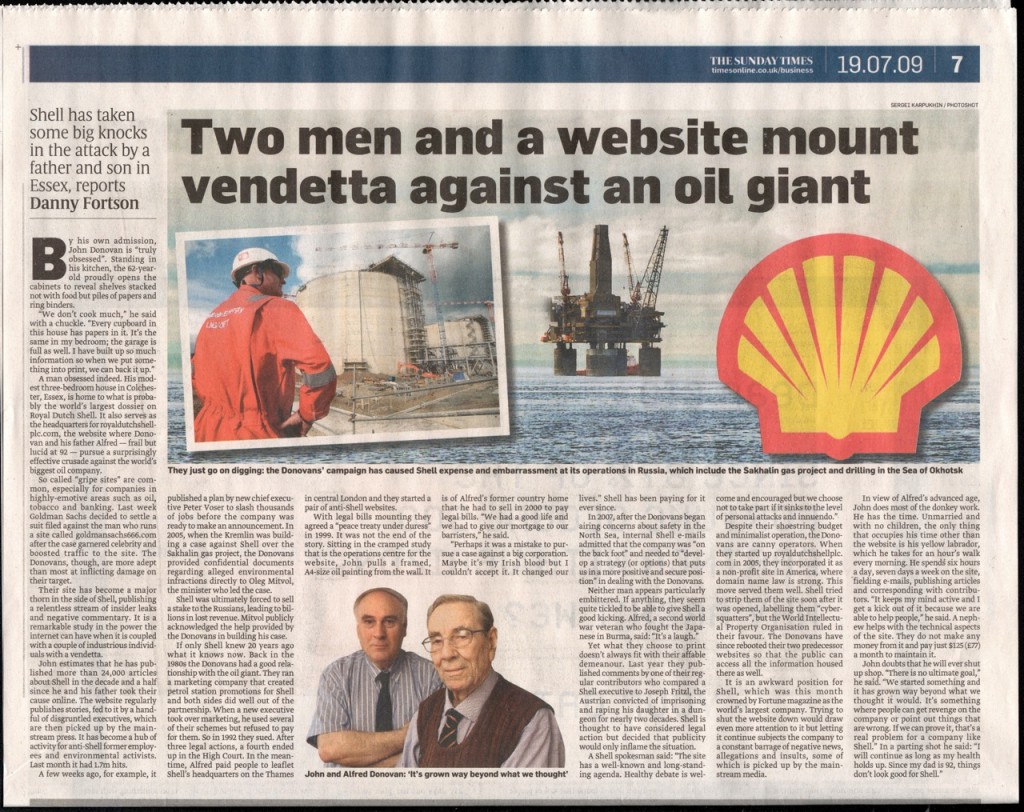
This website and sisters royaldutchshellplc.com, shellnazihistory.com, royaldutchshell.website, johndonovan.website, and shellnews.net, are owned by John Donovan. There is also a Wikipedia segment.


 Royal Dutch Shell conspired directly with Hitler, financed the Nazi Party, was anti-Semitic and sold out its own Dutch Jewish employees to the Nazis. Shell had a close relationship with the Nazis during and after the reign of Sir Henri Deterding, an ardent Nazi, and the founder and decades long leader of the Royal Dutch Shell Group. His burial ceremony, which had all the trappings of a state funeral, was held at his private estate in Mecklenburg, Germany. The spectacle (photographs below) included a funeral procession led by a horse drawn funeral hearse with senior Nazis officials and senior Royal Dutch Shell directors in attendance, Nazi salutes at the graveside, swastika banners on display and wreaths and personal tributes from Adolf Hitler and Reichsmarschall, Hermann Goring. Deterding was an honored associate and supporter of Hitler and a personal friend of Goring.

 Deterding was the guest of Hitler during a four day summit meeting at Berchtesgaden. Sir Henri and Hitler both had ambitions on Russian oil fields. Only an honored personal guest would be rewarded with a private four day meeting at Hitler’s mountain top retreat.


 IN JULY 2007, MR BILL CAMPBELL (ABOVE, A RETIRED GROUP AUDITOR OF SHELL INTERNATIONAL SENT AN EMAIL TO EVERY UK MP AND MEMBER OF THE HOUSE OF LORDS:


 MORE DETAILS:


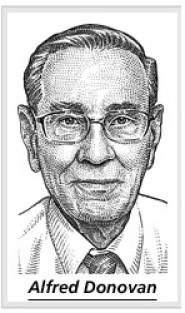 A head-cut image of Alfred Donovan (now deceased) appears courtesy of The Wall Street Journal.