Investment giant in pay warning to corporate big-hitters
The National Association of Pension Funds (NAPF) has told Britains biggest companies to keep the lid on executive pay and bonuses or risk shareholder revolts, as it steps up its campaign to improve corporate governance in UK boardrooms.
The NAPF, whose members own about 13 per cent of the stock market, has written to all FTSE 350 chairmen urging them to exercise pay restraint for their highest earners. In the letter, seen by The Times, the NAPF demands remuneration structures that are more closely matched to the interests of shareholders and calls on every company to carry out a best practice review of its compensation culture.
The objective should be to create simpler structures which better align interests over the longer term and which expose management to significant financial risk in the event of failure to achieve agreed goals, the NAPF writes in the letter, which is signed by Joanne Segars, chief executive, and David Paterson, head of corporate governance at the association.
Mr Paterson adds: Pay increases ought to be earned, as is the case for most of the rest of us. There is also the question of ensuring a recognition that bonuses are essentially a share of the profits. If profits are down, bonuses should be down.
While the NAPF does not recommend how shareholders should vote at company meetings, Mr Paterson says it would urge its members to engage directly with company boards in consultations over pay. He says it is hoping to use the guidelines to lay down a policy marker that funds could use when deciding which way to vote.
The NAPF speaks for about 1,200 UK pension funds, which between them control about £800 billion of assets. It is the NAPFs second letter to FTSE 350 chairman this year and marks a step-change in the associations traditionally low-key approach.
Investors, including pension funds, were accused of being absentee landlords at ownerless corporations in the run-up to last years banking crisis. Lord Myners, the City Minister, and other politicians have urged shareholders to engage with errant companies more actively, prompting a rash of protests over pay at blue-chip companies such as Royal Dutch Shell, BP and Royal Bank of Scotland.
Sir David Walkers final code on remuneration policies at banks is expected in about a fortnight.


 Royal Dutch Shell conspired directly with Hitler, financed the Nazi Party, was anti-Semitic and sold out its own Dutch Jewish employees to the Nazis. Shell had a close relationship with the Nazis during and after the reign of Sir Henri Deterding, an ardent Nazi, and the founder and decades long leader of the Royal Dutch Shell Group. His burial ceremony, which had all the trappings of a state funeral, was held at his private estate in Mecklenburg, Germany. The spectacle (photographs below) included a funeral procession led by a horse drawn funeral hearse with senior Nazis officials and senior Royal Dutch Shell directors in attendance, Nazi salutes at the graveside, swastika banners on display and wreaths and personal tributes from Adolf Hitler and Reichsmarschall, Hermann Goring. Deterding was an honored associate and supporter of Hitler and a personal friend of Goring.

 Deterding was the guest of Hitler during a four day summit meeting at Berchtesgaden. Sir Henri and Hitler both had ambitions on Russian oil fields. Only an honored personal guest would be rewarded with a private four day meeting at Hitler’s mountain top retreat.


 IN JULY 2007, MR BILL CAMPBELL (ABOVE, A RETIRED GROUP AUDITOR OF SHELL INTERNATIONAL SENT AN EMAIL TO EVERY UK MP AND MEMBER OF THE HOUSE OF LORDS:


 MORE DETAILS:


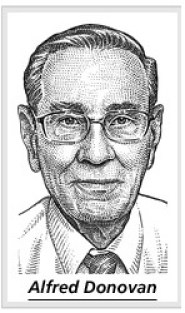 A head-cut image of Alfred Donovan (now deceased) appears courtesy of The Wall Street Journal.