Industry says they could hurt; environmentalists praise cautious pace

|
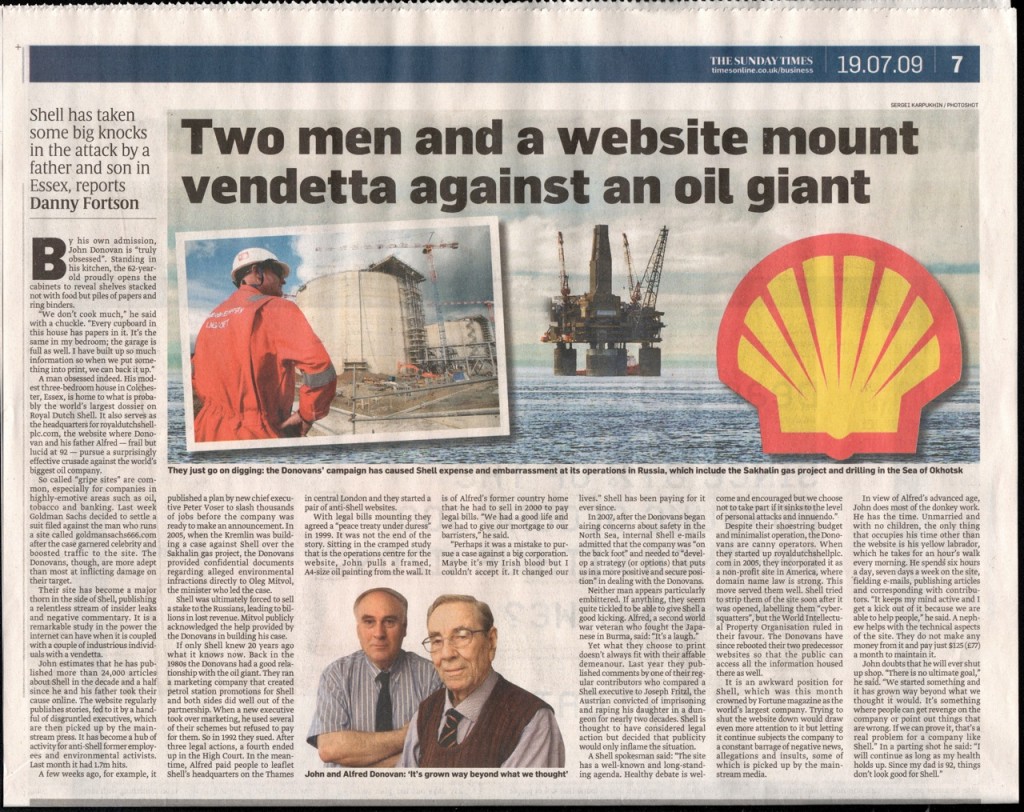
The area near Parachute, Colo., is already lined with roads that feed oil and gas wells. That same area, as well as others in Wyoming and Utah, are rich in oil shale deposits as well.
|
|
|
Ed Andrieski / AP
|


SALT LAKE CITY – The Obama administration’s decision to open a second round of oil shale leasing on federal lands in Colorado, Utah and Wyoming but with a more environmentally sensitive approach than the Bush administration has rankled industry while pleasing activists and Colorado’s governor.
Government and industry officials estimate as many as 800 billion barrels of oil enough to displace oil imports for 100 years is locked in sedimentary rock in parts of Colorado, Utah and Wyoming.
But no company has conclusively shown an economical way of extracting the waxy petroleum, called kerogen, on a large scale.
Interior Secretary Ken Salazar on Tuesday announced smaller research-and-development leases with requirements for environmental safeguards and milestones for progress.
The Interior Department said an “interdisciplinary team” of officials from various federal agencies “will consider the potential of each proposal to advance knowledge of effective technology, economic viability, and the impacts of oil shale development.”
With the announcements, Salazar is taking a more cautious approach to oil-shale development, which could require enormous amounts of water and electric power in states with little of either.
Moreover, oil companies will have to meet a series of development benchmarks for their leases “so they just aren’t held out there forever,” Salazar said.
A trade group was unhappy that Salazar was reducing the size of development leases to a square-mile from eight times that size.
“Slashing the size of the potential commercial lease diminishes the incentives for investment and ignores the enormous upfront costs and risks undertaken to develop these technologically complex resources,” The American Petroleum Institute said in a statement.
Dispute over royalty rate
Salazar also said the 5 percent production royalty set by the Bush administration on the first leases were “premature,” since rates for conventional oil and gas production on public land range up to 18.8 percent.
Glenn Vawter, executive director of the Colorado-based National Oil Shale Association, complained the 5 percent royalty rate was too high, given the risks and uncertainty of trying to squeeze oil from fine-grained rock using extreme temperatures.
“Nobody on the industry side or the opposition was happy with the royalty rate,” Vawter said.
Shell Exploration & Production Co., a major player with three research and development leases in Colorado picked up years ago, had no immediate reaction to Salazar’s announcement.
Colorado Gov. Bill Ritter applauded the federal government’s new restraint.
“The potential for oil shale development in Colorado, and the economic opportunity that it represents, is huge,” Ritter said. “But the prospect of commercial-scale activities raises significant questions” about the effect on the environment and water supplies.
The Natural Resources Defense Council, The Wilderness Society and Western Resource Advocates praised Salazar for making the next set of leases more accountable.
“The history of oil shale has been plagued with scandal and cronyism, and today’s announcement shows why we need a better approach to America’s energy,” said Bobby McEnaney, lands advocate for the Natural Resources Defense Council.
The last attempt to mine Colorado’s oil shale, considered the region’s richest, went bust when oil prices dropped and government subsidies dried up.
People still refer to “Black Sunday,” May 2, 1982, when Exxon shut down a $5 billion project near the West Slope town of Parachute, putting 2,200 people out of work.
Bush-era leases to be investigated
Salazar on Tuesday also called for an investigation into last-minute changes made by the Bush administration to favor oil companies in oil shale leasing.
Salazar said the Bush administration locked in the royalty rate on 30,000 acres of land for oil companies without any opportunity for review or comment.
“There are questions about whether the lease addendums are legal or should be rescinded,” he said in a teleconference call with reporters.
Salazar said before he reverses any of the Bush administration changes, he wants his department’s inspector general, Mary Kendall, to determine how the regulations were changed.
The Department of Justice already has launched a probe into whether Bush’s Interior Secretary Gale A. Norton used her position to steer three of the six potentially lucrative oil leases to Royal Dutch Shell PLC, the company she works for now.
Salazar said Kendall’s probe would be a separate matter.
Copyright 2009 The Associated Press. All rights reserved.
This website and sisters royaldutchshellplc.com, shellnazihistory.com, royaldutchshell.website, johndonovan.website, and shellnews.net, are owned by John Donovan. There is also a Wikipedia segment.


 Royal Dutch Shell conspired directly with Hitler, financed the Nazi Party, was anti-Semitic and sold out its own Dutch Jewish employees to the Nazis. Shell had a close relationship with the Nazis during and after the reign of Sir Henri Deterding, an ardent Nazi, and the founder and decades long leader of the Royal Dutch Shell Group. His burial ceremony, which had all the trappings of a state funeral, was held at his private estate in Mecklenburg, Germany. The spectacle (photographs below) included a funeral procession led by a horse drawn funeral hearse with senior Nazis officials and senior Royal Dutch Shell directors in attendance, Nazi salutes at the graveside, swastika banners on display and wreaths and personal tributes from Adolf Hitler and Reichsmarschall, Hermann Goring. Deterding was an honored associate and supporter of Hitler and a personal friend of Goring.

 Deterding was the guest of Hitler during a four day summit meeting at Berchtesgaden. Sir Henri and Hitler both had ambitions on Russian oil fields. Only an honored personal guest would be rewarded with a private four day meeting at Hitler’s mountain top retreat.


 IN JULY 2007, MR BILL CAMPBELL (ABOVE, A RETIRED GROUP AUDITOR OF SHELL INTERNATIONAL SENT AN EMAIL TO EVERY UK MP AND MEMBER OF THE HOUSE OF LORDS:


 MORE DETAILS:


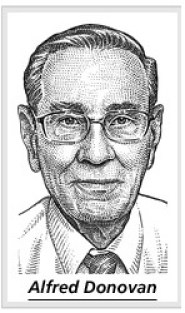 A head-cut image of Alfred Donovan (now deceased) appears courtesy of The Wall Street Journal.