Daily Telegraph
Sir Peter Job and the remuneration committee at Royal Dutch Shell are facing calls to step down.
The calls were made after the oil major became the UK’s most high-profile victim of a shareholder revolt.
In the latest sign of increasing activism among institutional shareholders and anger at what are deemed excessive payouts, 59.4pc of shareholders rejected Shell’s remuneration report at a fiery annual general meeting on Tuesday.
It is the second time that Sir Peter, the chair of the remuneration committee, has been involved in a major dispute over pay. He was on the remuneration committee at GlaxoSmithKline when its pay package was voted down in 2003.
Shell is unlikely to reverse the pay deal because the vote is only deemed to be advisory but shareholders are looking for change, including a restructuring of the remuneration committee. A significant proportion of shareholders, 8pc, also rebelled against pay last year.
Their anger has been stoked up after Shell missed its target of finishing third in a peer group of five companies, but directors used their discretion to give executives about half of the share awards. One shareholder asked yesterday, while joining calls for Sir Peter to quit: “Why reward failure?”
Legal & General and Capital Group, two of the largest shareholders, refused to comment, although it is thought that L&G, along with fellow institutional shareholder Standard Life, voted against the remuneration report. Franklin Mutual, another key investor, asked Sir Peter during the AGM whether he would quit if the company lost the pay vote.
Michael Rendell, the head of PricewaterhouseCooper’s human resources consultancy, said he feared a string of non-executives could step down from their posts because of the increasing pressure they are facing.
“It’s a very challenging role and one of the most high-profile in business at the moment,” he said.
Members of GSK’s remuneration committee, including Sir Peter, stepped down within 19 months of the drug companies’ controversial pay deal being rejected.
Sir Peter is also chairman of the remuneration committee at Schroders, where about 7pc of shareholders voted against the pay deal this year. He earned about £200,000 last year for his two roles. He is joined on the Shell committee by Lord Kerr of Kinlochard, the former diplomat who was comfortably re-elected at the annual meeting, and Dr Josef Ackerman, chairman of Deutsche Bank.
Related Articles
Shell suffers revolt over director pay
Criticism sparks Shell pay review
Fiery exchanges at Shell’s AGM
Patience will be a virtue for UKFI, the City’s new silent assassin
Parliament offers Shell’s oil men a lesson on the expense of overpaying


 Royal Dutch Shell conspired directly with Hitler, financed the Nazi Party, was anti-Semitic and sold out its own Dutch Jewish employees to the Nazis. Shell had a close relationship with the Nazis during and after the reign of Sir Henri Deterding, an ardent Nazi, and the founder and decades long leader of the Royal Dutch Shell Group. His burial ceremony, which had all the trappings of a state funeral, was held at his private estate in Mecklenburg, Germany. The spectacle (photographs below) included a funeral procession led by a horse drawn funeral hearse with senior Nazis officials and senior Royal Dutch Shell directors in attendance, Nazi salutes at the graveside, swastika banners on display and wreaths and personal tributes from Adolf Hitler and Reichsmarschall, Hermann Goring. Deterding was an honored associate and supporter of Hitler and a personal friend of Goring.

 Deterding was the guest of Hitler during a four day summit meeting at Berchtesgaden. Sir Henri and Hitler both had ambitions on Russian oil fields. Only an honored personal guest would be rewarded with a private four day meeting at Hitler’s mountain top retreat.


 IN JULY 2007, MR BILL CAMPBELL (ABOVE, A RETIRED GROUP AUDITOR OF SHELL INTERNATIONAL SENT AN EMAIL TO EVERY UK MP AND MEMBER OF THE HOUSE OF LORDS:


 MORE DETAILS:


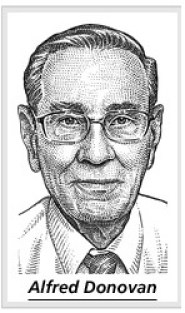 A head-cut image of Alfred Donovan (now deceased) appears courtesy of The Wall Street Journal.