
Published: March 23 2009 02:00 | Last updated: March 23 2009 02:00
The line held. After the Bank of Russia called a halt to the rouble’s slow-motion devaluation in January, the expected speculative attack on the floor of 41 to a dollar/euro basket never happened. Instead, the currency has strengthened – the central bank even bought dollars last Thursday to prevent excessive appreciation.
That is reason for relief, but no celebration, in Moscow. Russia, after all, has spent a third of its foreign exchange reserves since August on slowing the rouble’s 30 per cent devaluation to a pace that avoided panicking Russians. The rouble’s stabilisation owes much to oil prices staying above $40 a barrel. Its upward spurt on Thursday resulted from a wobbling dollar and spike in commodity prices after the Federal Reserve’s plans for huge quantitative easing. The economic outlook remains as chilly as a Moscow winter. Some 1.1m Russians have lost jobs since December. Retail sales fell year on year in February – for the first time in nine years.
But watching $200bn of reserves evaporate in weeks seems to have focused minds. The Kremlin has dumped earlier signals it would bail out corporate allcomers and now insists that Russian companies must work with domestic banks to solve foreign debt problems. Fears it would use the crisis to grab control of corporate assets have not materialised. The official emphasis is on renewed fiscal discipline.
Investors are somewhat reassured. Moscow’s RTS index has bucked emerging market indices by staging a mini-rally since January. But, while even pessimistic forecasts for Russia’s contraction this year are little worse than G7 countries, the RTS trades on a current-year price/earnings ratio of 5.9 times, below half that of the S&P 500. The reason might be termed the “trust gap”. Scared off by attacks on TNK-BP, Mechel and Royal Dutch Shell and by Moscow’s continuing foreign policy prickliness, investors are in no hurry to return. Rebuilding trust may take longer than returning Russia’s economy to growth.
Copyright The Financial Times Limited 2009
This website and sisters royaldutchshellplc.com, shellnazihistory.com, royaldutchshell.website, johndonovan.website, and shellnews.net, are owned by John Donovan. There is also a Wikipedia segment.


 Royal Dutch Shell conspired directly with Hitler, financed the Nazi Party, was anti-Semitic and sold out its own Dutch Jewish employees to the Nazis. Shell had a close relationship with the Nazis during and after the reign of Sir Henri Deterding, an ardent Nazi, and the founder and decades long leader of the Royal Dutch Shell Group. His burial ceremony, which had all the trappings of a state funeral, was held at his private estate in Mecklenburg, Germany. The spectacle (photographs below) included a funeral procession led by a horse drawn funeral hearse with senior Nazis officials and senior Royal Dutch Shell directors in attendance, Nazi salutes at the graveside, swastika banners on display and wreaths and personal tributes from Adolf Hitler and Reichsmarschall, Hermann Goring. Deterding was an honored associate and supporter of Hitler and a personal friend of Goring.

 Deterding was the guest of Hitler during a four day summit meeting at Berchtesgaden. Sir Henri and Hitler both had ambitions on Russian oil fields. Only an honored personal guest would be rewarded with a private four day meeting at Hitler’s mountain top retreat.


 IN JULY 2007, MR BILL CAMPBELL (ABOVE, A RETIRED GROUP AUDITOR OF SHELL INTERNATIONAL SENT AN EMAIL TO EVERY UK MP AND MEMBER OF THE HOUSE OF LORDS:


 MORE DETAILS:


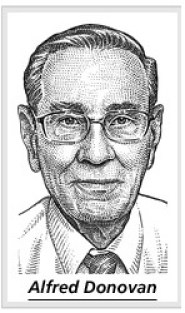 A head-cut image of Alfred Donovan (now deceased) appears courtesy of The Wall Street Journal.