THE WALL STREET JOURNAL
MARCH 12, 2009, 12:04 A.M. ET
By WILL CONNORS
LAGOS, Nigeria — In Nigeria, Africa’s most populous country and biggest oil producer, low crude prices are dragging down growth expectations, foreshadowing a dramatic slowdown in an economy that was teetering even in the good years.
![[losing ground]](https://i0.wp.com/s.wsj.net/public/resources/images/NA-AW324_NIGERI_NS_20090311184817.gif?resize=183%2C302)
Nigeria has long struggled with a fractious federal system, endemic corruption and ramshackle infrastructure — all factors that kept the commodities boom from lifting living standards significantly for most of the country’s 148 million people.
Now, falling oil prices and a struggling banking sector have forced the government to tap into a reserve account tied to excess crude-oil revenues that had bulked up during last year’s commodity boom. Nigeria depends on oil for more than 90% of its export earnings and 80% of its revenue.
On Tuesday, President Musa Yar’Adua signed a $21.2 billion budget for 2009 after months of wrangling. That is slightly more than budgeted last year, but it forecasts a bigger deficit, at about 5%.
The government also said it would tap into its windfall oil-reserve account and disperse $1.5 billion to federal, state and local governments.
The account, meant to protect Nigeria from price fluctuations, and now at $15 billion, collects revenue whenever oil prices climb above the benchmark price set in the budget. This year’s spending plan is based on some optimistic forecasts: Nigeria says it will produce 2.29 million barrels of crude oil a day, and that oil will fetch at least $45 a barrel.
Prices for U.S. benchmark crude, which sells at a premium to Nigerian crude, fell more than 7% to trade late Wednesday in New York at $42.33 a barrel.
Nigeria’s output quota after recent cuts by the Organization of Petroleum Exporting Countries to help stem oil price weakness is just 1.6 million barrels a day.
OPEC members often sell more crude than they’re allowed, and Nigeria’s production capacity is around 2.47 million barrels a day. But sabotage on oil installations in the Niger Delta has cut production to 1.83 million barrels a day.
Amid the steep fall in oil prices, the Nigerian currency, the naira, has fallen 25% against the dollar in the last two months.
The International Monetary Fund last week revised its estimate of Nigeria’s 2009 economic growth to 3.3% from the 8% seen in October. Other analysts forecast a growth rate closer to 2%.
Nigeria’s finance ministry predicts gross domestic product growth of around 6%.
Anything under 5% for a developing country such as Nigeria, where the population is growing quickly, may be too slow to improve unemployment and poverty, analysts say.
Sub-Saharan Africa is still expected to grow faster this year than every other region except China, India and the Middle East.
But foreign investors who had been flocking to Nigeria are reconsidering in the face of a struggling Nigerian stock market and financial problems in their own countries. International oil majors are postponing plans, and smaller oil-and-gas companies are hard-pressed for funding.
“Wannabe oil companies will disappear” here, said Ann Pickard, a vice president at Royal Dutch Shell PLC, at a recent conference in Nigeria. Shell has put several of its own exploration operations on hold.


 Royal Dutch Shell conspired directly with Hitler, financed the Nazi Party, was anti-Semitic and sold out its own Dutch Jewish employees to the Nazis. Shell had a close relationship with the Nazis during and after the reign of Sir Henri Deterding, an ardent Nazi, and the founder and decades long leader of the Royal Dutch Shell Group. His burial ceremony, which had all the trappings of a state funeral, was held at his private estate in Mecklenburg, Germany. The spectacle (photographs below) included a funeral procession led by a horse drawn funeral hearse with senior Nazis officials and senior Royal Dutch Shell directors in attendance, Nazi salutes at the graveside, swastika banners on display and wreaths and personal tributes from Adolf Hitler and Reichsmarschall, Hermann Goring. Deterding was an honored associate and supporter of Hitler and a personal friend of Goring.

 Deterding was the guest of Hitler during a four day summit meeting at Berchtesgaden. Sir Henri and Hitler both had ambitions on Russian oil fields. Only an honored personal guest would be rewarded with a private four day meeting at Hitler’s mountain top retreat.


 IN JULY 2007, MR BILL CAMPBELL (ABOVE, A RETIRED GROUP AUDITOR OF SHELL INTERNATIONAL SENT AN EMAIL TO EVERY UK MP AND MEMBER OF THE HOUSE OF LORDS:


 MORE DETAILS:


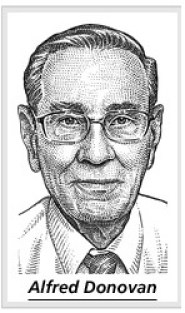 A head-cut image of Alfred Donovan (now deceased) appears courtesy of The Wall Street Journal.