
Western Gray Whale
19 February 2009
PETROPAVLOVSK KAMCHATSKY, February 19 (RIA Novosti) – Oil and natural gas development off the coast of Sakhalin Island in Russia’s Far East could have forced endangered whales to leave their habitat in the area, a local WWF spokesperson said on Thursday.
The change in habitat by part of the grey whale population “was probably due to oil and gas projects in Sakhalin,” Alexandra Filatkina said, citing a chief whale researcher in the Far Eastern branch of Russia’s Academy of Sciences.
Endangered gray whales have moved closer to Kamchatka, but they may not be safe there either, as environmentalists are concerned about planned oil production off the peninsula’s western coast, Filatkina said.
Independent environmental studies have repeatedly indicated that noise, ship collisions, oil and gas spills, and habitat destruction due to oil and gas development are the main threats to the gray whales’ survival. Experts have warned investors in the large-scale hydrocarbon projects in the region would be responsible for the extinction of the critically endangered species.
Russia unveiled on Wednesday its first liquefied natural gas (LNG) plant as part of the ambitious $20 billion Sakhalin-II oil and gas project, involving Royal Dutch Shell, Mitsui and Mitsubishi. Some 9.6 million metric tons of LNG will be produced annually, with the liquefied gas delivered from the plant in tankers.
Filatkina also said seven whales had died recently after being entangled in drift fishing gear and lobster traps in Russia’s Pacific waters. She urged more government measures to protect whales.
The WWF welcomed on Tuesday a proposal by Russian Prime Minister Vladimir Putin to outlaw fishing with drift nets, which the group said came after “a lengthy campaign by fishermen and politicians in Kamchatka as well as local organizations, including WWF-Russia.”
February 19 has been celebrated as world day of marine mammals protection since 1986, when commercial whaling was banned worldwide after ruthless whale hunting that lasted for 200 years.


 Royal Dutch Shell conspired directly with Hitler, financed the Nazi Party, was anti-Semitic and sold out its own Dutch Jewish employees to the Nazis. Shell had a close relationship with the Nazis during and after the reign of Sir Henri Deterding, an ardent Nazi, and the founder and decades long leader of the Royal Dutch Shell Group. His burial ceremony, which had all the trappings of a state funeral, was held at his private estate in Mecklenburg, Germany. The spectacle (photographs below) included a funeral procession led by a horse drawn funeral hearse with senior Nazis officials and senior Royal Dutch Shell directors in attendance, Nazi salutes at the graveside, swastika banners on display and wreaths and personal tributes from Adolf Hitler and Reichsmarschall, Hermann Goring. Deterding was an honored associate and supporter of Hitler and a personal friend of Goring.

 Deterding was the guest of Hitler during a four day summit meeting at Berchtesgaden. Sir Henri and Hitler both had ambitions on Russian oil fields. Only an honored personal guest would be rewarded with a private four day meeting at Hitler’s mountain top retreat.


 IN JULY 2007, MR BILL CAMPBELL (ABOVE, A RETIRED GROUP AUDITOR OF SHELL INTERNATIONAL SENT AN EMAIL TO EVERY UK MP AND MEMBER OF THE HOUSE OF LORDS:


 MORE DETAILS:


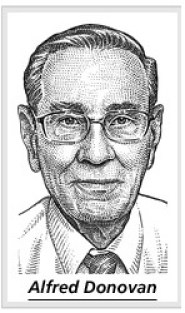 A head-cut image of Alfred Donovan (now deceased) appears courtesy of The Wall Street Journal.