
By Catherine Belton in Moscow and Mure Dickie in Tokyo
Published: February 19 2009 02:00 | Last updated: February 19 2009 02:00
Russia launched its $22bn (17bn, £15bn) liquefied natural gas project on the Pacific island of Sakhalin on Wednesday, opening a big new front to supply energy to Asia and to North America as the Kremlin seeks to diversify energy markets from Europe.
The inauguration of the Sakhalin-2 project comes after years of delays and political wrangling over control of the venture in which Royal Dutch Shell was forced to sell control to Gazprom, Russias state-controlled gas monopoly, at the height of the Kremlins bid to reassert control over the energy sector in 2006.
Dmitry Medvedev, the Russian president, said the project would be able to supply 5 per cent of global demand for LNG once at full capacity next year. This strengthens Russias position as a major energy market participant, he said at the opening ceremony in Sakhalin, which was also attended by Taro Aso, the Japanese prime minister.
The project, which will ship 50 145,000-cubic-metre tankers of super-cooled gas this year to Japan, South Korea and potentially to North America, will open a big energy route for Russia, which has built most of its geopolitical clout as an energy supplier.
This is the first significant outflow of Russian energy to Asia, said Chris Weafer, chief strategist at Uralsib investment bank in Moscow. Russia will look to piggy-back that new energy relationship with a closer political relationship. About 65 per cent of LNG produced at the plant will be shipped to Japan.
The launch of the project ends Europes position as the only foreign consumer of Russian gas all of Russias existing gas export pipelines are directed into Europe.
The launch comes a day after Russia signed off on another big push to send energy east, a $25bn oil-for-loans deal with China.
Under the deal, Russia agreed to supply China with 30m tonnes of crude from east Siberia over 20 years in return for loans for Transneft, the state-controlled oil pipeline monopoly, and Rosneft, the state-controlled oil group. The first branch of a pipeline across Siberia to a Pacific hub is expected to be completed this year, with a spur also expected to be built to China.
EDITORS CHOICE
In depth: Oil – Feb-03
Copyright The Financial Times Limited 2009
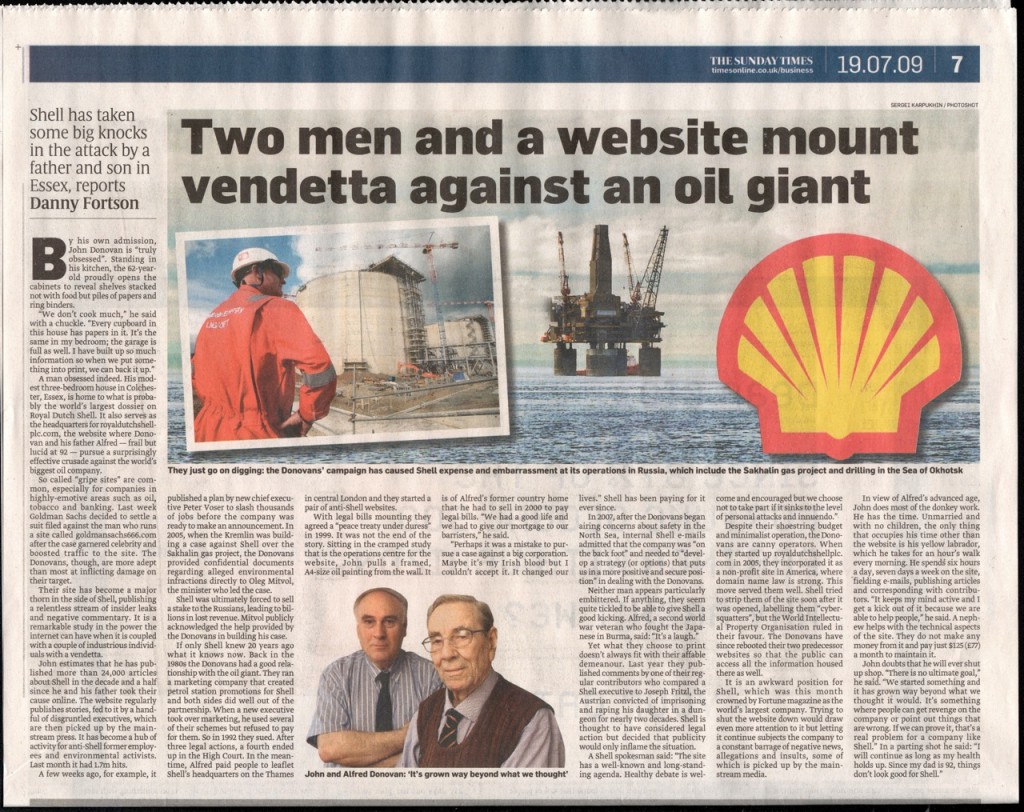
This website and sisters royaldutchshellplc.com, shellnazihistory.com, royaldutchshell.website, johndonovan.website, and shellnews.net, are owned by John Donovan. There is also a Wikipedia segment.


 Royal Dutch Shell conspired directly with Hitler, financed the Nazi Party, was anti-Semitic and sold out its own Dutch Jewish employees to the Nazis. Shell had a close relationship with the Nazis during and after the reign of Sir Henri Deterding, an ardent Nazi, and the founder and decades long leader of the Royal Dutch Shell Group. His burial ceremony, which had all the trappings of a state funeral, was held at his private estate in Mecklenburg, Germany. The spectacle (photographs below) included a funeral procession led by a horse drawn funeral hearse with senior Nazis officials and senior Royal Dutch Shell directors in attendance, Nazi salutes at the graveside, swastika banners on display and wreaths and personal tributes from Adolf Hitler and Reichsmarschall, Hermann Goring. Deterding was an honored associate and supporter of Hitler and a personal friend of Goring.

 Deterding was the guest of Hitler during a four day summit meeting at Berchtesgaden. Sir Henri and Hitler both had ambitions on Russian oil fields. Only an honored personal guest would be rewarded with a private four day meeting at Hitler’s mountain top retreat.


 IN JULY 2007, MR BILL CAMPBELL (ABOVE, A RETIRED GROUP AUDITOR OF SHELL INTERNATIONAL SENT AN EMAIL TO EVERY UK MP AND MEMBER OF THE HOUSE OF LORDS:


 MORE DETAILS:


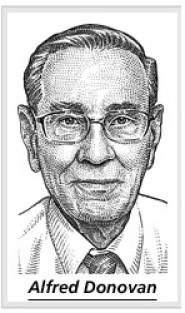 A head-cut image of Alfred Donovan (now deceased) appears courtesy of The Wall Street Journal.