
Record-breaking earnings despite ‘rough waters’
Investors worried by sluggish production
- The Guardian,
- Friday October 31 2008
Royal Dutch Shell and Exxon Mobil followed BP yesterday by revealing record quarterly profits.
Royal Dutch Shell, the biggest oil firm in Europe, beat City expectations with third-quarter current cost-of-supply profits – which strip out unrealised inventory gains and losses – up 74% to $10.9bn (£6.7bn).
Exxon Mobil, the world’s largest oil company, smashed its own record for the highest quarterly earnings from a US firm, by delivering a profit of $14.83bn.
Despite the better than expected figures, Royal Dutch Shell shares fell more than 3%, in part because of lower than expected production.
“Overall, this is a good outcome,” said Tony Shepard, an analyst at stockbroker Charles Stanley. “But some investors will be disappointed by the sluggish production volumes.”
Shell said it had benefited from higher oil and gas prices. Crude oil prices were more than 50% higher and gas realisations some 48% ahead of the same quarter last year.
Oil prices have fallen by about half from their peak in July when they reached $147 a barrel but the continued scale of oil company profits have prompted calls for lower prices for consumers and the imposition of a windfall tax.
“We are steering the Shell ship through rough waters and so far OK,” said chief executive Jeroen van der Veer. “Yes, we are generating large profits. Yes, we have the largest investment programme in Shell’s history to create value for shareholders and to play our part in providing safe and cost competitive energy for consumers.”
As well as investments to secure energy supplies, strategy remained to pay “competitive and progressive dividends”.
The combination of a commitment to investment and dividend payouts echoed BP’s response this week to questions about the scale of its earnings.
Chief financial officer Peter Voser, who will take over from Van der Veer next summer, said that the company was on track to reach its target of asset sales of $5bn this year, though he acknowledged the credit crunch was curbing the number of buyers. He added: “We are in no rush to sell assets. It’s not a fire sale.”
Like Shell and BP, Exxon benefited from the high price of crude oil. Its profits amounted to $162m a day or $113,000 a minute, despite disruption caused to offshore production in the Gulf of Mexico by two hurricanes – Gustav and Ike.
“Despite the continuing uncertainty in world financial markets, Exxon Mobil has maintained a strong financial position,” said its chairman, Rex Tillerson, who said that capital investment of $19.3bn this year had made “a substantial contribution to employment and economic activity” in the countries in which they operated.
The figures are likely to raise hackles among critics of the oil industry. Exxon’s previous quarter yielded profits of $11.6bn, which was itself a US record. The presidential candidate Barack Obama branded the company’s earnings as “outrageous” at a time when US motorists were “paying record prices at the pump”.
Exxon has been attacked by the environmental movement for its reluctance to invest in alternative energy sources. At the company’s annual meeting in May, a significant minority of investors backed resolutions demanding limits on the company’s greenhouse gas emissions and a shift towards renewable energy.
The Texas-based company’s upstream businesses, comprising exploration and production, enjoyed a 48% surge in earnings to $9.35bn as commodity prices soared, despite an 8% fall in output. Downstream, Exxon’s refineries saw profits rise by $1bn to $3.01bn.
The figures comfortably beat analysts’ expectations and Exxon’s shares rose in early trading on Wall Street.
“US downstream was up from last year, so that was a positive surprise,” said Gene Pisasale, an energy analyst at PNC Capital Advisers. “They have the strongest balance sheet in the business.”


 Royal Dutch Shell conspired directly with Hitler, financed the Nazi Party, was anti-Semitic and sold out its own Dutch Jewish employees to the Nazis. Shell had a close relationship with the Nazis during and after the reign of Sir Henri Deterding, an ardent Nazi, and the founder and decades long leader of the Royal Dutch Shell Group. His burial ceremony, which had all the trappings of a state funeral, was held at his private estate in Mecklenburg, Germany. The spectacle (photographs below) included a funeral procession led by a horse drawn funeral hearse with senior Nazis officials and senior Royal Dutch Shell directors in attendance, Nazi salutes at the graveside, swastika banners on display and wreaths and personal tributes from Adolf Hitler and Reichsmarschall, Hermann Goring. Deterding was an honored associate and supporter of Hitler and a personal friend of Goring.

 Deterding was the guest of Hitler during a four day summit meeting at Berchtesgaden. Sir Henri and Hitler both had ambitions on Russian oil fields. Only an honored personal guest would be rewarded with a private four day meeting at Hitler’s mountain top retreat.


 IN JULY 2007, MR BILL CAMPBELL (ABOVE, A RETIRED GROUP AUDITOR OF SHELL INTERNATIONAL SENT AN EMAIL TO EVERY UK MP AND MEMBER OF THE HOUSE OF LORDS:


 MORE DETAILS:


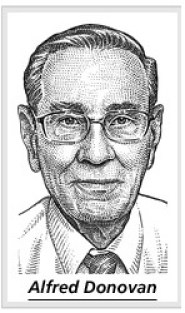 A head-cut image of Alfred Donovan (now deceased) appears courtesy of The Wall Street Journal.